📍 TELLER IS TESTING RANGE RESISTANCE
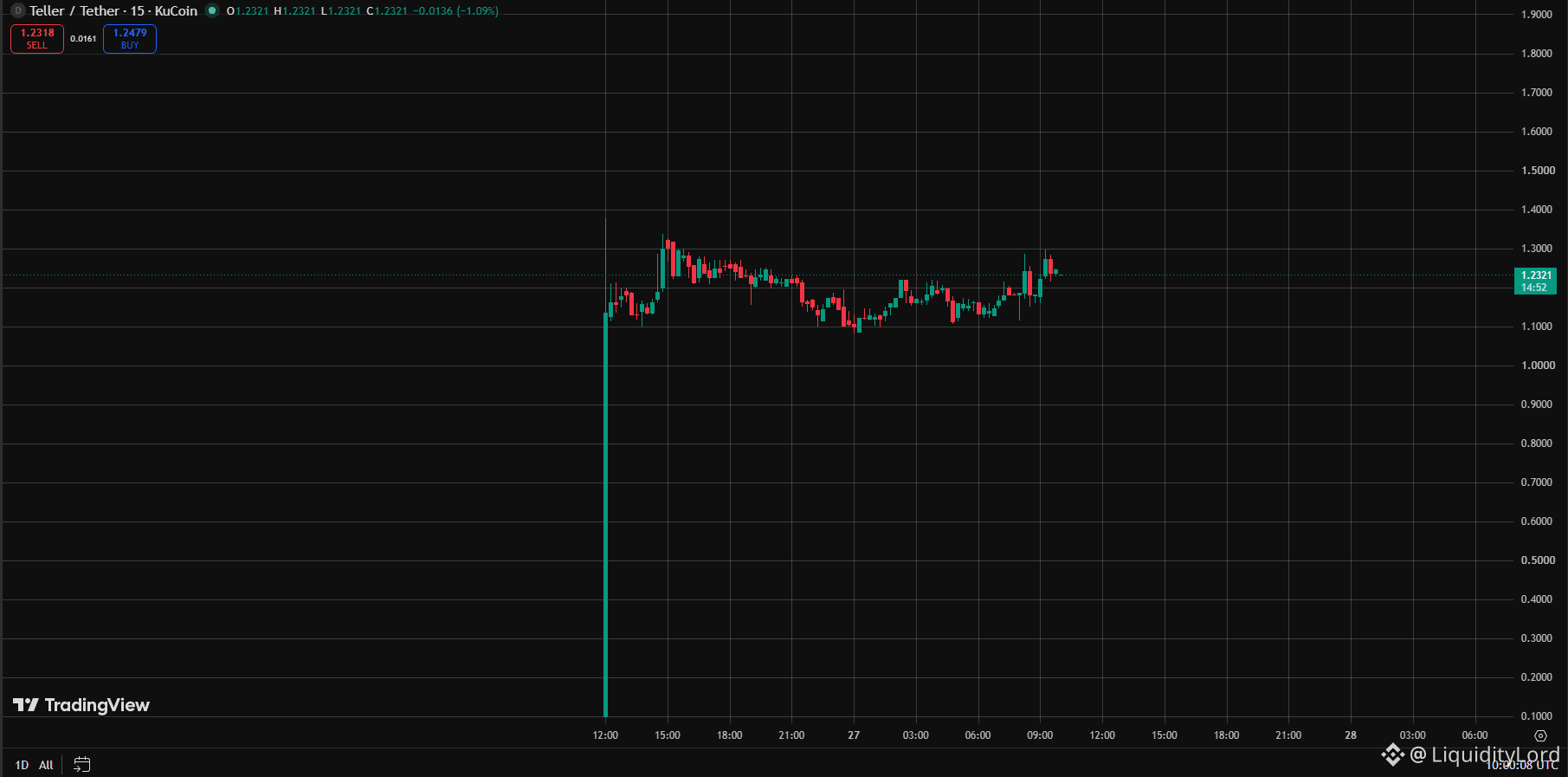
Teller trades around 1.2321 on the 15m chart after a sharp launch from the 1.10 area. Price pushed toward 1.38 before settling into consolidation between roughly 1.10 and 1.32.
📊 STRUCTURE CHECK
Buyers repeatedly defended 1.10-1.15, while sellers appeared around 1.30-1.32. Price is now back near the upper half of the range, keeping the breakout area in focus for the next move.
A clean break above 1.30 would confirm another expansion attempt.
🎯 TARGET MAP
TP1: 1.30
TP2: 1.38
TP3: 1.50
Stop Loss: 1.10
TP1 is the immediate resistance checkpoint. TP2 matches the previous high, while TP3 is the next extension if momentum accelerates.
⚠ INVALIDATION
The bullish setup weakens if Teller loses 1.10 and fails to reclaim it. A sustained break below the range floor would suggest that the structure is resolving lower.
🧩 EXECUTION DYNAMICS
STONfi is relevant to execution, not the Teller thesis. After a rapid move, liquidity can become fragmented as traders reposition around changing prices. RFQ-based routing allows competing resolvers to search available liquidity and compare quotes for efficient execution.
This matters near breakout zones because depth and spreads can change quickly. STONfi operates at the execution layer; it does not determine whether Teller breaks 1.30.
The chart defines the directional thesis, while execution infrastructure focuses on accessing available liquidity efficiently as market conditions change.
TON remains the broader ecosystem reference, while Teller needs independent confirmation from its own price action.
🔎 MY PLAN
I would not chase Teller into 1.30. I prefer a breakout above 1.30 followed by a retest. If it holds, 1.38 is next, with 1.50 as the broader target.
If price rejects 1.30 and loses 1.10, I would step aside.
The range is constructive, but confirmation is still required.
NFA - DYOR
$DEBIT
Teller trades around 1.2321 on the 15m chart after a sharp launch from the 1.10 area. Price pushed toward 1.38 before settling into consolidation between roughly 1.10 and 1.32.
📊 STRUCTURE CHECK
Buyers repeatedly defended 1.10-1.15, while sellers appeared around 1.30-1.32. Price is now back near the upper half of the range, keeping the breakout area in focus for the next move.
A clean break above 1.30 would confirm another expansion attempt.
🎯 TARGET MAP
TP1: 1.30
TP2: 1.38
TP3: 1.50
Stop Loss: 1.10
TP1 is the immediate resistance checkpoint. TP2 matches the previous high, while TP3 is the next extension if momentum accelerates.
⚠ INVALIDATION
The bullish setup weakens if Teller loses 1.10 and fails to reclaim it. A sustained break below the range floor would suggest that the structure is resolving lower.
🧩 EXECUTION DYNAMICS
STONfi is relevant to execution, not the Teller thesis. After a rapid move, liquidity can become fragmented as traders reposition around changing prices. RFQ-based routing allows competing resolvers to search available liquidity and compare quotes for efficient execution.
This matters near breakout zones because depth and spreads can change quickly. STONfi operates at the execution layer; it does not determine whether Teller breaks 1.30.
The chart defines the directional thesis, while execution infrastructure focuses on accessing available liquidity efficiently as market conditions change.
TON remains the broader ecosystem reference, while Teller needs independent confirmation from its own price action.
🔎 MY PLAN
I would not chase Teller into 1.30. I prefer a breakout above 1.30 followed by a retest. If it holds, 1.38 is next, with 1.50 as the broader target.
If price rejects 1.30 and loses 1.10, I would step aside.
The range is constructive, but confirmation is still required.
NFA - DYOR
$DEBIT