

Over the past decades, the global financial system has experienced many major crises.
Despite differing causes, they all shared one common trait:
each crisis was fundamentally different from the one before it.
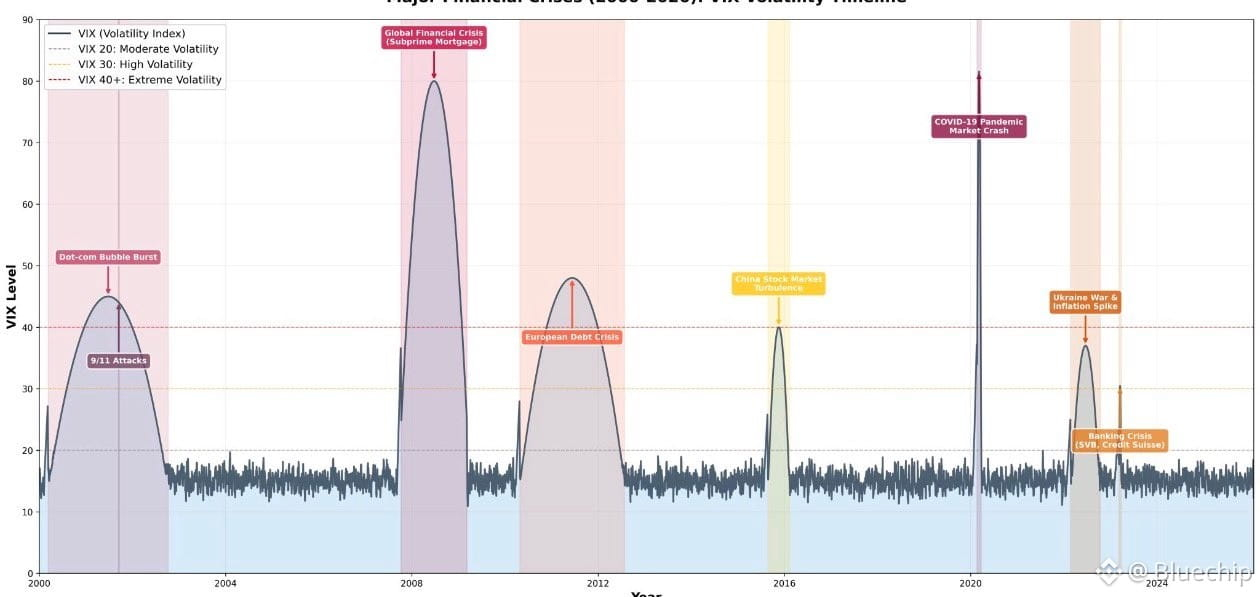
Today, talk of a new potential financial shock is growing.
But the common mistake is searching for a repeat of past crises.
The truth is, the next shock if it occurs will not be a replay of any known model.
Where does the real risk lie?
Not in a single major event,
but in the overlap of existing vulnerabilities, such as:
Elevated volatility in sovereign debt markets
Heavy concentration in public equity positioning
Fragile pockets in private markets that have not yet been tested under real stress
Risks do not operate in isolation.
Danger begins when they move together.
Why do crises always surprise markets?
Because attention is usually focused on:
News headlines
Short-term forecasts
Attempts to predict the initial trigger
While real crises emerge from:
Mispricing
Poor risk management
The assumption that “this time is different in a good way”
What really makes the difference when a shock hits?
Not perfect forecasting,
nor speed of reaction after the collapse.
The real edge lies in:
Realistic, non-optimistic valuation frameworks
Deep understanding of portfolio risks
Flexible, adaptive plans not rigid scenarios
In crises, the bold do not survive the prepared do.
History does not repeat itself,
but it tests the financial system each time from a different angle.
And the real question is never when the crisis will come,
but whether the structure is built to withstand it.
