Look, Dusk Network is trying to fix a real problem: financial institutions need blockchain infrastructure without broadcasting every transaction, balance, and ownership detail to the world.
That part makes sense.
But let’s be honest. Privacy does not make finance simple. It can make the machinery more complicated.
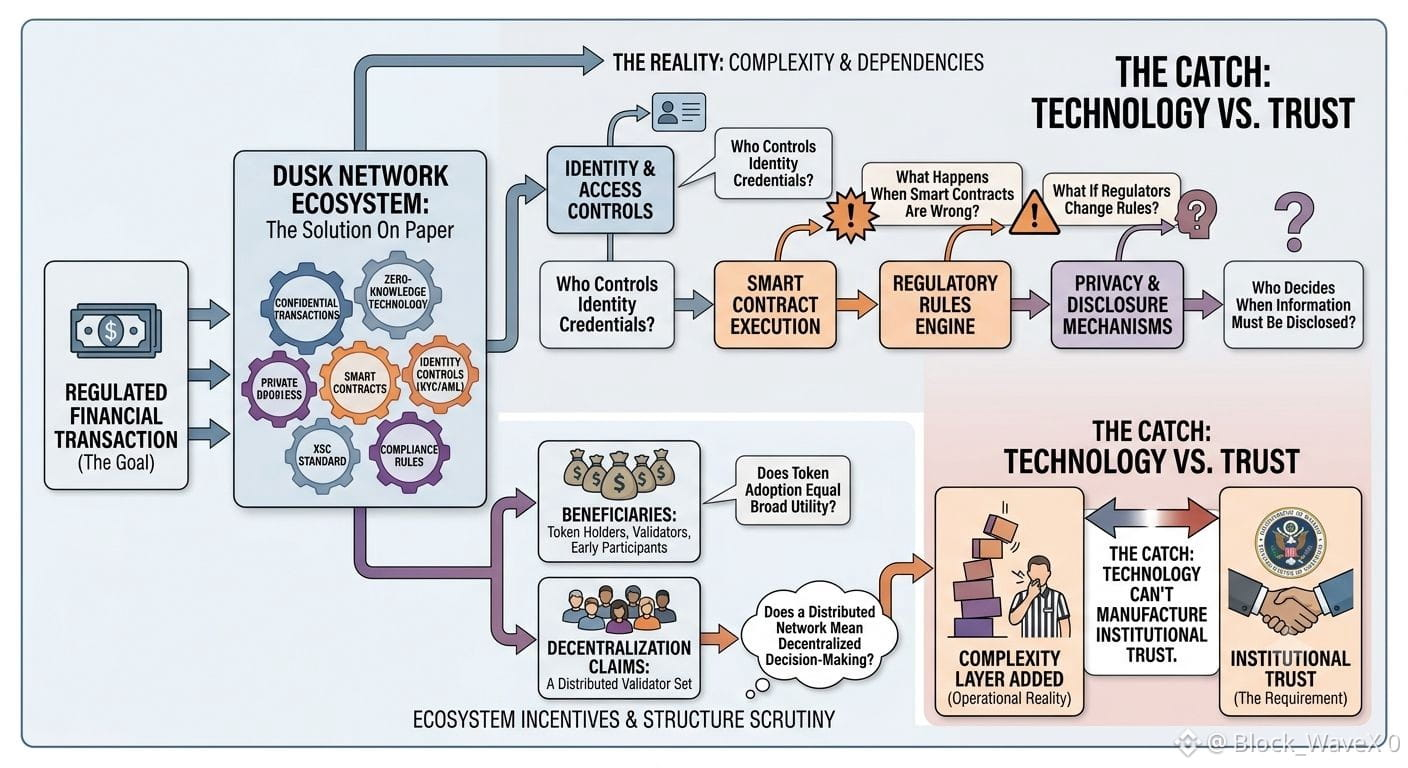
Dusk combines confidential transactions, smart contracts, identity controls, zero-knowledge technology, compliance rules, and its XSC standard to make regulated financial activity work on-chain. Sounds tidy. On paper, at least.
But I’ve seen this movie before.
Every new layer creates another dependency. Who controls access? Who handles identity? Who decides when information must be disclosed? What happens when a smart contract is wrong, a credential is compromised, or a regulator changes the rules?
Then comes the uncomfortable question: who actually benefits if Dusk becomes important? Token holders, validators, infrastructure operators and early participants all have incentives. That does not automatically make the network bad, but it does mean the adoption story deserves scrutiny.
And decentralization? Look closely. A distributed validator set does not automatically mean every important decision is decentralized.
The catch is simple: Dusk can build the technology, but it cannot manufacture institutional trust.
Finance does not care how elegant the blockchain looks when something breaks.
@Dusk #dusk $DUSK
That part makes sense.
But let’s be honest. Privacy does not make finance simple. It can make the machinery more complicated.
Dusk combines confidential transactions, smart contracts, identity controls, zero-knowledge technology, compliance rules, and its XSC standard to make regulated financial activity work on-chain. Sounds tidy. On paper, at least.
But I’ve seen this movie before.
Every new layer creates another dependency. Who controls access? Who handles identity? Who decides when information must be disclosed? What happens when a smart contract is wrong, a credential is compromised, or a regulator changes the rules?
Then comes the uncomfortable question: who actually benefits if Dusk becomes important? Token holders, validators, infrastructure operators and early participants all have incentives. That does not automatically make the network bad, but it does mean the adoption story deserves scrutiny.
And decentralization? Look closely. A distributed validator set does not automatically mean every important decision is decentralized.
The catch is simple: Dusk can build the technology, but it cannot manufacture institutional trust.
Finance does not care how elegant the blockchain looks when something breaks.
@Dusk #dusk $DUSK