#dusk $DUSK @Dusk Something about Dusk’s EVM expansion caught my attention the bigger opportunity may not be adding another privacy feature, but making Dusk easier for developers to actually use.
That matters because privacy alone does not create an ecosystem.
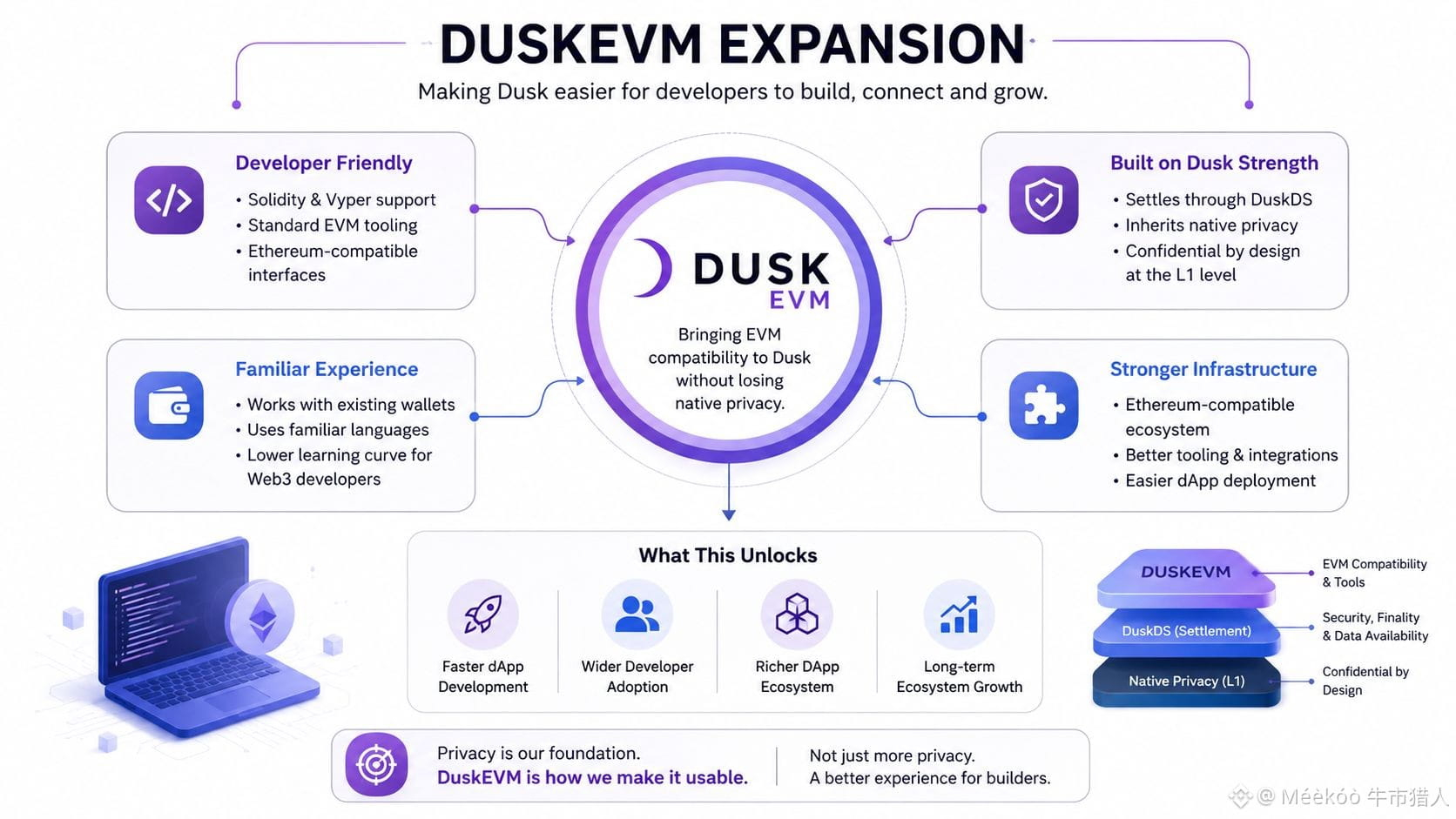
Dusk already has native privacy through its L1 architecture, but developers still need familiar tools, wallets, languages, and infrastructure to build applications. DuskEVM addresses that gap by supporting Solidity, Vyper, standard EVM tooling, and Ethereum compatible interfaces while settling through DuskDS.
That changes the equation.
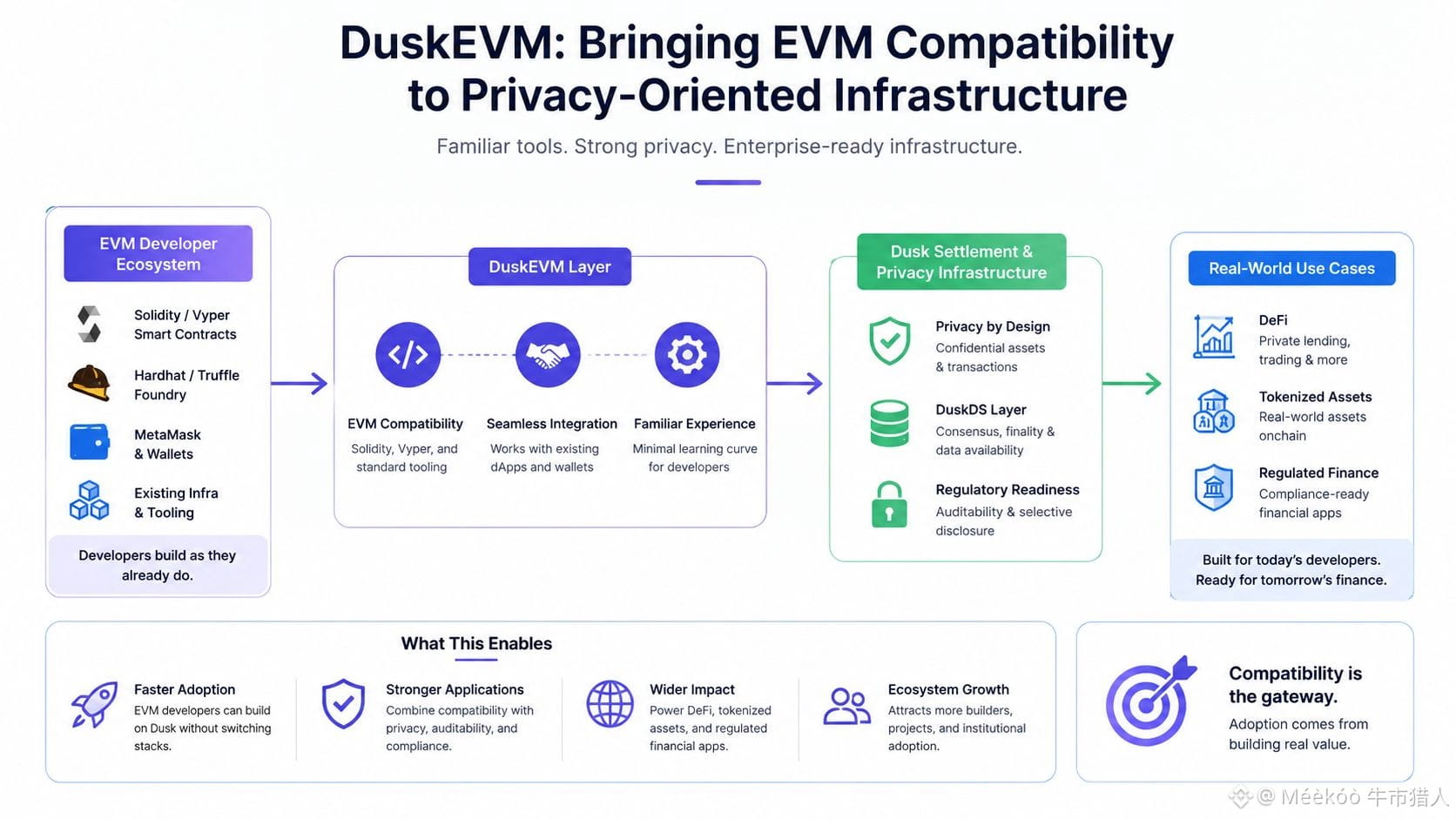
Instead of asking developers to learn an entirely new stack, Dusk can give EVM applications a path into its settlement and privacy oriented infrastructure. That could matter for DeFi, tokenized assets, and regulated financial applications where existing developer ecosystems are important.
But compatibility is not adoption.
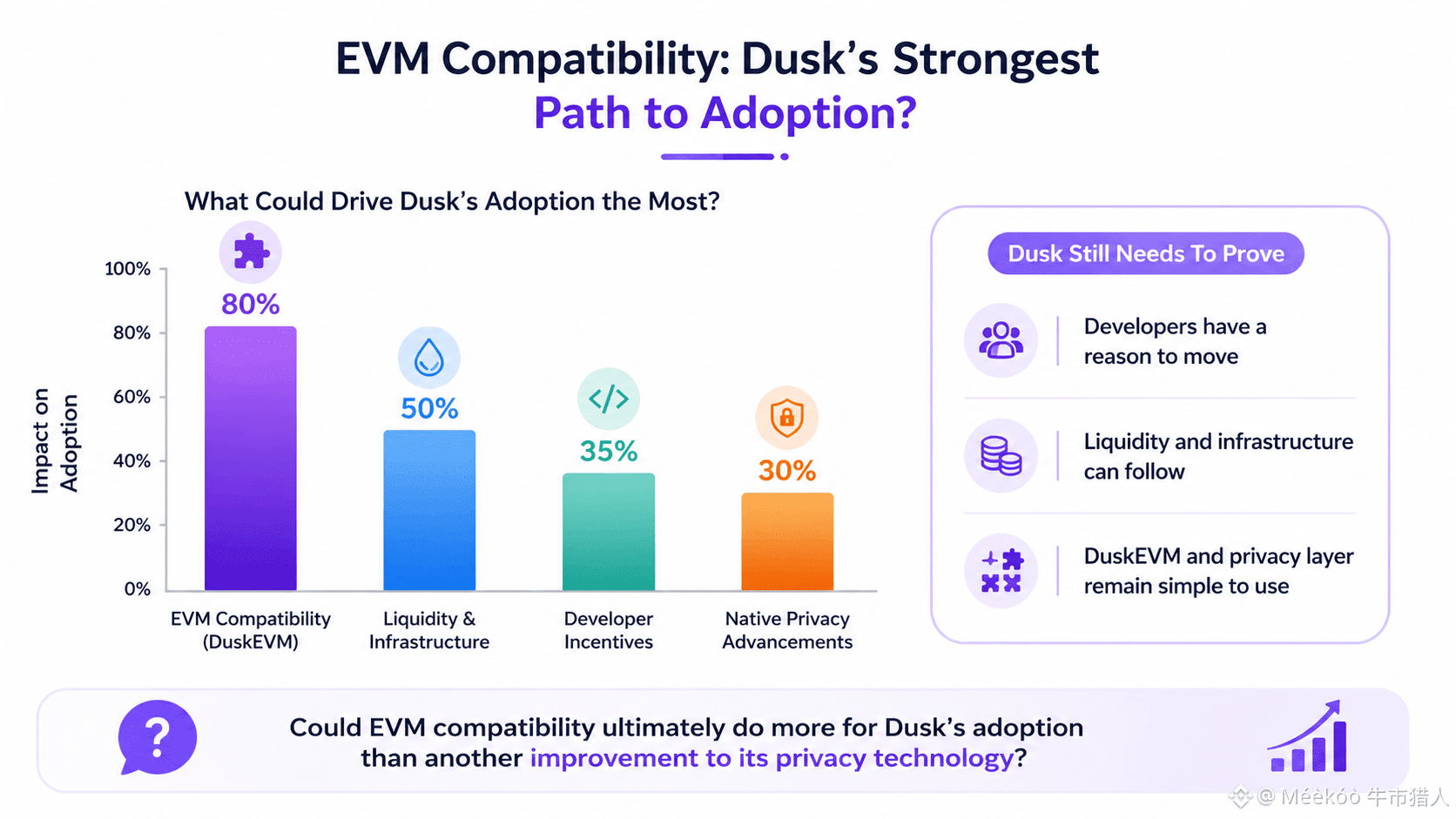
Dusk still has to prove that developers have a reason to move, that liquidity and infrastructure can follow, and that the relationship between DuskEVM and the native privacy layer remains simple enough to use.
So I keep wondering could EVM compatibility ultimately do more for Dusk’s adoption than another improvement to its privacy technology?
That matters because privacy alone does not create an ecosystem.
Dusk already has native privacy through its L1 architecture, but developers still need familiar tools, wallets, languages, and infrastructure to build applications. DuskEVM addresses that gap by supporting Solidity, Vyper, standard EVM tooling, and Ethereum compatible interfaces while settling through DuskDS.
That changes the equation.
Instead of asking developers to learn an entirely new stack, Dusk can give EVM applications a path into its settlement and privacy oriented infrastructure. That could matter for DeFi, tokenized assets, and regulated financial applications where existing developer ecosystems are important.
But compatibility is not adoption.
Dusk still has to prove that developers have a reason to move, that liquidity and infrastructure can follow, and that the relationship between DuskEVM and the native privacy layer remains simple enough to use.
So I keep wondering could EVM compatibility ultimately do more for Dusk’s adoption than another improvement to its privacy technology?