
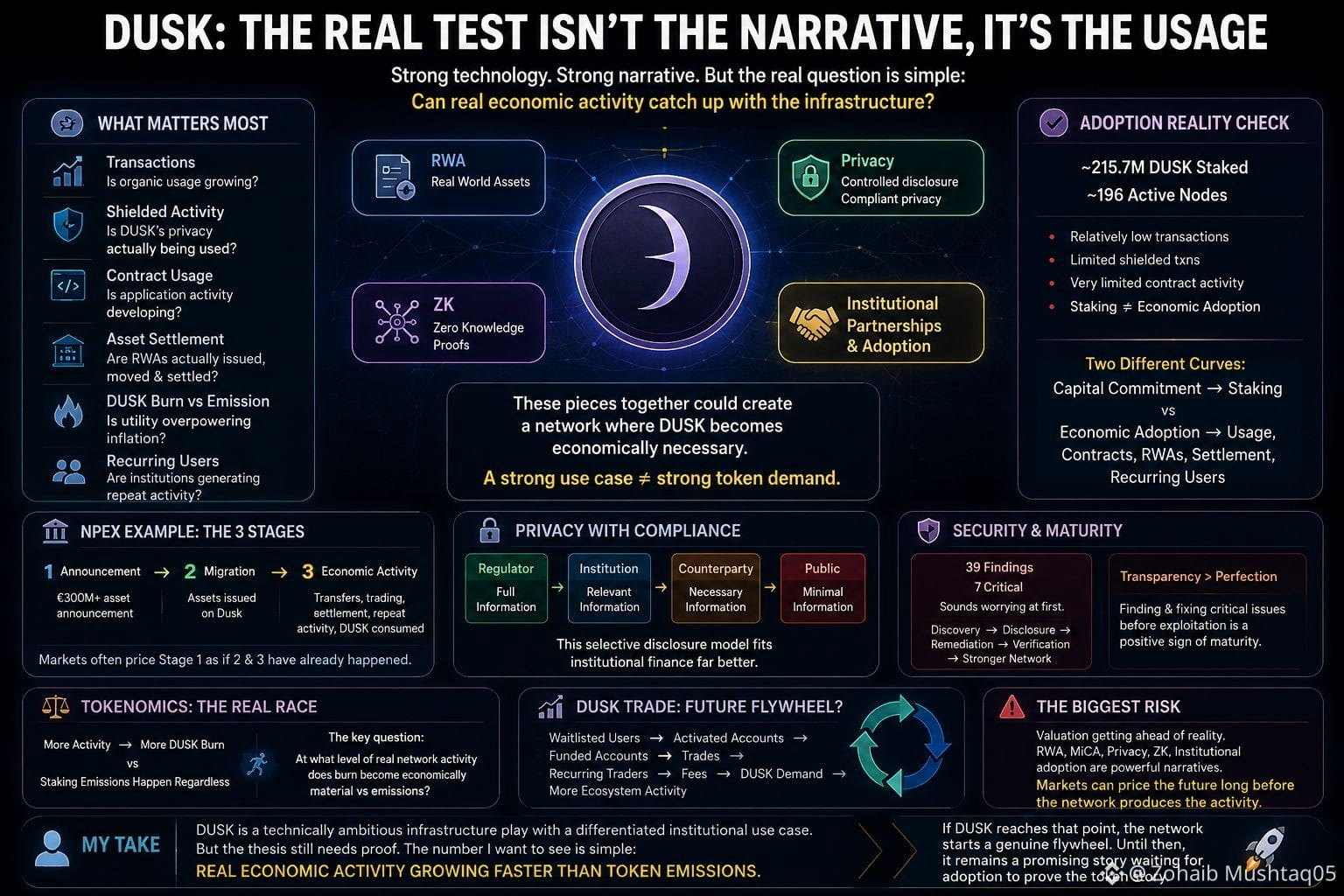
The more I look at DUSK, the more I think the thesis is being misunderstood. What makes DUSK interesting isn’t simply RWA, privacy, ZK, or institutional partnerships on their own. It’s the possibility that all of these pieces eventually create a network where the token becomes economically necessary. That distinction matters. A strong use case doesn’t automatically mean strong token demand. For me, the biggest question now is whether real activity can catch up with the infrastructure being built. Staking numbers can look impressive, but locked capital isn’t the same thing as economic adoption. I care much more about transactions, shielded activity, contract usage, actual asset settlement, recurring users and, eventually, how much DUSK gets consumed versus emitted. The NPEX story is a good example of this difference. Announcing assets is one thing; actually issuing them, moving them, settling them and creating repeat activity is where the thesis gets tested. The same applies to Dusk Trade: a waitlist is interesting, but funded accounts, completed trades and recurring users are what matter. I also think DUSK’s privacy proposition is more compelling than simply calling it a “private blockchain.” If institutions can keep sensitive financial information protected while still supporting controlled disclosure and compliance, that could be a meaningful niche. But technology alone cannot solve the legal and institutional side of finance. On security, the serious audit findings initially sound worrying, yet I view transparent disclosure and remediation as more important than pretending complex systems never have vulnerabilities. The bigger risk, in my opinion, is valuation getting ahead of reality. RWA, MiCA, privacy, ZK and institutional adoption are powerful narratives, and markets can price the future long before the network produces the activity needed to justify it. So I’m neither blindly bullish nor dismissive. #dusk $DUSK @Dusk

نشر
إخلاء مسؤولية: يتضمن آراء جهات خارجية. لا تُعدّ نصيحة. يُمكن استخدام Binance AI دون أي ضمان. اطلع على الشروط والأحكام.