
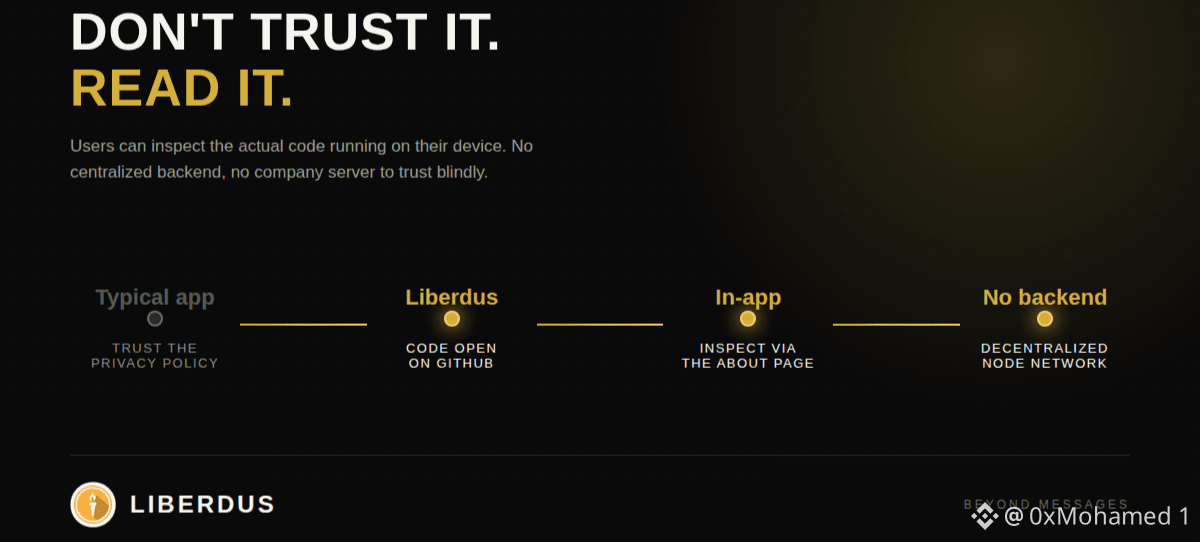
Code You Can Actually Check Trust in most messaging apps rests on a promise you can't verify: we don't read your messages. No way to check the claim yourself, just a privacy policy and a brand reputation to take on faith. Liberdus takes a different approach: unlike many messaging platforms, it's fully transparent, and users can inspect the actual code running on their device through the About page in the app. Not a whitepaper summary of what the code supposedly does. The code itself, sitting where anyone can read it. The project's GitHub organization hosts the full framework as a decentralized chat system with native coin transfer built in, horizontally scalable and built on top of the Shardus protocol, alongside the proxy infrastructure that routes traffic to validator nodes and the bridge contracts connecting LIB across chains. Every core component sits in the open, not just the parts convenient to show off. That transparency connects directly to the architecture covered earlier in this series. Instead of a centralized backend run by a company, Liberdus uses a blockchain operated by a network of decentralized nodes which anyone can join using a standard computer. There's no company server to trust blindly, because there's no company server running the core network in the first place. Open code doesn't replace the need for encryption or careful architecture, it backs those design choices with something a privacy policy can't offer: the ability for anyone technical enough to verify the claim instead of taking it on faith. #Liberdus @Liberdus #BNB $BNB

نشر
إخلاء مسؤولية: يتضمن آراء جهات خارجية. لا تُعدّ نصيحة. يُمكن استخدام Binance AI دون أي ضمان. اطلع على الشروط والأحكام.