#dusk $ONG #Dusk $TAC $DUSK @Dusk
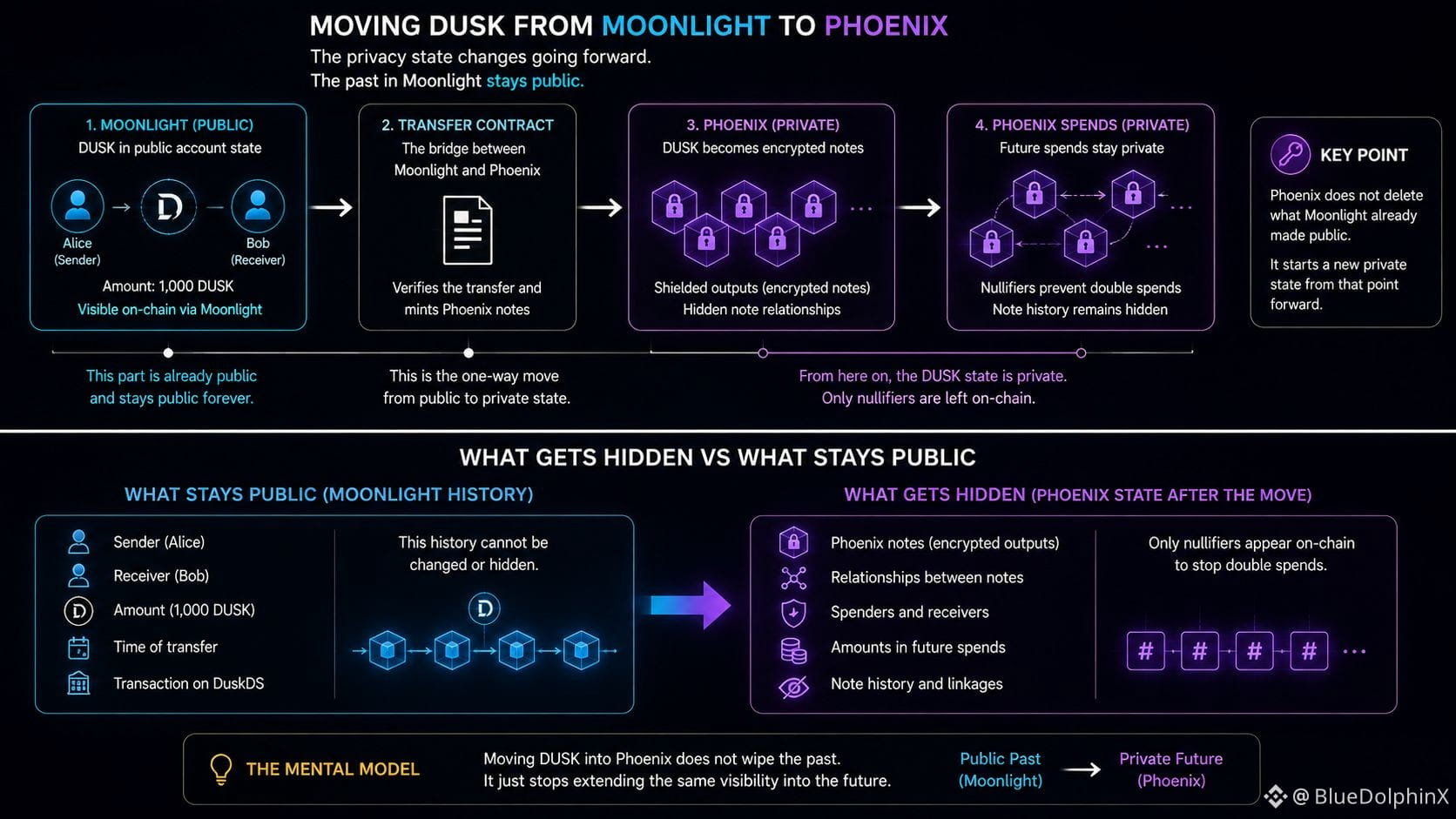
i keep thinking if Phoenix already hid the DUSK value properly, then that should be enough for Rusk too.
like the value is already confidential. encrypted notes did their job. sender, receiver, amount not sitting there in some obvious public shape.
so why cant that same hidden DUSK just touch a Rusk contract and change whatever private state it needs to change.
apparently because Phoenix solved the value problem, not the contract problem.
and yeah thats where i keep flattening two different things again.
Phoenix can keep the DUSK confidential while it moves, but once that hidden value is supposed to affect private contract state, Phoenix notes dont somehow become the contract state Rusk VM works with.
thats where Zilch starts making more sense to me.
not another Dusk privacy layer sitting on Phoenix. more like the handoff that gets that hidden value into the Rusk side without asking the Phoenix note itself to become contract state.
then Dusk PLONK is sitting there proving the private conditions around that change without those hidden inputs needing to spill out first.
so wait. the DUSK can stay private the whole time, but the thing keeping it useful privately has already changed underneath.
Dusk Phoenix handled the confidential value. Zilch gets that value into the contract side, and PLONK gives Rusk VM enough proof for the private contract state to actually move.
thats way different from Phoenix just moving DUSK.
i think i kept assuming privacy was one job because from my side the value never stopped looking private.
apparently Dusk Phoenix keeping it hidden never answered what happens once that value is supposed to change Rusk state.
thats the part i kept skipping.
i keep thinking if Phoenix already hid the DUSK value properly, then that should be enough for Rusk too.
like the value is already confidential. encrypted notes did their job. sender, receiver, amount not sitting there in some obvious public shape.
so why cant that same hidden DUSK just touch a Rusk contract and change whatever private state it needs to change.
apparently because Phoenix solved the value problem, not the contract problem.
and yeah thats where i keep flattening two different things again.
Phoenix can keep the DUSK confidential while it moves, but once that hidden value is supposed to affect private contract state, Phoenix notes dont somehow become the contract state Rusk VM works with.
thats where Zilch starts making more sense to me.
not another Dusk privacy layer sitting on Phoenix. more like the handoff that gets that hidden value into the Rusk side without asking the Phoenix note itself to become contract state.
then Dusk PLONK is sitting there proving the private conditions around that change without those hidden inputs needing to spill out first.
so wait. the DUSK can stay private the whole time, but the thing keeping it useful privately has already changed underneath.
Dusk Phoenix handled the confidential value. Zilch gets that value into the contract side, and PLONK gives Rusk VM enough proof for the private contract state to actually move.
thats way different from Phoenix just moving DUSK.
i think i kept assuming privacy was one job because from my side the value never stopped looking private.
apparently Dusk Phoenix keeping it hidden never answered what happens once that value is supposed to change Rusk state.
thats the part i kept skipping.