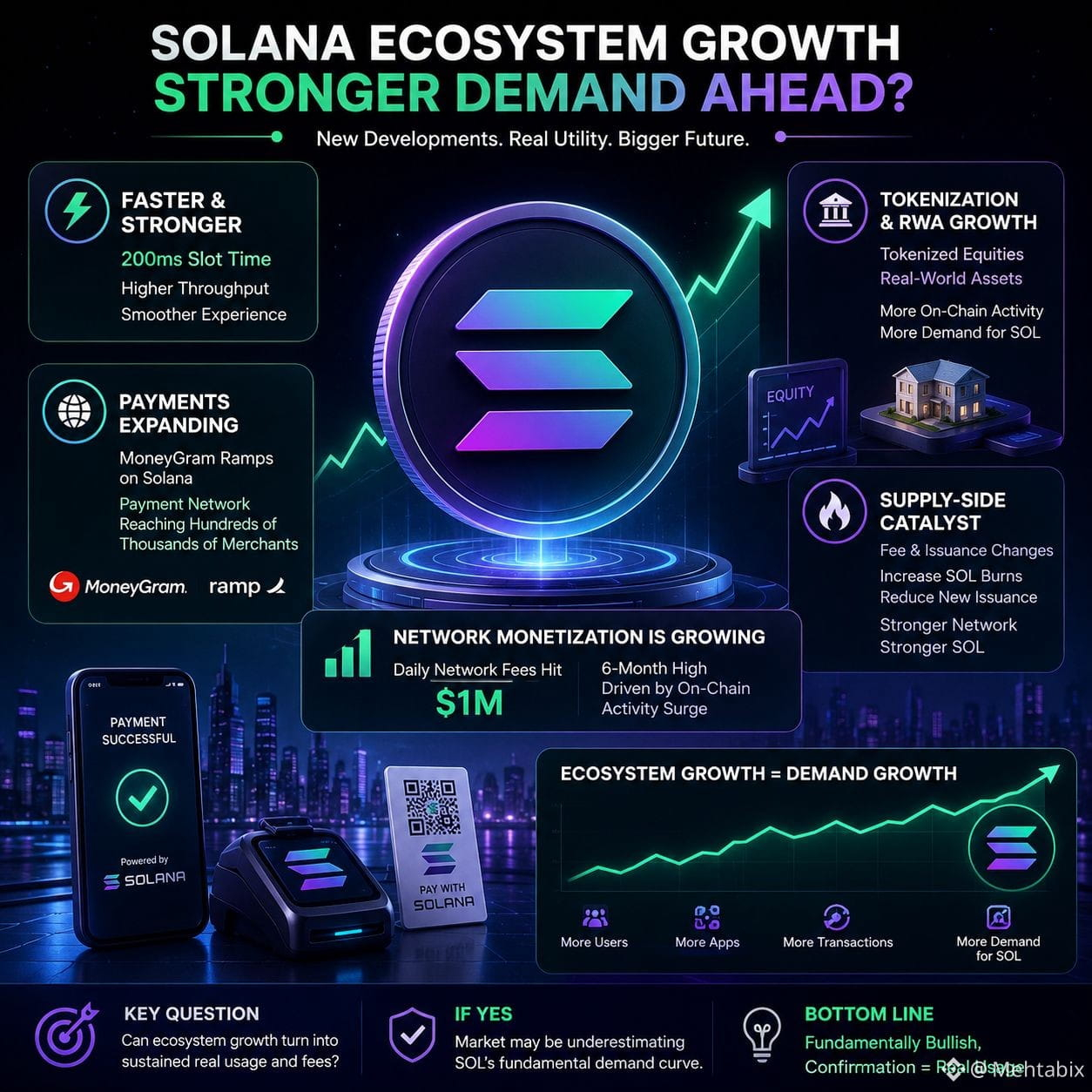
Yes — the latest $SOL ecosystem developments could materially improve SOL’s demand outlook, especially if higher network capacity translates into real usage.
⚡ Faster infrastructure: Solana is moving toward 200ms slot times, while transaction capacity is being expanded. That can make the network more attractive for high-frequency trading, payments and consumer applications.
Solana +1
💳 Payments are expanding: MoneyGram Ramps launched on Solana, while Solana’s ecosystem now includes payment infrastructure reaching hundreds of thousands of merchant locations.
🏦 Tokenization/RWA growth: Tokenized equities and real-world assets are becoming a meaningful part of Solana activity, potentially creating sustained demand for network transactions and liquidity.
Solana +1
🔥 Supply-side catalyst: Proposed fee and issuance changes could increase SOL burns while reducing new issuance, potentially making stronger network activity more significant for the token itself.
📈 Network monetization is already showing strength: Solana's daily network fees recently reached about $1M, a six-month high, amid renewed on-chain activity.
The key question: can ecosystem growth turn into sustained transaction fees, stablecoin/payment volume and $SOL demand? If yes, the market may be underestimating SOL's fundamental demand curve. If usage remains mostly speculative, the impact could be much smaller.
Bottom line: 🟢 **Fundamentally bullish, but confirmation should come from rising real usage rather than announcements alone.**
#KOSPI200NightFuturesFall1.77% #KOSPI200NightFuturesFall1.77% #BitcoinOpenInterestFallsToTwoMonthLow #BitcoinRises23.6%Weekly
⚡ Faster infrastructure: Solana is moving toward 200ms slot times, while transaction capacity is being expanded. That can make the network more attractive for high-frequency trading, payments and consumer applications.
Solana +1
💳 Payments are expanding: MoneyGram Ramps launched on Solana, while Solana’s ecosystem now includes payment infrastructure reaching hundreds of thousands of merchant locations.
🏦 Tokenization/RWA growth: Tokenized equities and real-world assets are becoming a meaningful part of Solana activity, potentially creating sustained demand for network transactions and liquidity.
Solana +1
🔥 Supply-side catalyst: Proposed fee and issuance changes could increase SOL burns while reducing new issuance, potentially making stronger network activity more significant for the token itself.
📈 Network monetization is already showing strength: Solana's daily network fees recently reached about $1M, a six-month high, amid renewed on-chain activity.
The key question: can ecosystem growth turn into sustained transaction fees, stablecoin/payment volume and $SOL demand? If yes, the market may be underestimating SOL's fundamental demand curve. If usage remains mostly speculative, the impact could be much smaller.
Bottom line: 🟢 **Fundamentally bullish, but confirmation should come from rising real usage rather than announcements alone.**
#KOSPI200NightFuturesFall1.77% #KOSPI200NightFuturesFall1.77% #BitcoinOpenInterestFallsToTwoMonthLow #BitcoinRises23.6%Weekly