I spent the week digging into the deeper side of Dusk Argon2, Equihash, PLONK, consensus, all the technical stuff that usually gets the attention.
Then I looked at what actually happened on Dusk earlier this year.
And honestly, the lesson had very little to do with cryptography.
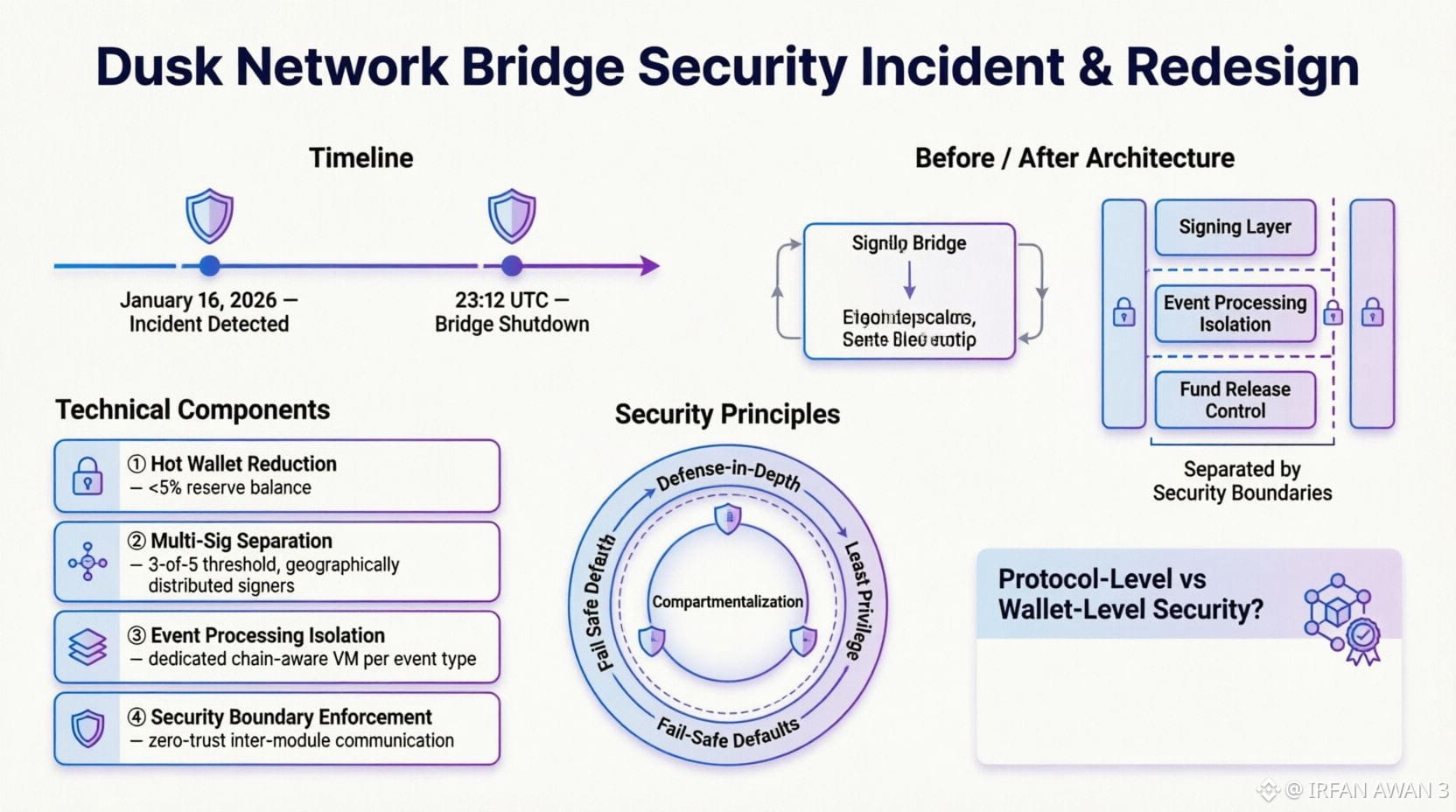
On January 16, 2026, Dusk noticed something was not right with one of its bridge wallets. It turned out someone had gotten access and was moving funds.
Dusk shut down the bridge at 23:12 UTC to contain it.
Some transactions had already gone through, but Dusk said user funds were not affected. DuskDS itself kept running normally.
That part is important.
This wasn't a consensus failure or a problem with the core protocol.
It was a bridge wallet compromise.
What happened after that is what caught my attention.
Dusk didn't just replace the wallet and move on. They redesigned the bridge.
Signing was separated from event handling. Event processing was separated from fund release. Hot-wallet exposure was reduced, and the bridge infrastructure was hardened.
For me, that's the real takeaway.
If one part of a system gets compromised, it shouldn't have enough access to take the rest of the system down with it.
That becomes even more important if Dusk wants to work with regulated financial markets.
A secure base layer isn't enough when a bridge can still become a separate security boundary.
So I'm left with one question:
When real financial assets move onchain, should more of that security be built into the protocol, or should wallets and bridges remain responsible for it?
@Dusk #DUSK $DUSK
Then I looked at what actually happened on Dusk earlier this year.
And honestly, the lesson had very little to do with cryptography.
On January 16, 2026, Dusk noticed something was not right with one of its bridge wallets. It turned out someone had gotten access and was moving funds.
Dusk shut down the bridge at 23:12 UTC to contain it.
Some transactions had already gone through, but Dusk said user funds were not affected. DuskDS itself kept running normally.
That part is important.
This wasn't a consensus failure or a problem with the core protocol.
It was a bridge wallet compromise.
What happened after that is what caught my attention.
Dusk didn't just replace the wallet and move on. They redesigned the bridge.
Signing was separated from event handling. Event processing was separated from fund release. Hot-wallet exposure was reduced, and the bridge infrastructure was hardened.
For me, that's the real takeaway.
If one part of a system gets compromised, it shouldn't have enough access to take the rest of the system down with it.
That becomes even more important if Dusk wants to work with regulated financial markets.
A secure base layer isn't enough when a bridge can still become a separate security boundary.
So I'm left with one question:
When real financial assets move onchain, should more of that security be built into the protocol, or should wallets and bridges remain responsible for it?
@Dusk #DUSK $DUSK