I’ve watched enough crypto cycles to become careful with anything that arrives wrapped in words like “the future of finance.” I’ve seen privacy narratives rise, disappear, and return with a slightly different name. Every cycle brings projects promising to fix the problems that earlier projects failed to solve, and after a while you start paying more attention to what actually works rather than what sounds impressive.
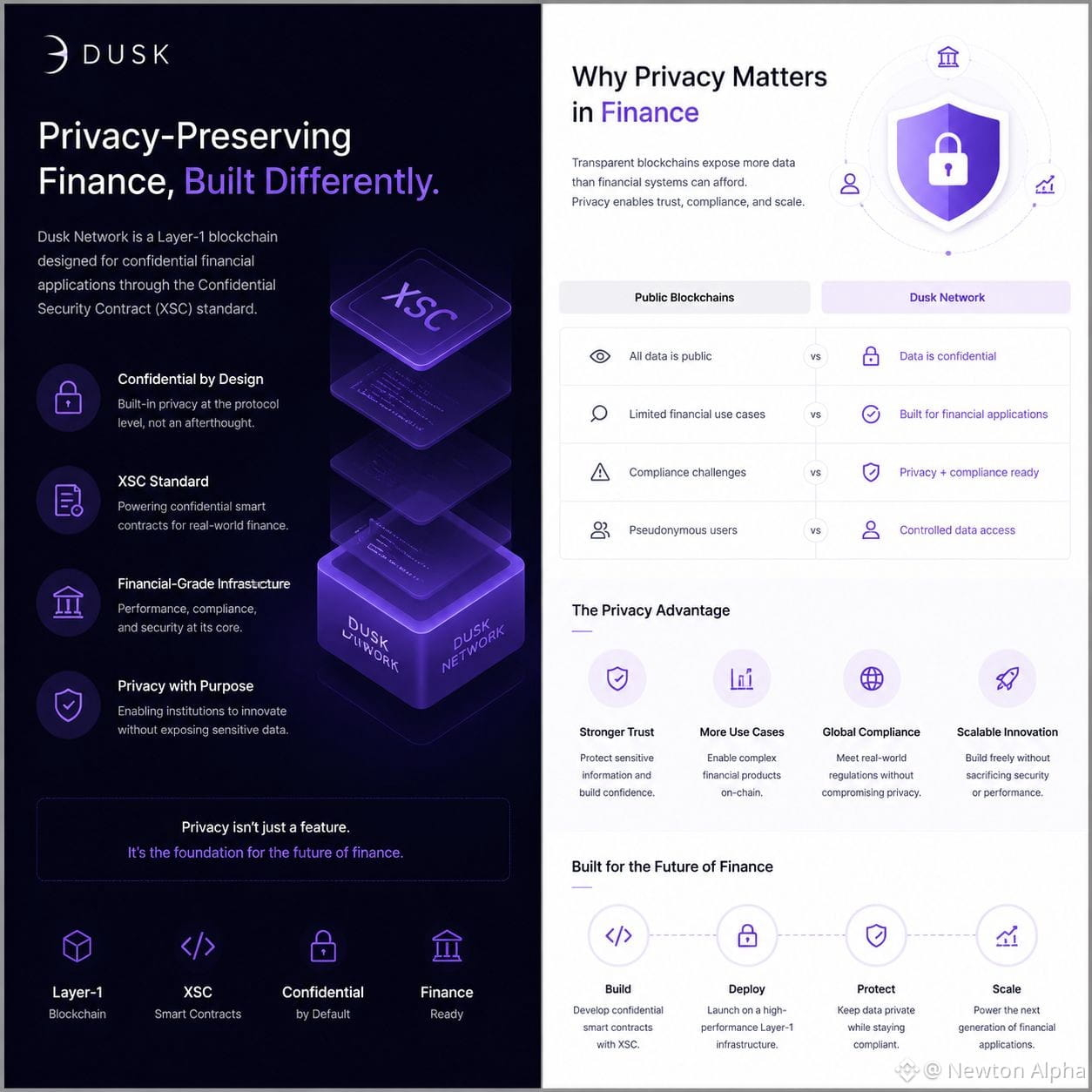
Dusk Network is interesting because it is trying to sit in a difficult place: where blockchain transparency meets the reality that financial systems cannot expose everything publicly. The idea of confidential smart contracts and privacy-focused financial applications makes sense on paper. Real businesses do need privacy, compliance, and security working together. That part is easy to understand.
The harder question is always the same one in crypto: what happens when the technology meets real users, regulations, developers, and everyday friction?
I keep noticing that many strong ideas fail not because the technology is bad, but because adoption requires much more than a clever protocol. People underestimate the complexity of building trust, creating useful applications, and convincing traditional systems to change.
I’m not fully convinced that privacy blockchains will automatically become the foundation of future finance. There are still assumptions to test, trade-offs to understand, and practical challenges that cannot be solved by architecture alone.
But something about projects focused on real financial problems keeps my attention. After years of watching hype come and go, I’ve learned to ignore the loudest promises and watch the quiet builders instead. Dusk is one of those projects I’m watching with curiosity, but also with the same caution that experience brings.
@Dusk #dusk $DUSK
Dusk Network is interesting because it is trying to sit in a difficult place: where blockchain transparency meets the reality that financial systems cannot expose everything publicly. The idea of confidential smart contracts and privacy-focused financial applications makes sense on paper. Real businesses do need privacy, compliance, and security working together. That part is easy to understand.
The harder question is always the same one in crypto: what happens when the technology meets real users, regulations, developers, and everyday friction?
I keep noticing that many strong ideas fail not because the technology is bad, but because adoption requires much more than a clever protocol. People underestimate the complexity of building trust, creating useful applications, and convincing traditional systems to change.
I’m not fully convinced that privacy blockchains will automatically become the foundation of future finance. There are still assumptions to test, trade-offs to understand, and practical challenges that cannot be solved by architecture alone.
But something about projects focused on real financial problems keeps my attention. After years of watching hype come and go, I’ve learned to ignore the loudest promises and watch the quiet builders instead. Dusk is one of those projects I’m watching with curiosity, but also with the same caution that experience brings.
@Dusk #dusk $DUSK