#dusk $DUSK @Dusk
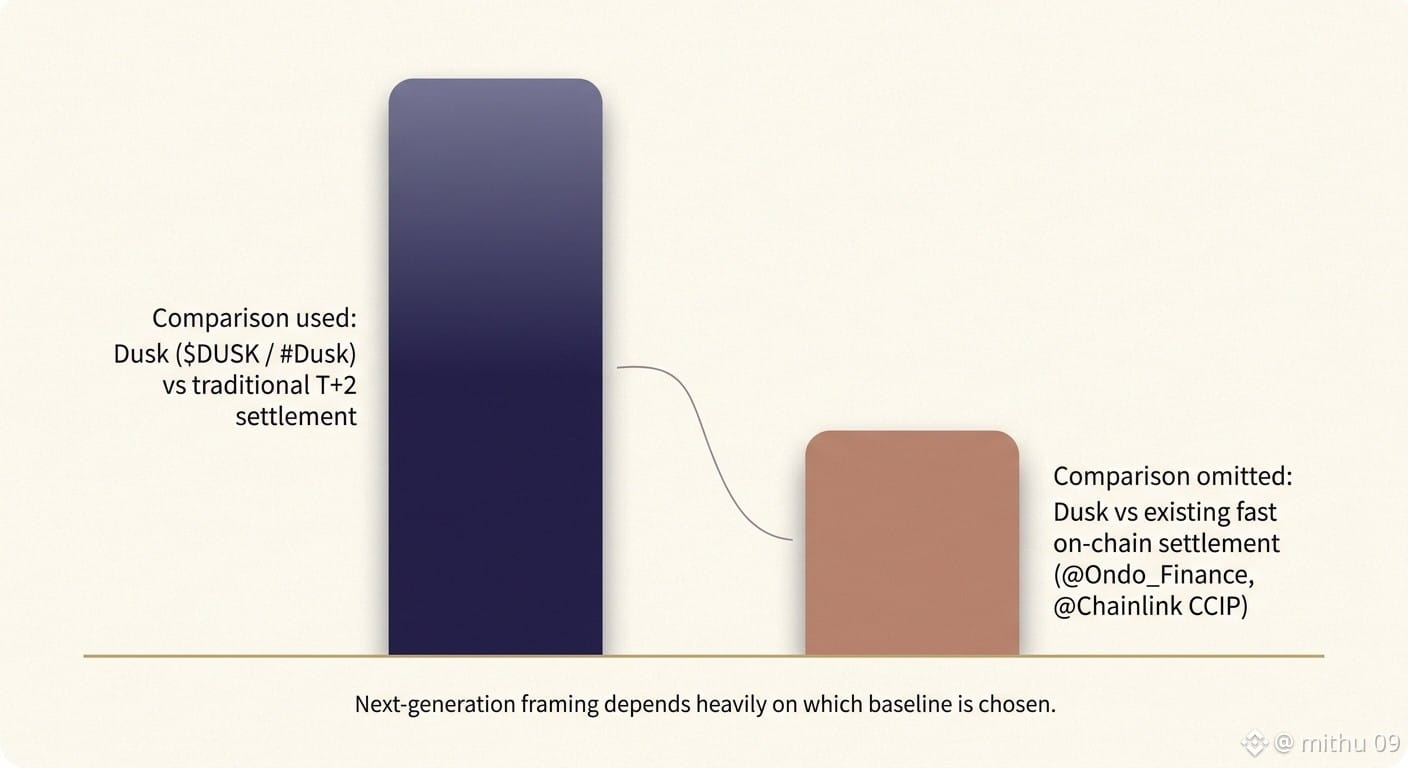
ما لفت الانتباه هو كيف يتم استخدام عبارة "الجيل التالي" لوصف تحسين في الجدول الزمني، لكن عند قراءة محتوى $DUSK ومواد تسوية #Dusk، فإن المقارنة الفعلية التي يتم إجراؤها هي مقابل التسوية التقليدية عند T+2، وليست مقابل أنظمة التسوية على السلسلة الأخرى التي تعمل بالفعل اليوم. إن حسم Dusk أسرع فعلاً من المسارات/الوسائل القديمة، لكن العديد من السلاسل الحالية تُنجز ذلك خلال ثوانٍ بالفعل، لذا فإن صياغة "الجيل التالي" هي في الحقيقة "جيل تالٍ مقارنةً بالبنوك"، وليس "جيلًا تالياً" مقارنة ببنية التحتية للعملات المشفرة التي توجد أصلاً. وبالمقارنة مع طريقة تسويق @Ondo_Finance لمزاياها مقابل أطر زمنية لتسوية الصناديق التقليدية تحديدًا، أو طريقة تموضع @Chainlink لـ CCIP على أنه يحل مشكلة التسوية عبر السلاسل بدلًا من كونه يحل مشكلة سرعة التسوية بحد ذاتها، فإن نقطة المقارنة لدى Dusk تختار بهدوء خط الأساس الأبطأ لجعل التحسين يبدو أكبر مما هو عليه فعليًا ضمن فئته. هذا ليس أمرًا غير صادق، بل هو مجرد اختيار لمعيار المقارنة، وهذا مهم لأن المنافسة الحقيقية ليست التمويل التقليدي، بل كل سلسلة أخرى تقدم تسوية سريعة بالفعل دون طبقة الخصوصية. يظل السؤال بالنسبة لي: هل تكفي ميزة الخصوصية لتبرير وصف ذلك بأنه "الجيل التالي" بدلًا من كونه مجرد اختلاف عن النسخة الحالية؟ ما زال الأمر غير محسوم.
ما لفت الانتباه هو كيف يتم استخدام عبارة "الجيل التالي" لوصف تحسين في الجدول الزمني، لكن عند قراءة محتوى $DUSK ومواد تسوية #Dusk، فإن المقارنة الفعلية التي يتم إجراؤها هي مقابل التسوية التقليدية عند T+2، وليست مقابل أنظمة التسوية على السلسلة الأخرى التي تعمل بالفعل اليوم. إن حسم Dusk أسرع فعلاً من المسارات/الوسائل القديمة، لكن العديد من السلاسل الحالية تُنجز ذلك خلال ثوانٍ بالفعل، لذا فإن صياغة "الجيل التالي" هي في الحقيقة "جيل تالٍ مقارنةً بالبنوك"، وليس "جيلًا تالياً" مقارنة ببنية التحتية للعملات المشفرة التي توجد أصلاً. وبالمقارنة مع طريقة تسويق @Ondo_Finance لمزاياها مقابل أطر زمنية لتسوية الصناديق التقليدية تحديدًا، أو طريقة تموضع @Chainlink لـ CCIP على أنه يحل مشكلة التسوية عبر السلاسل بدلًا من كونه يحل مشكلة سرعة التسوية بحد ذاتها، فإن نقطة المقارنة لدى Dusk تختار بهدوء خط الأساس الأبطأ لجعل التحسين يبدو أكبر مما هو عليه فعليًا ضمن فئته. هذا ليس أمرًا غير صادق، بل هو مجرد اختيار لمعيار المقارنة، وهذا مهم لأن المنافسة الحقيقية ليست التمويل التقليدي، بل كل سلسلة أخرى تقدم تسوية سريعة بالفعل دون طبقة الخصوصية. يظل السؤال بالنسبة لي: هل تكفي ميزة الخصوصية لتبرير وصف ذلك بأنه "الجيل التالي" بدلًا من كونه مجرد اختلاف عن النسخة الحالية؟ ما زال الأمر غير محسوم.