



𝗔𝗟𝗜𝗡𝗧𝗘𝗥𝗡𝗘𝗧 𝗠𝗜𝗚𝗛𝗧 𝗡𝗢𝗧 𝗡𝗘𝗘𝗗 𝗔 𝗕𝗜𝗚𝗚𝗘𝗥 𝗖𝗘𝗡𝗧𝗘𝗥
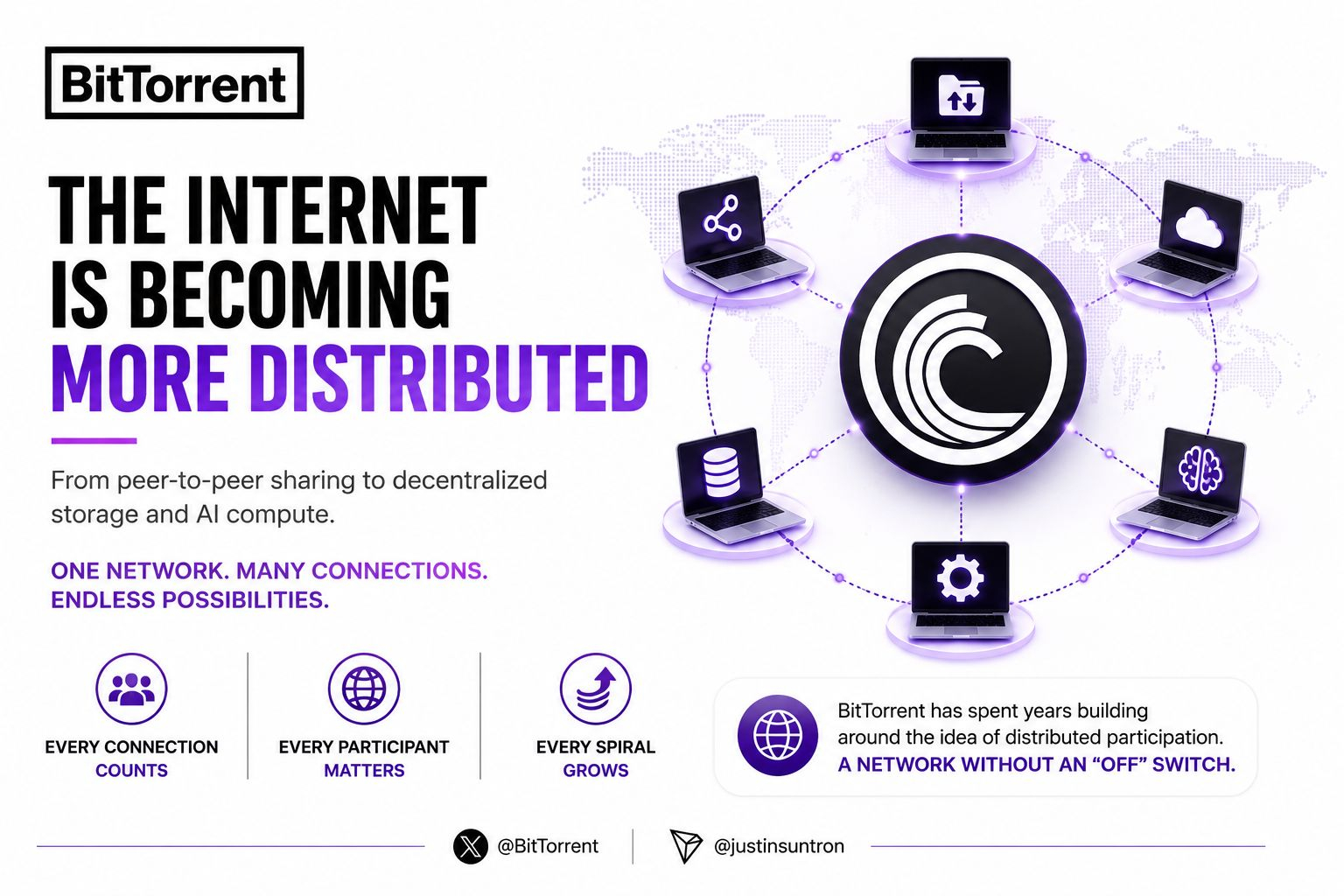
ماذا لو لم تكن مستقبل الإنترنت قائمًا على بناء بنية مركزية أكبر، بل على تنسيق المزيد من الموارد المتاحة بالفعل عبر الشبكة؟
كانت هذه الفكرة في قلب @BitTorrent_Official لأكثر من عقدين من الزمان.
بدلًا من أن يتولى خادم واحد معالجة كل طلب، تتيح بروتوكولات BitTorrent للأقران تبادل أجزاء من الملفات مباشرةً فيما بينهم. يمكن لكل مشارك المساهمة بعرض النطاق والموارد، مما يساعد على توزيع عبء العمل عبر السرب.
مِنْ نَظِيرٍ لِنَظِيرٍ إِلَى بُنْيَةٍ تَحْتِيَّةٍ مَوْزَّعَة
تصبح هذه الفكرة أكثر إثارة للاهتمام عندما يطلب الإنترنت موارد أكثر.
يحتاج الذكاء الاصطناعي إلى كميات هائلة من القدرة الحاسوبية.
تحتاج تطبيقات Web3 إلى تخزين.
تحتاج الخدمات كثيفة البيانات إلى بنية تحتية موثوقة.
وفي جميع أنحاء العالم، توجد بالفعل كمية هائلة من قدرات الحوسبة والتخزين وعرض النطاق الترددي الموزعة عبر أجهزة وشبكات فردية.
التحدي هو تحويل تلك الموارد المتناثرة إلى بنية تحتية مفيدة.
هَذَا هُوَ مَكَانُ تَحْوِيلِ بِت تورنتِ إلى نُظُمٍ تَتَغَايَرُ تَحْصُلُ ؟
يُطَوِّر BTFS النهجَ الموزع إلى تخزين لامركزي، ويوفر نظامًا من نظير إلى نظير لتخزين المحتوى الرقمي ومشاركته.
تأخذ BTTInferGrid فكرة مماثلة للبنية التحتية الموزعة في الحوسبة الخاصة بالذكاء الاصطناعي، عبر ربط موارد GPU مستقلة بأحمال عمل استدلال الذكاء الاصطناعي، واستخدام المدققين والآليات الاقتصادية التشفيرية للمساعدة في التحقق من الحوسبة. ([BTT Infergrid][2])
لذلك تبدو الصورة الأوسع مثل هذا:
➟ BitTorrent → نقل بيانات موزع
➟ BTFS → تخزين موزع
➟ BTTInferGrid → حوسبة ذكاء اصطناعي موزعة
تقنيات مختلفة، لكن مبدأ ذو صلة:
تَوْزِيعِ المَوارِد.
تَوْزِيعُ العَمَل.
نَوَسِّعِ الشَّبَكَة.
لا يعني ذلك اختفاء البنية التحتية المركزية.
وهذا يعني أن الشبكات اللامركزية يمكنها توفير طريقة أخرى لتنسيق الموارد وتقليل الاعتماد على مزود بنية تحتية واحد.
كانت ابتكارَ بيت تورنت الأصلي هو إظهار أن شبكةً عالمية يمكنها توزيع المعلومات عبر جعل المشاركين جزءًا من نظام التسليم.
واليوم، يتم استكشاف الفلسفة الأوسع نفسها عبر التخزين والحوسبة وغيرها من الخدمات اللامركزية.
يستمر الإنترنت في التطور.
لكن تبقى فكرة واحدة قوية بشكلٍ مدهش:
شَبَكَةٌ يُمْكِنُهَا أَنْ تَصْبَحَ قَوِيَّةً عِنْدَمَا يُمْكِنُ لَها استخدامُ المَوارِدِ التي يَسْهُمُ بها المُشارِكون.