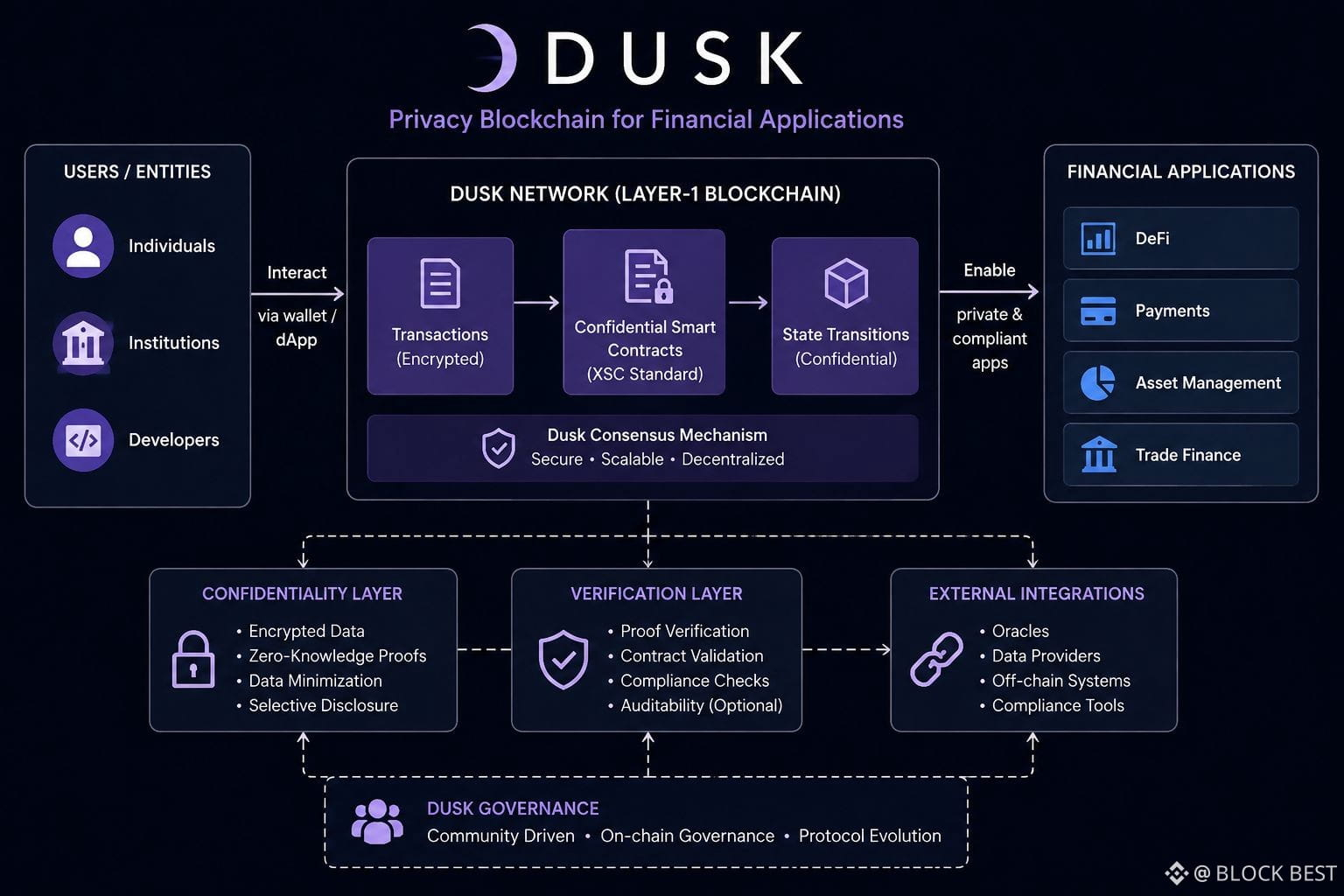
I keep coming back to the idea that privacy on Dusk isn’t really about hiding data. It’s about changing what financial applications are allowed to assume about the people using them. That feels like a smaller distinction than it actually is.
Most blockchains treat transparency as the default and privacy as something added around the edges. Dusk seems to be making confidentiality part of the execution environment itself. The interesting question, then, isn’t whether private transactions are possible. It’s what kinds of financial rules become practical once exposure is no longer the price of using them.
That also makes the security assumptions more interesting to me. If confidential contracts become normal, users have to trust not only the chain, but the boundaries around what remains hidden and what still needs to be verifiable. I’m not sure that tension ever disappears.
Maybe that’s the part worth watching: not whether Dusk can make financial activity private, but whether it can make privacy feel ordinary enough that people stop treating it as a special feature.
@Dusk #dusk $DUSK
Most blockchains treat transparency as the default and privacy as something added around the edges. Dusk seems to be making confidentiality part of the execution environment itself. The interesting question, then, isn’t whether private transactions are possible. It’s what kinds of financial rules become practical once exposure is no longer the price of using them.
That also makes the security assumptions more interesting to me. If confidential contracts become normal, users have to trust not only the chain, but the boundaries around what remains hidden and what still needs to be verifiable. I’m not sure that tension ever disappears.
Maybe that’s the part worth watching: not whether Dusk can make financial activity private, but whether it can make privacy feel ordinary enough that people stop treating it as a special feature.
@Dusk #dusk $DUSK