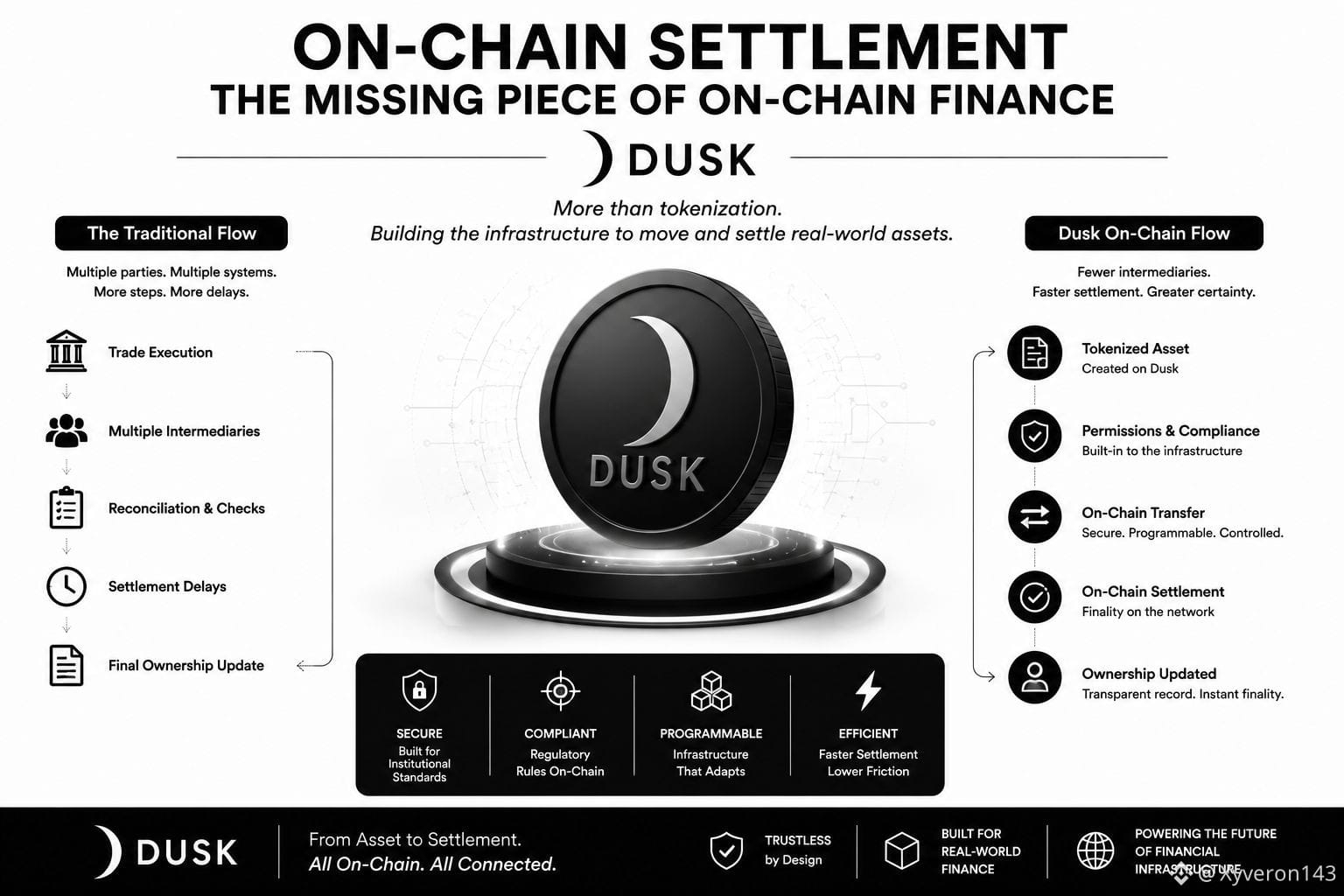
#dusk $DUSK @Dusk spent some more time researching @dusk today, and this time I was looking at something that is easy to overlook when people talk about blockchain finance: settlement.
Putting an asset on-chain is one thing, but making sure the final transfer happens correctly, securely and without unnecessary delays is a much bigger part of the process. In traditional finance, settlement can involve multiple parties, systems and checks before ownership is finally updated.
Dusk is designed to bring more of this process directly into blockchain infrastructure, with on-chain settlement as part of its financial architecture. What I find interesting is that this can make the blockchain more than just a place where assets are represented.
For regulated markets, settlement needs to work together with permissions, compliance rules and ownership controls. If these things are built into the infrastructure, financial applications may not need to depend on completely separate systems for every step.
I think the real value of tokenization is not simply creating a digital version of an asset. The bigger opportunity is connecting the entire process around that asset in a way that is programmable and easier to manage.
The more I explore Dusk, the more I see its focus on building financial infrastructure, rather than just another place for transactions. That settlement layer is another part of the bigger picture that makes @dusk interesting to me.
$ZEC $ENA
Putting an asset on-chain is one thing, but making sure the final transfer happens correctly, securely and without unnecessary delays is a much bigger part of the process. In traditional finance, settlement can involve multiple parties, systems and checks before ownership is finally updated.
Dusk is designed to bring more of this process directly into blockchain infrastructure, with on-chain settlement as part of its financial architecture. What I find interesting is that this can make the blockchain more than just a place where assets are represented.
For regulated markets, settlement needs to work together with permissions, compliance rules and ownership controls. If these things are built into the infrastructure, financial applications may not need to depend on completely separate systems for every step.
I think the real value of tokenization is not simply creating a digital version of an asset. The bigger opportunity is connecting the entire process around that asset in a way that is programmable and easier to manage.
The more I explore Dusk, the more I see its focus on building financial infrastructure, rather than just another place for transactions. That settlement layer is another part of the bigger picture that makes @dusk interesting to me.
$ZEC $ENA