#dusk $DUSK @Dusk
DeFi borrowing usually comes with a small headache:
You borrow → the market moves → the rate changes → you check again.
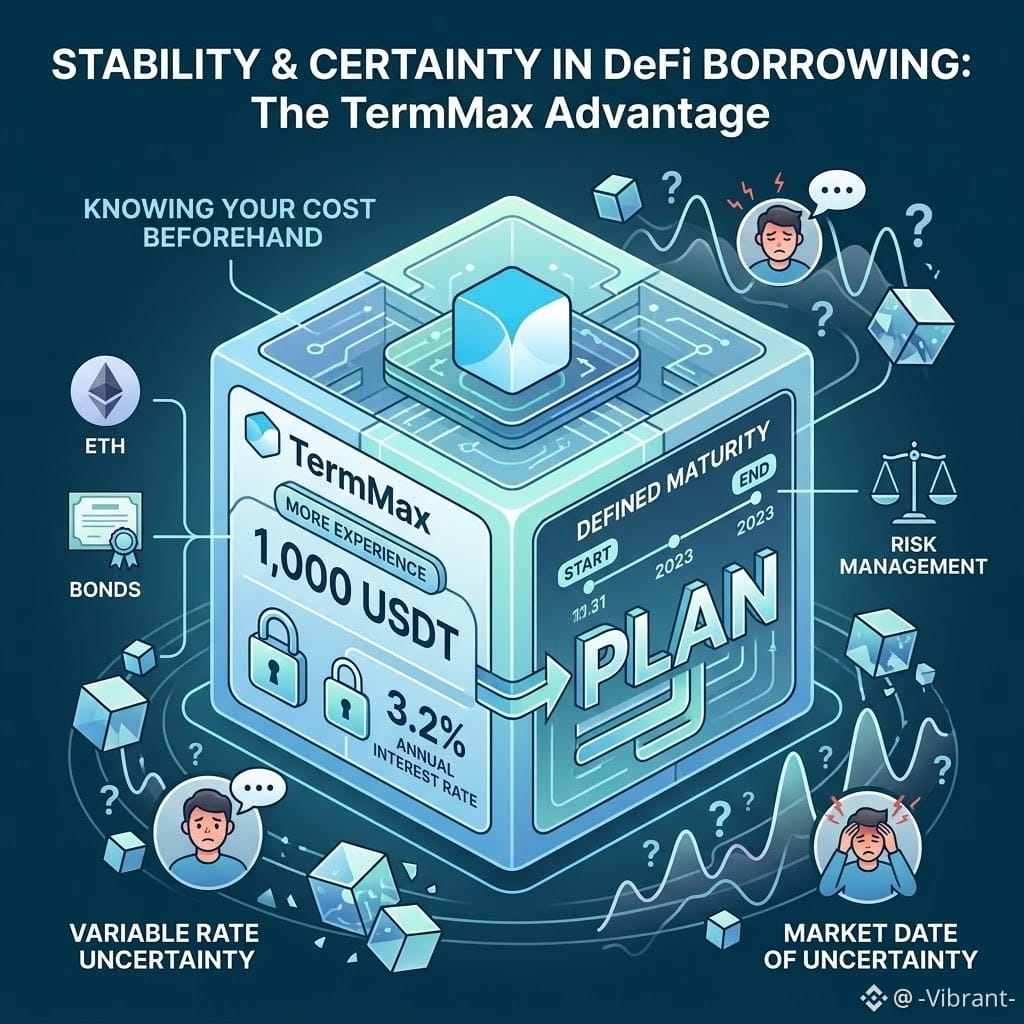
I was used to that cycle. Whenever I needed liquidity, I’d rather keep my ETH and bonds than sell them, so borrowing against them made more sense.
But the problem with variable rates is that the cost of borrowing can change while the position is still open.
That’s why my recent experience with TermMax caught my attention.
I borrowed 1,000 USDT against my assets with a fixed 3.2% annual rate and a defined maturity.
The interesting part wasn’t just borrowing without selling my holdings.
It was knowing the financing cost beforehand.
I could calculate the position before entering it, understand what I’d owe at maturity, and plan my capital without wondering whether tomorrow’s market conditions would make the loan more expensive.
That matters more during volatile periods.
Of course, fixed rates don’t remove liquidation risk. If the collateral moves against you, you still have to manage the position properly.
But it made me rethink what I actually want from DeFi lending.
Sometimes the best rate isn’t necessarily the most useful one.
Sometimes certainty about the cost of capital is the bigger advantage.
DeFi borrowing usually comes with a small headache:
You borrow → the market moves → the rate changes → you check again.
I was used to that cycle. Whenever I needed liquidity, I’d rather keep my ETH and bonds than sell them, so borrowing against them made more sense.
But the problem with variable rates is that the cost of borrowing can change while the position is still open.
That’s why my recent experience with TermMax caught my attention.
I borrowed 1,000 USDT against my assets with a fixed 3.2% annual rate and a defined maturity.
The interesting part wasn’t just borrowing without selling my holdings.
It was knowing the financing cost beforehand.
I could calculate the position before entering it, understand what I’d owe at maturity, and plan my capital without wondering whether tomorrow’s market conditions would make the loan more expensive.
That matters more during volatile periods.
Of course, fixed rates don’t remove liquidation risk. If the collateral moves against you, you still have to manage the position properly.
But it made me rethink what I actually want from DeFi lending.
Sometimes the best rate isn’t necessarily the most useful one.
Sometimes certainty about the cost of capital is the bigger advantage.