
@Dusk
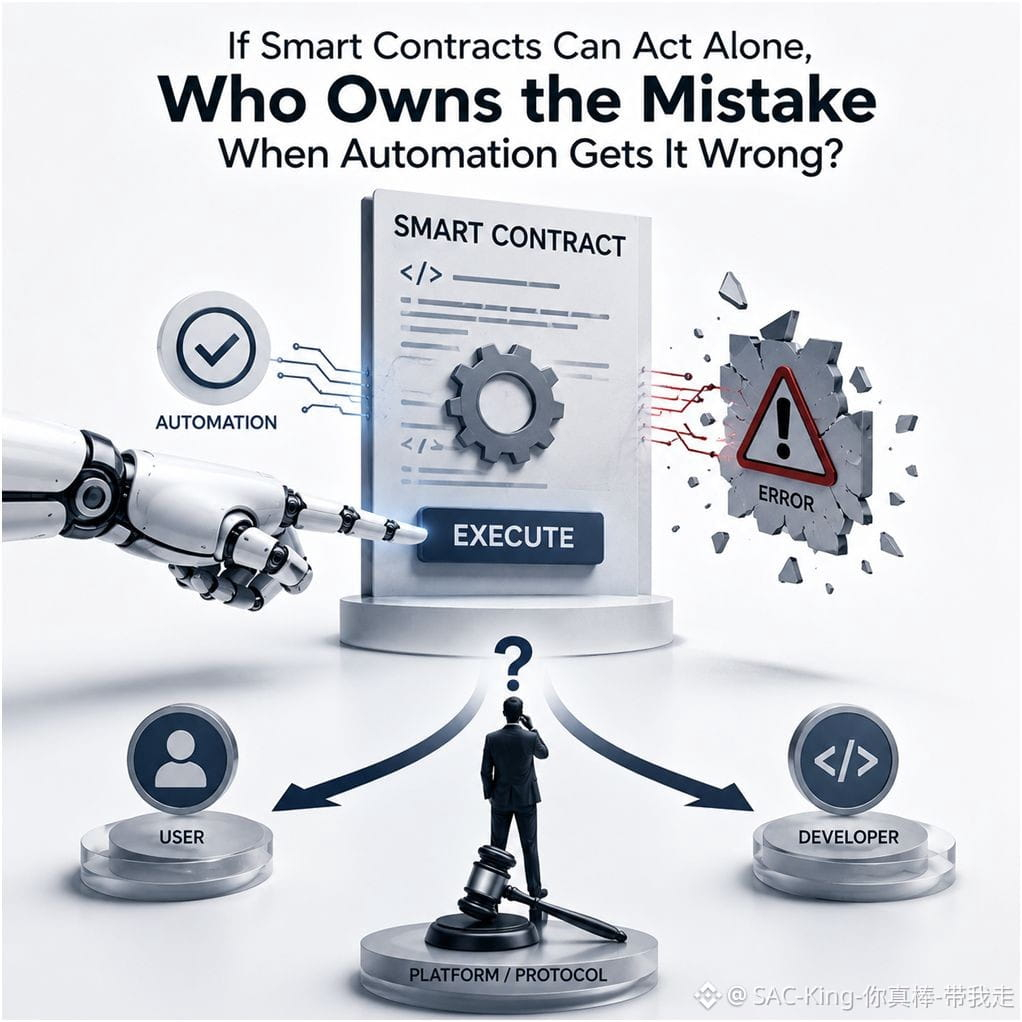
The more I study smart contracts, the less I think the hard question is whether they can execute without anyone pressing a button.
The hard question is what happens when the code works exactly as designed, but the design was wrong.
DUSK supports smart contract execution via DuskVM, where contracts process inputs according to their programmed logic.
This creates a subtle shift in responsibility.
With manual transactions, a person can stop, reconsider, or refuse to proceed. With automation, the decision can already be encoded in the system. If the conditions are met, execution occurs.
And that means testing is not just a developer’s concern. It becomes part of the trust model.
This is even more important for DUSK because its architecture is designed for streamlined financial workflows, where access, transfer, disclosure, and settlement can interact with executable processes.
A failed contract call can be recorded as an execution error, but recording the failure is not the same as deciding who should suffer the consequences.
So I think the real challenge of automation is not removing humans from the transaction.
It’s deciding where human responsibility belongs before the code gets the final say.
When automated finance executes a flawed decision perfectly correctly, who ultimately owns the error?
#dusk $DUSK #Dusk #GrowWithSAC
The more I study smart contracts, the less I think the hard question is whether they can execute without anyone pressing a button.
The hard question is what happens when the code works exactly as designed, but the design was wrong.
DUSK supports smart contract execution via DuskVM, where contracts process inputs according to their programmed logic.
This creates a subtle shift in responsibility.
With manual transactions, a person can stop, reconsider, or refuse to proceed. With automation, the decision can already be encoded in the system. If the conditions are met, execution occurs.
And that means testing is not just a developer’s concern. It becomes part of the trust model.
This is even more important for DUSK because its architecture is designed for streamlined financial workflows, where access, transfer, disclosure, and settlement can interact with executable processes.
A failed contract call can be recorded as an execution error, but recording the failure is not the same as deciding who should suffer the consequences.
So I think the real challenge of automation is not removing humans from the transaction.
It’s deciding where human responsibility belongs before the code gets the final say.
When automated finance executes a flawed decision perfectly correctly, who ultimately owns the error?
#dusk $DUSK #Dusk #GrowWithSAC
Code owns the error
Users own the error
Shared responsibility
17 ساعة (ساعات) مُتبقية