Alibaba’s AI Bet Just Got More Expensive 💸
$BABAB
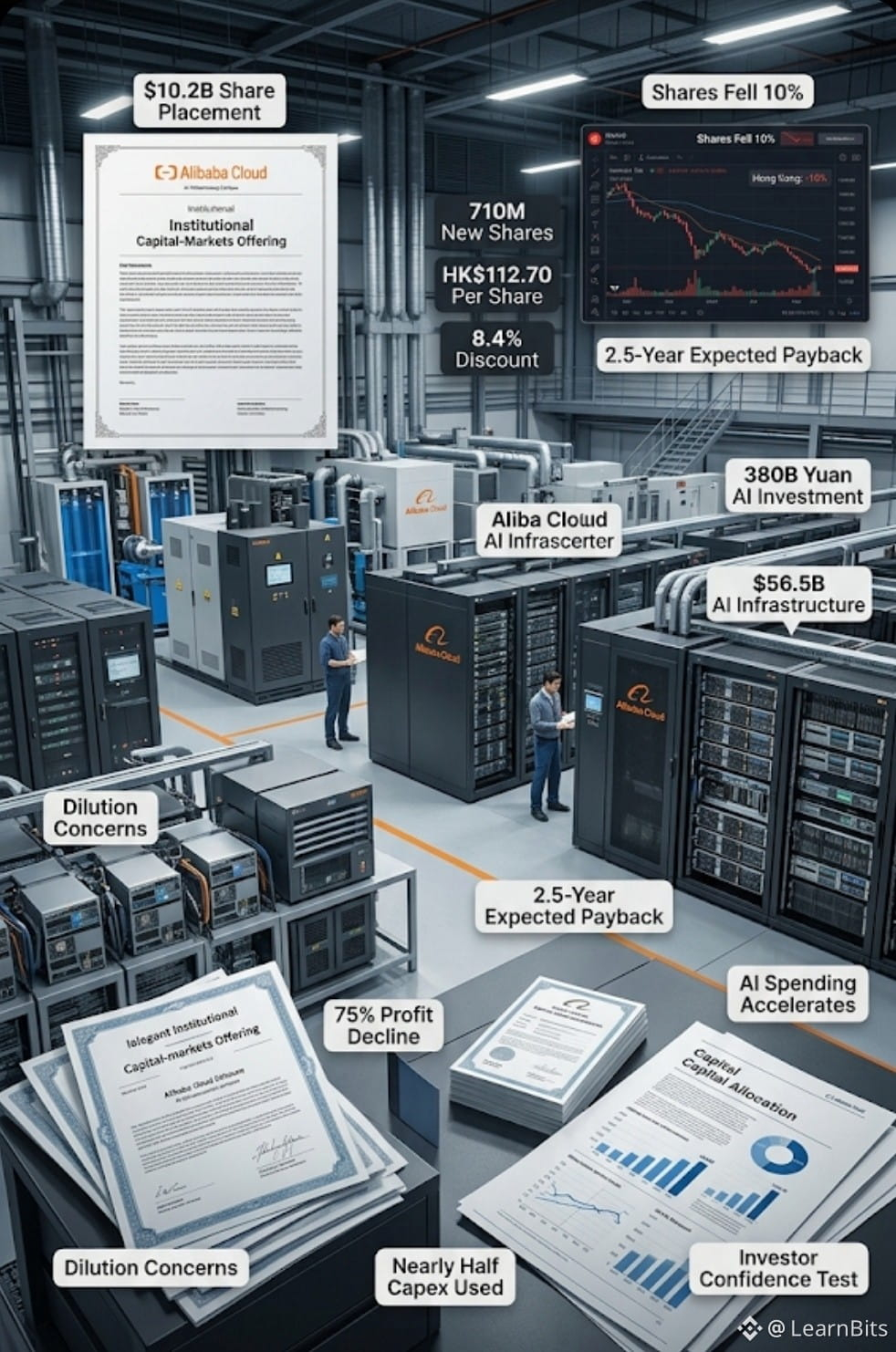
Alibaba shares plunged as much as 10% in Hong Kong after the company completed a $10.2 billion share placement to fund its artificial-intelligence expansion. The deal is the largest-ever primary follow-on offering by a Hong Kong-listed company, making it a major test of investor confidence in Alibaba’s aggressive AI strategy.
Alibaba issued 710 million new shares at HK$112.70 each, an 8.4% discount to the previous closing price. That discount, combined with the new shares, immediately raised concerns about dilution and helped drive the sharp market reaction.
The bigger issue is spending. Alibaba has already used nearly half of its planned three-year capital expenditure budget, while its latest quarterly net profit fell 75% year over year as AI-related investment accelerated.
Management is betting that the spending will pay off faster as demand for AI infrastructure grows. The company has committed 380 billion yuan, roughly $56.5 billion, to AI infrastructure over three years and says expected payback has shortened to about two and a half years.
For investors, this is a fascinating trade-off: Alibaba is spending aggressively to secure a bigger role in the AI race, but shareholders are being asked to absorb the near-term cost. Now the market wants proof that those billions can turn into sustainable AI growth. 🚀$BABA
$BABA.US
$BABAB
Alibaba shares plunged as much as 10% in Hong Kong after the company completed a $10.2 billion share placement to fund its artificial-intelligence expansion. The deal is the largest-ever primary follow-on offering by a Hong Kong-listed company, making it a major test of investor confidence in Alibaba’s aggressive AI strategy.
Alibaba issued 710 million new shares at HK$112.70 each, an 8.4% discount to the previous closing price. That discount, combined with the new shares, immediately raised concerns about dilution and helped drive the sharp market reaction.
The bigger issue is spending. Alibaba has already used nearly half of its planned three-year capital expenditure budget, while its latest quarterly net profit fell 75% year over year as AI-related investment accelerated.
Management is betting that the spending will pay off faster as demand for AI infrastructure grows. The company has committed 380 billion yuan, roughly $56.5 billion, to AI infrastructure over three years and says expected payback has shortened to about two and a half years.
For investors, this is a fascinating trade-off: Alibaba is spending aggressively to secure a bigger role in the AI race, but shareholders are being asked to absorb the near-term cost. Now the market wants proof that those billions can turn into sustainable AI growth. 🚀$BABA
$BABA.US