
The more I look at tokenization, the more I think “onchain” can mean two very different things.
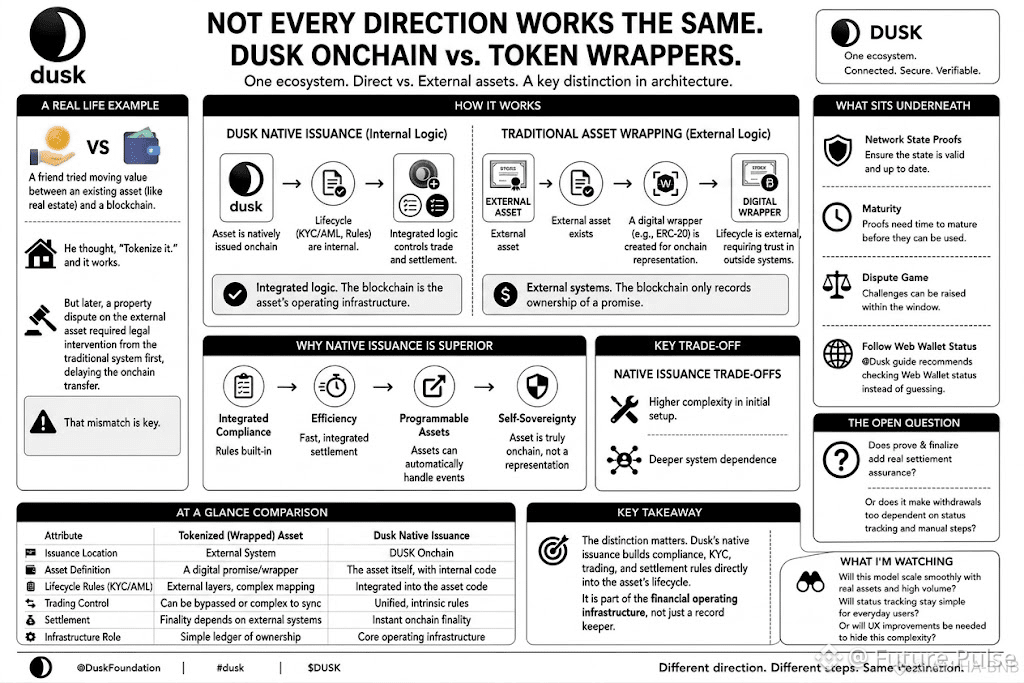
One approach takes an existing financial asset and creates a digital wrapper around it. The representation moves onchain, but the underlying lifecycle can still depend on traditional systems.
@Dusk takes a different route with native issuance.
The asset is created onchain from the beginning, allowing compliance, KYC/AML, trading rules, and settlement logic to become part of its lifecycle rather than external layers around it.
That distinction matters.
If issuance, secondary trading, and settlement all happen within the same environment, the blockchain isn’t just recording ownership.
It is becoming part of the financial asset’s operating infrastructure.
For me, that’s the more interesting meaning of tokenization.
$AAVE
$PROM
$DUSK
#dusk @Dusk
One approach takes an existing financial asset and creates a digital wrapper around it. The representation moves onchain, but the underlying lifecycle can still depend on traditional systems.
@Dusk takes a different route with native issuance.
The asset is created onchain from the beginning, allowing compliance, KYC/AML, trading rules, and settlement logic to become part of its lifecycle rather than external layers around it.
That distinction matters.
If issuance, secondary trading, and settlement all happen within the same environment, the blockchain isn’t just recording ownership.
It is becoming part of the financial asset’s operating infrastructure.
For me, that’s the more interesting meaning of tokenization.
$AAVE
$PROM
$DUSK
#dusk @Dusk