
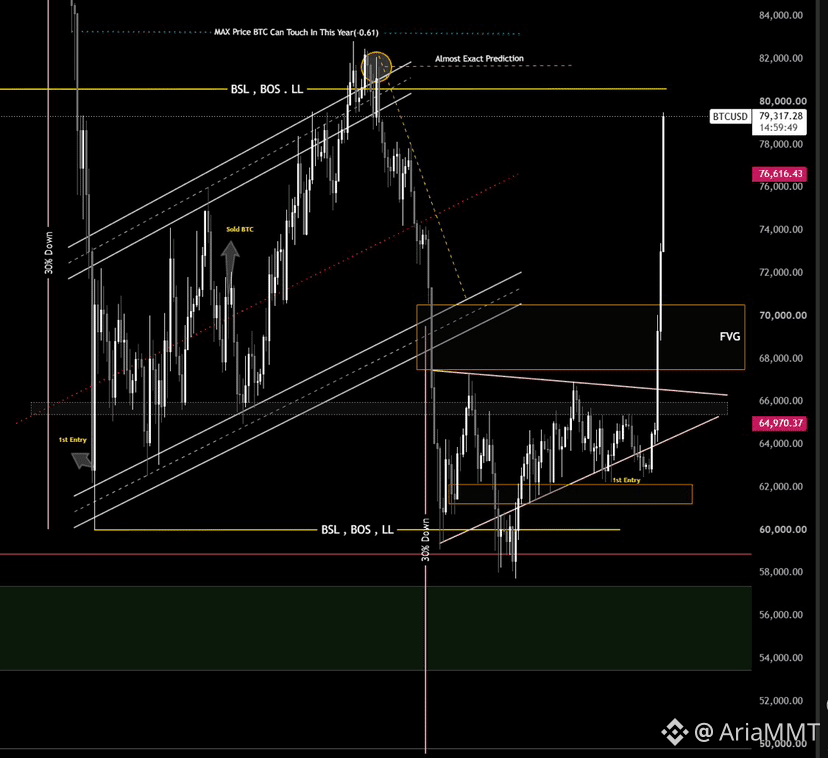
Bitcoin just delivered a stunning 27% surge in 72 hours, breaking past $79,000 and sending sentiment indicators into extreme greed. While retail channels celebrate the sudden shift in market structure, a closer look at the order book suggests a more complex reality. Vertical price action without structural consolidation often builds fragile support, making current levels high-risk for new capital allocations.
The Mechanics of Low-Liquidity Explosions
One-sided pumps rarely represent organic spot-driven demand. Instead, rapid upward moves are frequently fueled by cascading liquidations in the derivatives market.
Short Squeezes: Over-leveraged short positions get forcibly closed, creating automated market-buy orders that accelerate price discovery upward.
Thin Order Books: Low liquidity on bid/ask walls magnifies price volatility, allowing relatively small capital inflows to push prices past key psychological resistances like $75,000 and $78,000.
Funding Rates: When perpetual swap funding rates skew heavily positive, long positions pay a high premium to hold trades, creating a setup vulnerable to sharp, sudden long liquidations.
Why Proper Retracements Matter
Healthy, sustainable bull cycles rely on liquidity resets—often referred to as retests. A standard technical retracement typically pulls back 50% to 60% of an impulse move (aligning with the 0.5–0.618 Fibonacci level). This process serves two main purposes: it converts former resistance into confirmed support and sweeps late-entering leverage from the market.
Buying directly into a vertical move exposes capital to severe drawdown risks if market makers trigger a liquidity sweep.
 #AnthropicIPOCouldTopSpaceXRecordReportsSay #NvidiaAIServerPricesRiseOver15% #USCanadaTradeTalksCollapseCanadaVowsRetaliation #GrayscaleFilesFifthZECETFAmendment #SP500EndsWeeklyWinStreak