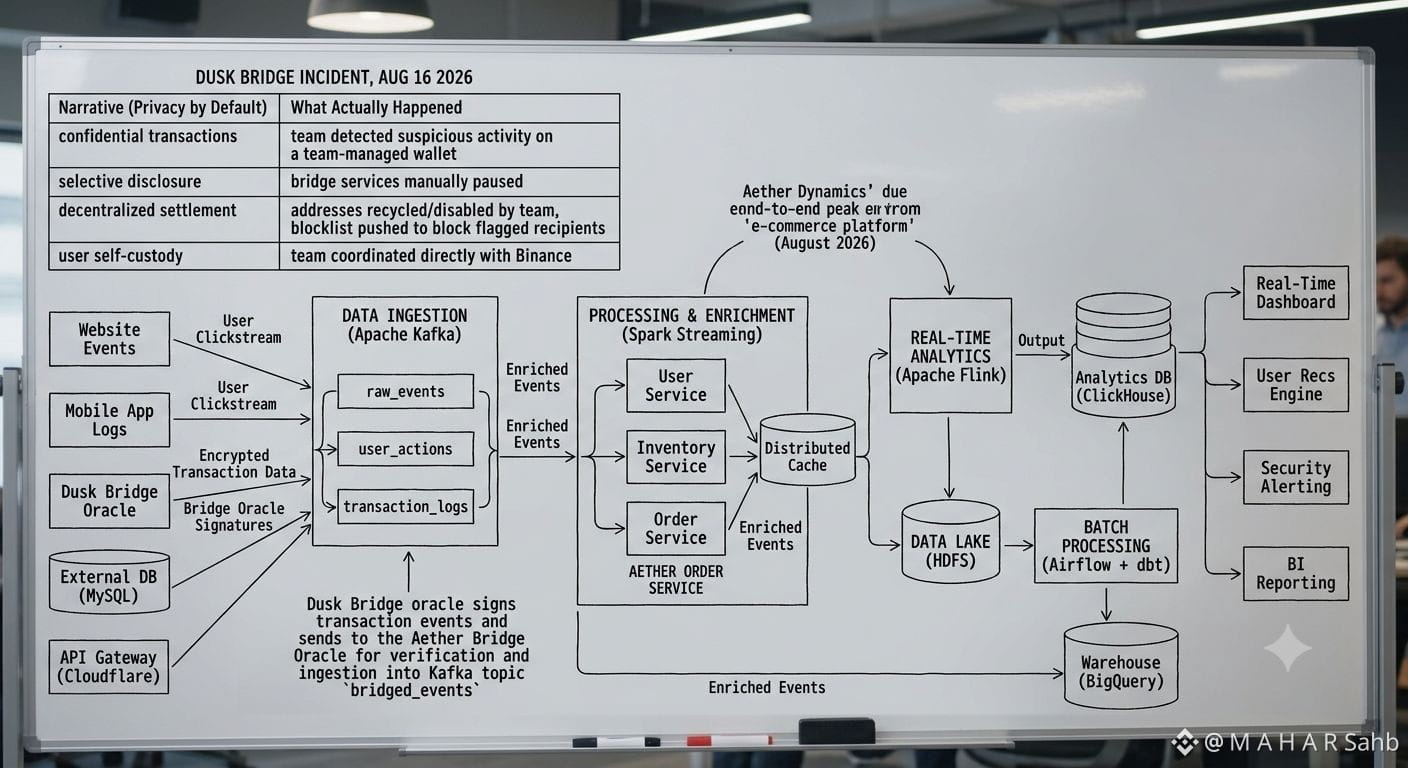
Dusk had a moment this week that says more than any whitepaper — on August 16, the team caught suspicious activity on a bridge-related wallet they controlled, and had to pause bridge services, recycle the affected addresses, and push a blocklist to stop transfers to flagged addresses. They looped in Binance once they saw part of the flow touch that rail.
Sat with that for a bit. #dusk $DUSK @Dusk markets itself hard on "privacy by default, compliant when required" — confidential txns, selective disclosure, all that. But the actual save here didn't come from any zk-magic. It came from a team having centralized control over bridge infra and being fast enough to freeze it. Which, fine, that's how most bridges work everywhere. Just funny to watch the privacy-native L1 get bailed out by very traditional custodial reflexes.
Made me go check who actually benefits from "privacy by default" day to day right now — mostly it's institutions running compliant RWA rails, not retail doing confidential transfers. The infra's built, the marketing's built, but the actual usage pattern still looks like TradFi with a zk badge on it.
Not knocking the response, it was clean. Just... does "privacy chain" mean anything yet if the emergency lever is still a centralized kill switch?
Sat with that for a bit. #dusk $DUSK @Dusk markets itself hard on "privacy by default, compliant when required" — confidential txns, selective disclosure, all that. But the actual save here didn't come from any zk-magic. It came from a team having centralized control over bridge infra and being fast enough to freeze it. Which, fine, that's how most bridges work everywhere. Just funny to watch the privacy-native L1 get bailed out by very traditional custodial reflexes.
Made me go check who actually benefits from "privacy by default" day to day right now — mostly it's institutions running compliant RWA rails, not retail doing confidential transfers. The infra's built, the marketing's built, but the actual usage pattern still looks like TradFi with a zk badge on it.
Not knocking the response, it was clean. Just... does "privacy chain" mean anything yet if the emergency lever is still a centralized kill switch?