I finally stopped and asked myself what “eligibility” actually means in a regulated market, because it’s easy to mix it up with KYC.#dusk
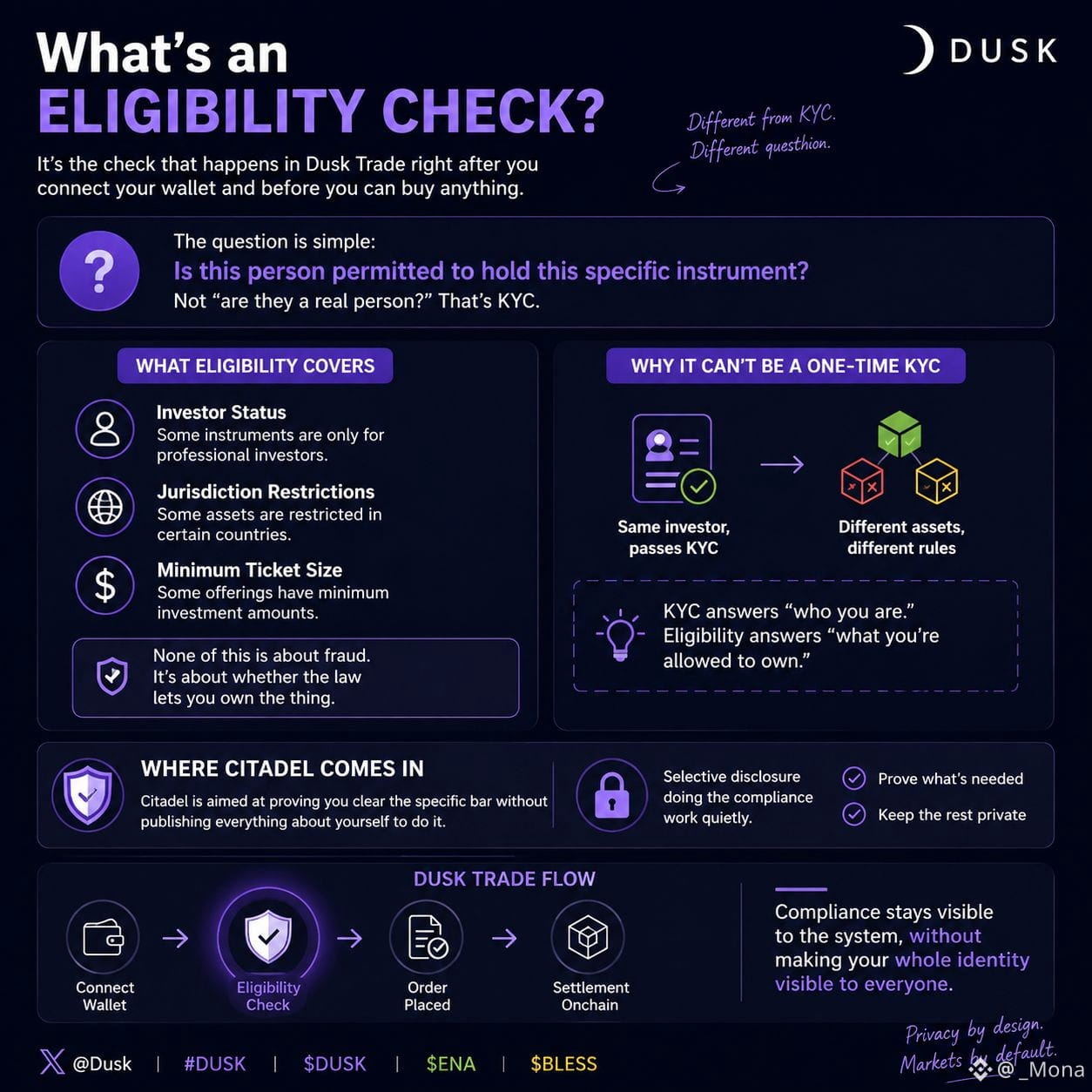
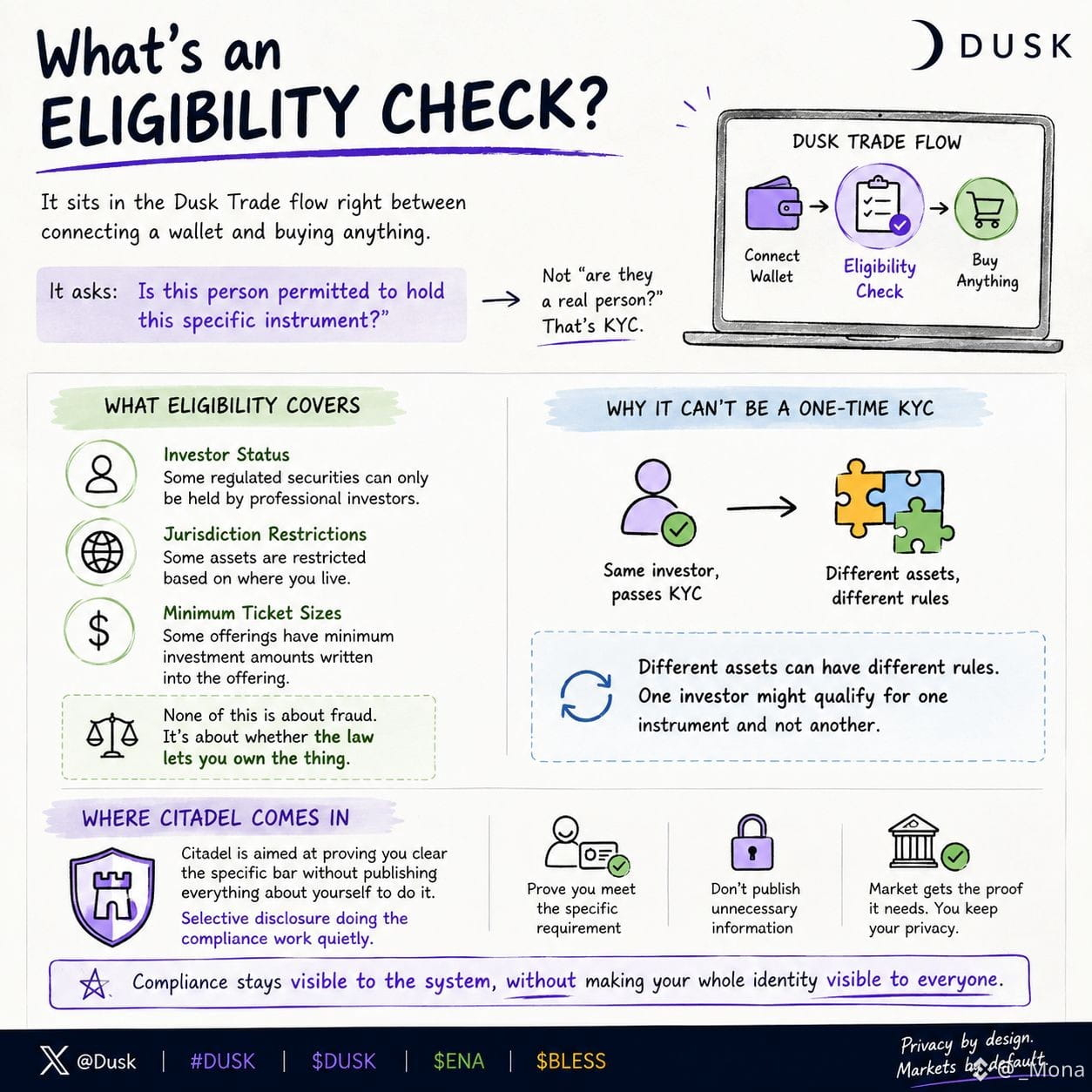
They’re not the same thing. KYC is basically asking, “Who is this person?” Eligibility asks something different: “Is this person allowed to hold this particular asset?” That can depend on whether they’re a profesional investor, where they live, or even minimum investment rules attached to an offering.
It’s not necessarily about someone being suspicious. It’s simply about whether the rules allow them to own that specific instrument. That’s why one KYC check shouldn’t really act like a permanent pass for everything.
The same investor could qualify for one asset and not qualify for another. This is where Citadel caught my attention.
The idea is to prove the credentials needed for a specific requirement without exposing your entire identity and personal information just to prove you qualify.
That’s where selective disclosure becomes intresting. The market gets the confirmation it needs, while the investor keeps information that doesn’t need to be shared private.
For regulated markets, that feels like a much more practical way to think about privacy. Compliance doesn’t have to mean putting everything in the open.
@Dusk #dusk $DUSK
They’re not the same thing. KYC is basically asking, “Who is this person?” Eligibility asks something different: “Is this person allowed to hold this particular asset?” That can depend on whether they’re a profesional investor, where they live, or even minimum investment rules attached to an offering.
It’s not necessarily about someone being suspicious. It’s simply about whether the rules allow them to own that specific instrument. That’s why one KYC check shouldn’t really act like a permanent pass for everything.
The same investor could qualify for one asset and not qualify for another. This is where Citadel caught my attention.
The idea is to prove the credentials needed for a specific requirement without exposing your entire identity and personal information just to prove you qualify.
That’s where selective disclosure becomes intresting. The market gets the confirmation it needs, while the investor keeps information that doesn’t need to be shared private.
For regulated markets, that feels like a much more practical way to think about privacy. Compliance doesn’t have to mean putting everything in the open.
@Dusk #dusk $DUSK