

Crypto has a habit of saving its worst moves for the hours when people are least prepared to deal with them.
That was the vibe on Saturday, when Ethereum and XRP dropped hard in a short burst, right as weekend liquidity was already thin.
Around 3 PM GMT on Saturday, XRP was down about 7.98%, ETH was down about 5.66%, and Bitcoin was comparatively steady with a smaller drawdown of around 3%.
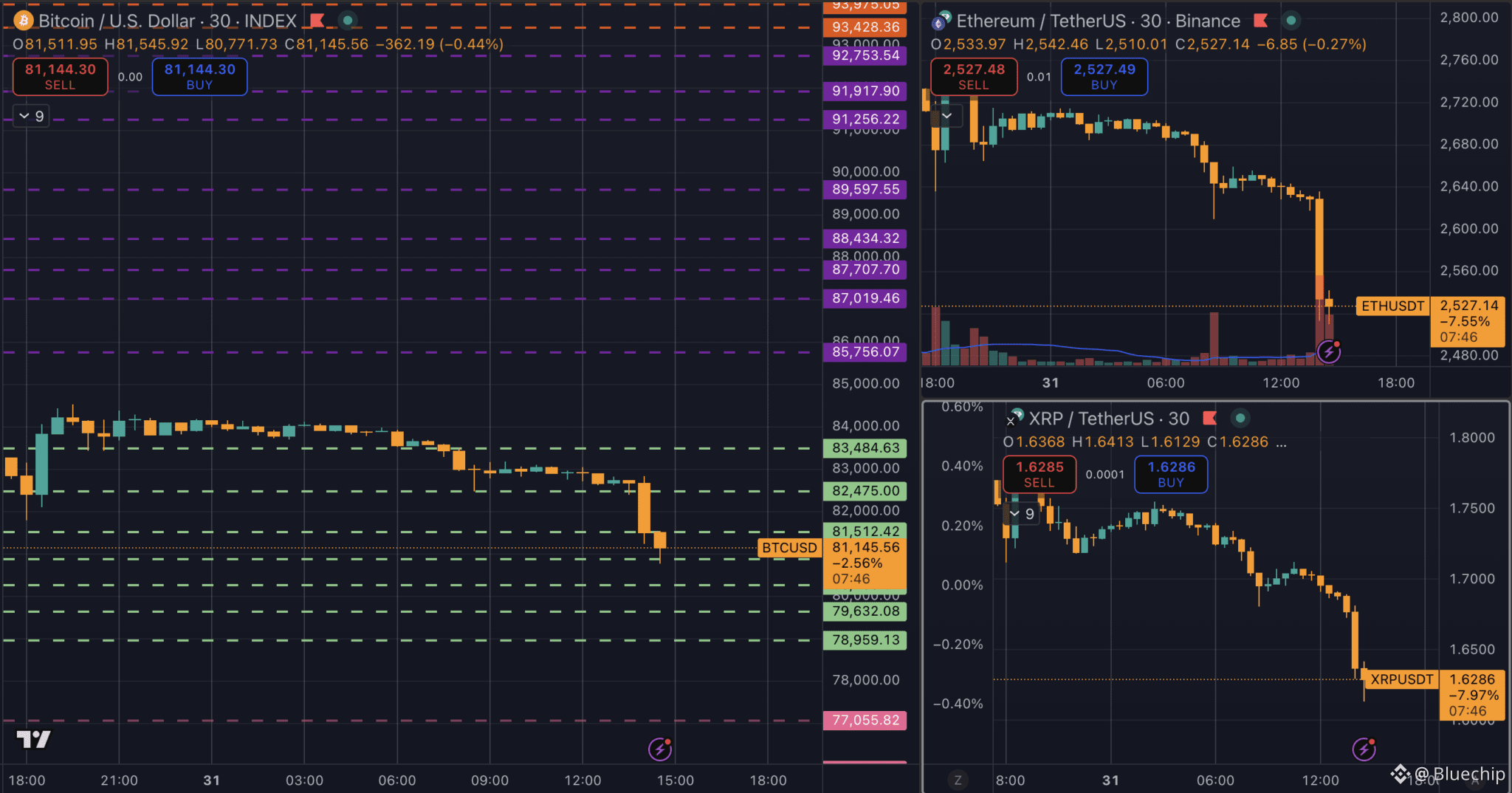
Four hours later, Ethereum wicked sharply down by as much as 18% to touch $2,250, while Bitcoin fell below $80,000 to brush $75,600, and XRP dropped to $1.58.
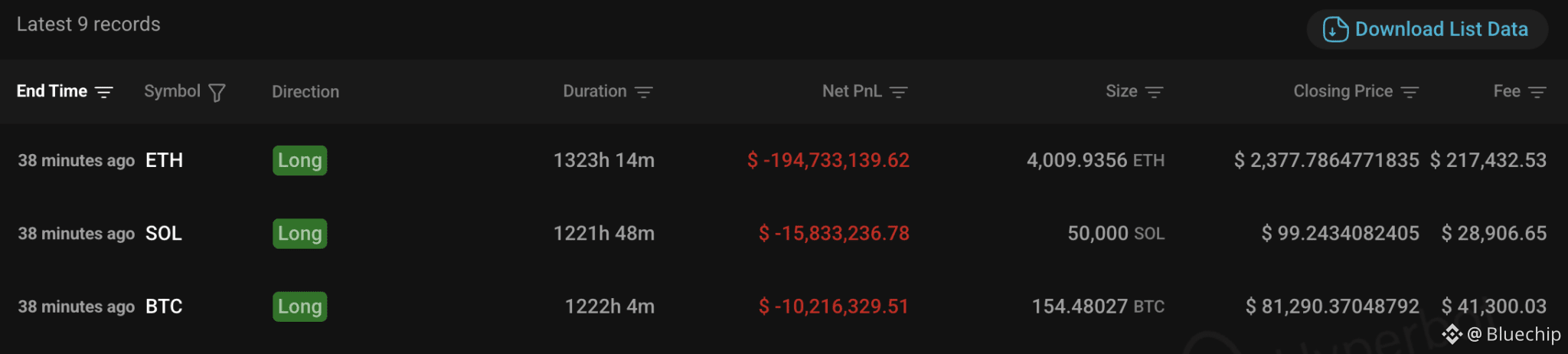
Interestingly, all three assets recovered some of their losses almost instantly, at nearly the exact price at which the 10/10 trader was just liquidated. The trader made over $100 million during the October liquidation event from Trump's tariff announcements and had a liquidation price of $2,282.
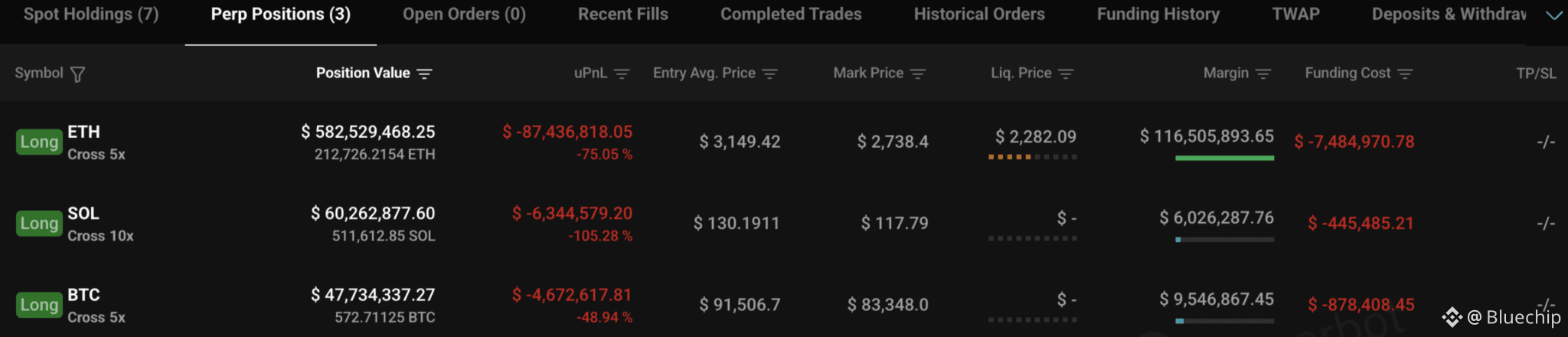
The account now holds just $53 of altcoins and a net PnL of -$220 million.
The broader market took the hit to the tune of around $220 billion. CoinMarketCap showed a total crypto market cap of about $2.62T, down 3.76% on the day from $2.84T, with a 24-hour volume of around $171B at the time of viewing.
Total liquidations over the last 24 hours are just below $2.5 billion as of press time, with Ethereum leading losses with $1.1 billion liquidated.
If you look only at the candles, it appears to be another ugly red day. When you look at where it happened and what the world was discussing at the same time, it starts to feel like something more specific: a weekend market nudged, then slipped.
The headline risk people are pointing at
When markets nuke like this, thoughts turn to the obvious question, was there a weekend catalyst, or did the market just fall through a thin patch of air?
The timing is hard to ignore because major outlets reported Israeli air strikes in Gaza on Saturday.
That does not automatically mean the strikes caused the move. Crypto is not a clean cause-and-effect market.
Crypto remains the most sensitive risk-on market that trades continuously through the weekend, meaning macro shocks can hit digital assets faster than traditional markets that pause until Monday.
In the absence of circuit breakers and limited liquidity during off-hours, crypto often becomes the first venue where risk is repriced.
Notably, however, while Bitcoin has shown relative resilience, the broader altcoin market has dipped much harder, reflecting a sharper pullback in speculative appetite beyond BTC.
Why weekends keep doing this to people
Crypto is a reflex market. Headlines change mood, mood changes positioning, positioning turns into forced flows and liquidations, and that is exactly what a thin weekend book struggles to absorb.
Weekends are when crypto loses its shock absorbers.
There are fewer traders active, fewer market makers leaning in, less depth sitting on the order book, and more reliance on automated stops and perps flows to do the job of price discovery. When price starts moving, the market can gap in a way that feels unfair, mainly because it is.
Liquidity researchers have been pushing the same point for a while, market cap tells you how big something is, market depth tells you how fragile it is. has built a lot of its work around depth based measures that capture how much can trade close to spot without moving price too far.
That framework fits what we saw, Bitcoin gets hit, ETH gets hit harder, XRP gets hit hardest, because the pool gets shallower the further down the risk curve you go.


