
@Dusk
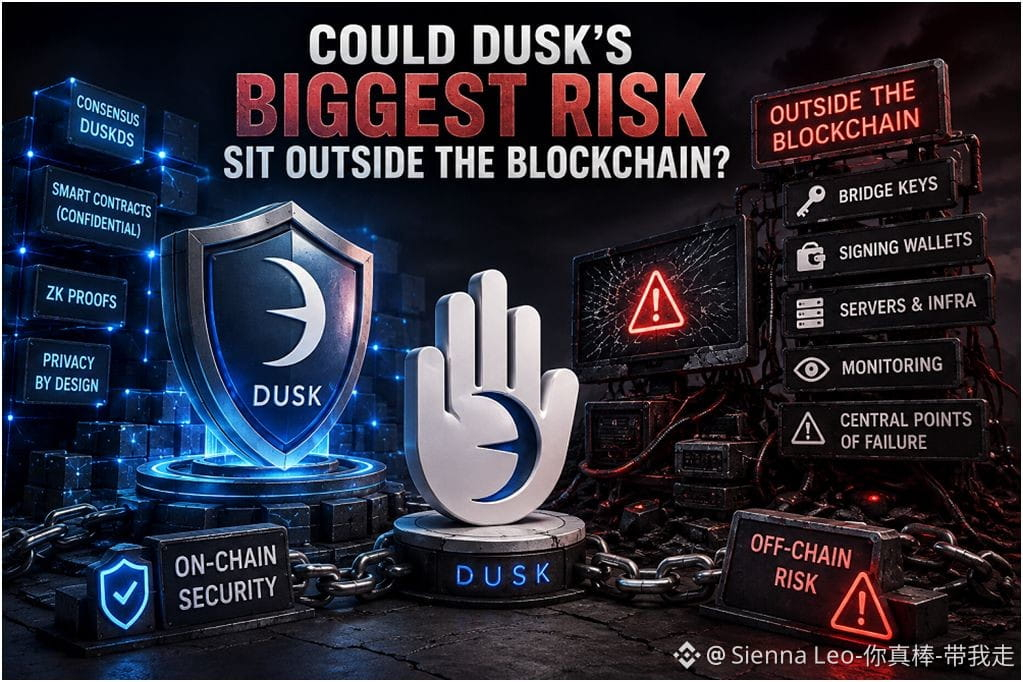
A blockchain can have strong cryptography, consensus, and smart contracts, but still rely on the systems that work around it to a much lesser extent.
Syria learned this the hard way.
In January 2026, an attacker compromised a signing wallet used by the DuskDS to EVM bridge. Dusk’s own post-mortem was clear that it was not a failure of the DuskDS consensus or an exploit of the protocol. The vulnerability was operational: signing, event handling, and connectivity were all concentrated on a single path.
This difference is more important than it may first appear.
As soon as users treat a bridge as part of an asset’s liquidity route, its keys, servers, monitoring, and recovery mechanisms become part of the practical security boundaries.
What I find interesting is what happened next. Dusk redesigned the bridge around decoupled signing, decoupled event processing, reduced hot wallet exposure, and strong isolation.
So perhaps the profound lesson is uncomfortable but useful:
For financial infrastructure, securing the chain is only half the battle. The harder question may be whether everything connected to it deserves the same level of security discipline.
#dusk $DUSK
@Dusk #dusk #Dusk #GrowWithSAC
A blockchain can have strong cryptography, consensus, and smart contracts, but still rely on the systems that work around it to a much lesser extent.
Syria learned this the hard way.
In January 2026, an attacker compromised a signing wallet used by the DuskDS to EVM bridge. Dusk’s own post-mortem was clear that it was not a failure of the DuskDS consensus or an exploit of the protocol. The vulnerability was operational: signing, event handling, and connectivity were all concentrated on a single path.
This difference is more important than it may first appear.
As soon as users treat a bridge as part of an asset’s liquidity route, its keys, servers, monitoring, and recovery mechanisms become part of the practical security boundaries.
What I find interesting is what happened next. Dusk redesigned the bridge around decoupled signing, decoupled event processing, reduced hot wallet exposure, and strong isolation.
So perhaps the profound lesson is uncomfortable but useful:
For financial infrastructure, securing the chain is only half the battle. The harder question may be whether everything connected to it deserves the same level of security discipline.
#dusk $DUSK
@Dusk #dusk #Dusk #GrowWithSAC
External systems matter
Chain security comes first
Both must be secured
3 يوم (أيام) مُتبقية