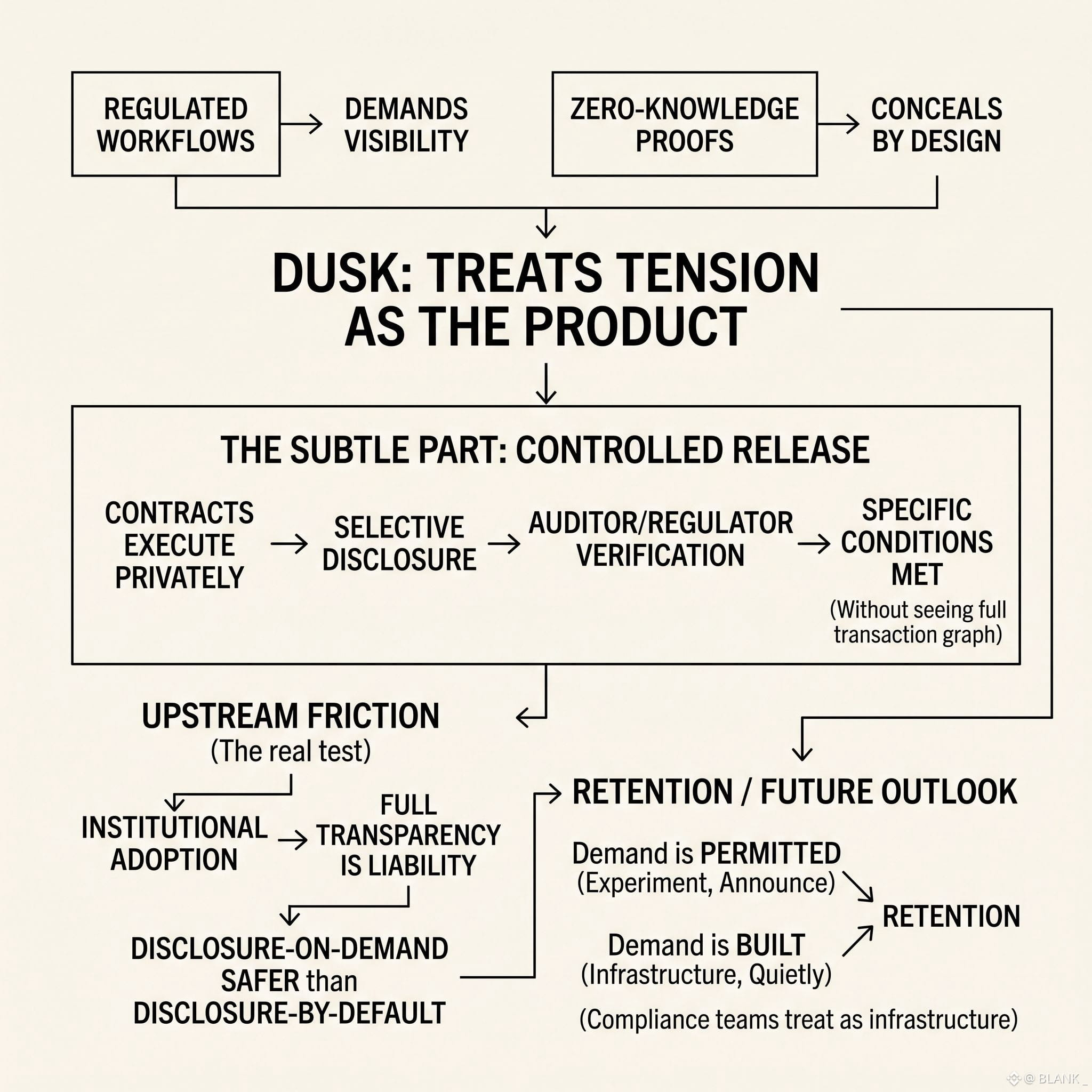

في البداية افترضت أن سير العمل المُنظَّم وأدلة المعرفة الصفرية كانا نقيضين طبيعيين: أحدهما يتطلب إظهارًا، والآخر يخفيه حسب التصميم. يتعامل «Dusk» مع هذا التوتر باعتباره المنتج الحقيقي بدلًا من كونه عيبًا يجب التحايل عليه. تُنفَّذ العقود بشكلٍ خاص، لكن يتيح الإفصاح الانتقائي للمُدقِّق أو الجهة التنظيمية التحقق من شروط محددة دون رؤية مخطط المعاملات الكامل. وهذه هي النقطة الدقيقة: ليست الخصوصية غيابًا للبيانات، بل خصوصية على هيئة إصدارٍ مُتحكَّم فيه لها، مؤقت وموجَّه لمن يملك المفتاح الصحيح. ما يثير اهتمامي أكثر هو الاحتكاك الذي يخلقه ذلك في المراحل السابقة. نادرًا ما تعتمد المؤسسات أدوات الخصوصية لمجرد الخصوصية نفسها؛ بل تعتمدها عندما يصبح الإفصاح الكامل هو المسؤولية الفعلية. لذلك فليس الاختبار الحقيقي هو ما إذا كانت التشفيرات ثابتة، بل ما إذا كان عدد كافٍ من الكيانات الخاضعة للرقابة يقرر أن الإفصاح عند الطلب أكثر أمانًا من الإفصاح الافتراضي. ولن تأتي الاستمرارية من التكهنات هنا. بل ستأتي من كون فرق الامتثال تبدأ في التعامل مع هذا الأمر باعتباره بنية تحتية لا مجرد تجربة—بهدوء ودون الإعلان عنه. وهذا يطرح السؤال الحقيقي: هل يجري بناء الطلب، أم مجرد السماح به؟
@Dusk $DUSK #dusk
@Dusk $DUSK #dusk