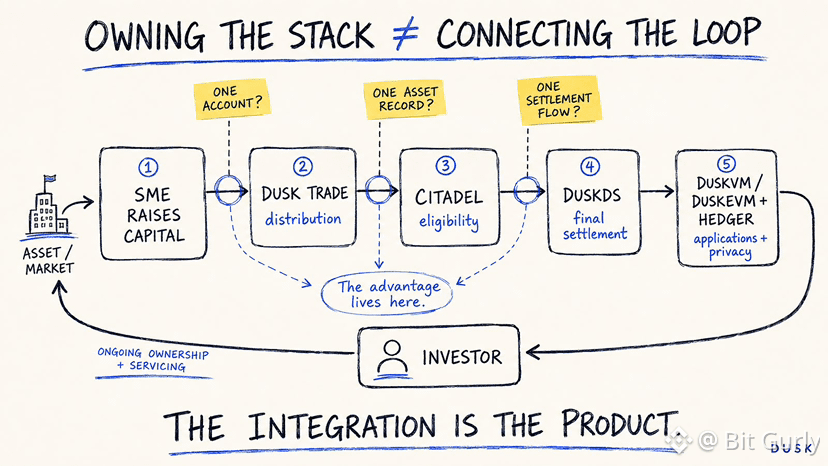

@Dusk latest update keeps connecting the ECSP plan with more assets entering the ecosystem.
At first the logic looked straightforward.
A business raises capital.
Investors receive tokenized shares, bonds or loan exposure.
#dusk gains assets and activity.
Then I separated issuance from trading.
An ECSP can help fund the original offering. That does not mean investors will have somewhere liquid to sell the asset afterward.
Dusk’s NPEX relationship matters here because NPEX also brings regulated secondary-market infrastructure through its MTF licence.
So there is a possible route:
ECSP for raising the capital.
Dusk infrastructure for issuing and settling the asset.
NPEX or Dusk Trade for later market access.
Looks complete on paper.
But tokenizing an SME security does not suddenly create buyers on both sides. A small company’s bond can settle perfectly onchain and still trade once every few weeks with a wide spread.
That is the part the “more assets and TVL” language skips over.
Bringing an asset onto Dusk creates supply.
Keeping it useful requires pricing, buyers, market makers, corporate actions and an exit route.
I would not measure this strategy only through the value of assets issued.
I would watch what happens after issuance.
Do investors hold everything until maturity?
Can they exit without taking a large discount?
Does the same asset generate real secondary turnover?
The first offering proves Dusk can originate an asset.
The first functioning secondary market proves it can support one.
$DUSK
At first the logic looked straightforward.
A business raises capital.
Investors receive tokenized shares, bonds or loan exposure.
#dusk gains assets and activity.
Then I separated issuance from trading.
An ECSP can help fund the original offering. That does not mean investors will have somewhere liquid to sell the asset afterward.
Dusk’s NPEX relationship matters here because NPEX also brings regulated secondary-market infrastructure through its MTF licence.
So there is a possible route:
ECSP for raising the capital.
Dusk infrastructure for issuing and settling the asset.
NPEX or Dusk Trade for later market access.
Looks complete on paper.
But tokenizing an SME security does not suddenly create buyers on both sides. A small company’s bond can settle perfectly onchain and still trade once every few weeks with a wide spread.
That is the part the “more assets and TVL” language skips over.
Bringing an asset onto Dusk creates supply.
Keeping it useful requires pricing, buyers, market makers, corporate actions and an exit route.
I would not measure this strategy only through the value of assets issued.
I would watch what happens after issuance.
Do investors hold everything until maturity?
Can they exit without taking a large discount?
Does the same asset generate real secondary turnover?
The first offering proves Dusk can originate an asset.
The first functioning secondary market proves it can support one.
$DUSK