#dusk $DUSK @Dusk I watched a deploy retry fail this morning on the DuskEVM side. Same Foundry command, same encrypted keystore, gas estimate looked clean enough. Transaction just hung. The bridged testnet DUSK from Nocturne hadn’t fully settled explorer still showed the L1 hop pending while the EVM RPC already took the signed payload. Small timing gap, but it made me sit there watching the bridge status instead of assuming the tooling would just coordinate itself.
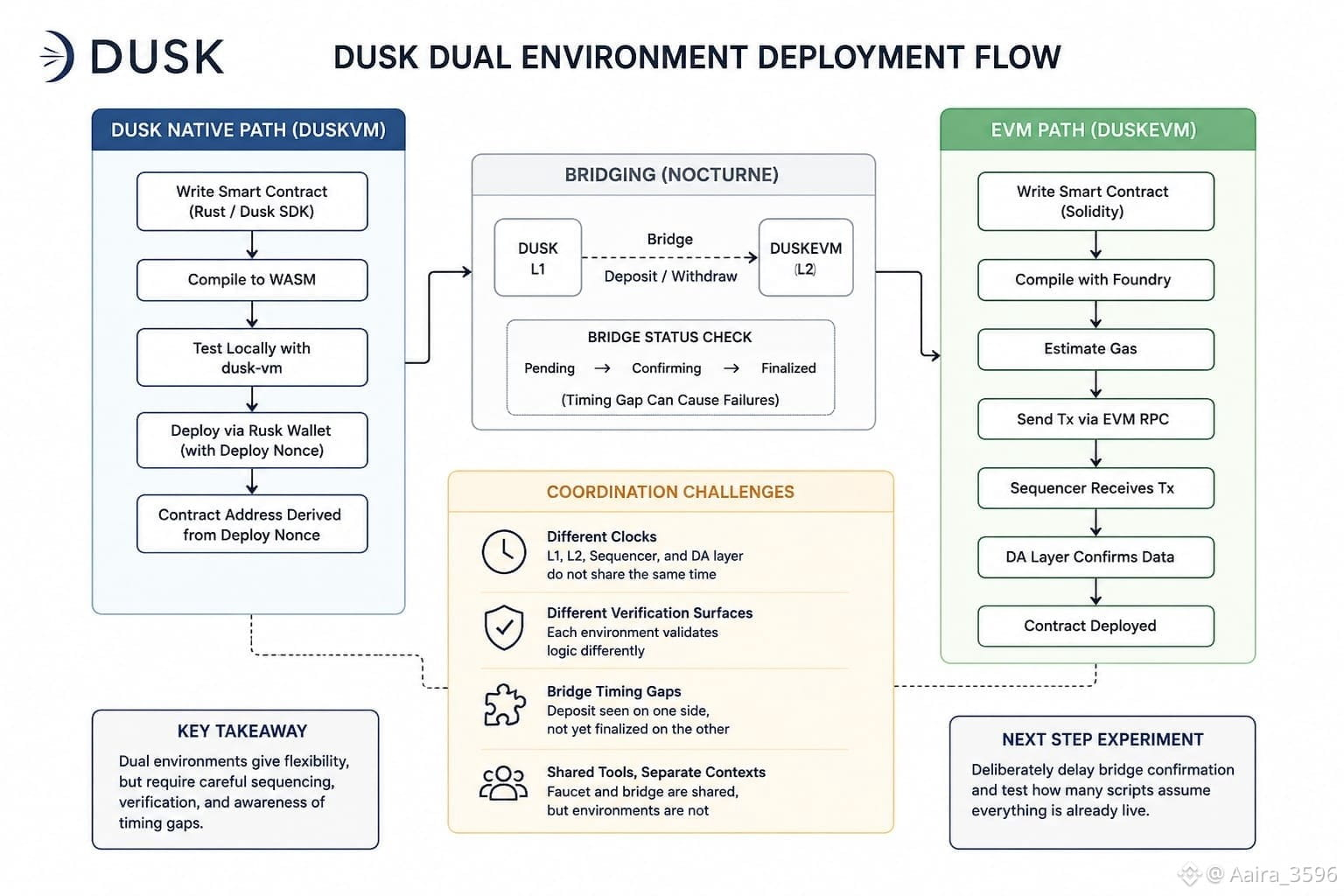
That stall said more than most of the docs. You’re bouncing between two environments that don’t share a clock or the same verification surface. Native path: compile the WASM, run it through dusk-vm locally, then hand it to the Rusk wallet with a deploy nonce that becomes part of the address. Miss the nonce and the contract lands somewhere unexpected. EVM side feels familiar until the sequencer and the data-availability layer disagree about when a deposit is actually real. People start treating the Discord faucet and the bridge like shared infrastructure rather than free tokens, which changes how carefully they sequence their own tests.
I’m still not convinced the dual setup scales cleanly once more teams hit the same coordination points at once. The incentives push toward careful verification, but only if you notice the gaps. Next time I’ll deliberately delay the bridge confirmation and watch how many of the usual scripts still assume everything is already live.
That stall said more than most of the docs. You’re bouncing between two environments that don’t share a clock or the same verification surface. Native path: compile the WASM, run it through dusk-vm locally, then hand it to the Rusk wallet with a deploy nonce that becomes part of the address. Miss the nonce and the contract lands somewhere unexpected. EVM side feels familiar until the sequencer and the data-availability layer disagree about when a deposit is actually real. People start treating the Discord faucet and the bridge like shared infrastructure rather than free tokens, which changes how carefully they sequence their own tests.
I’m still not convinced the dual setup scales cleanly once more teams hit the same coordination points at once. The incentives push toward careful verification, but only if you notice the gaps. Next time I’ll deliberately delay the bridge confirmation and watch how many of the usual scripts still assume everything is already live.