

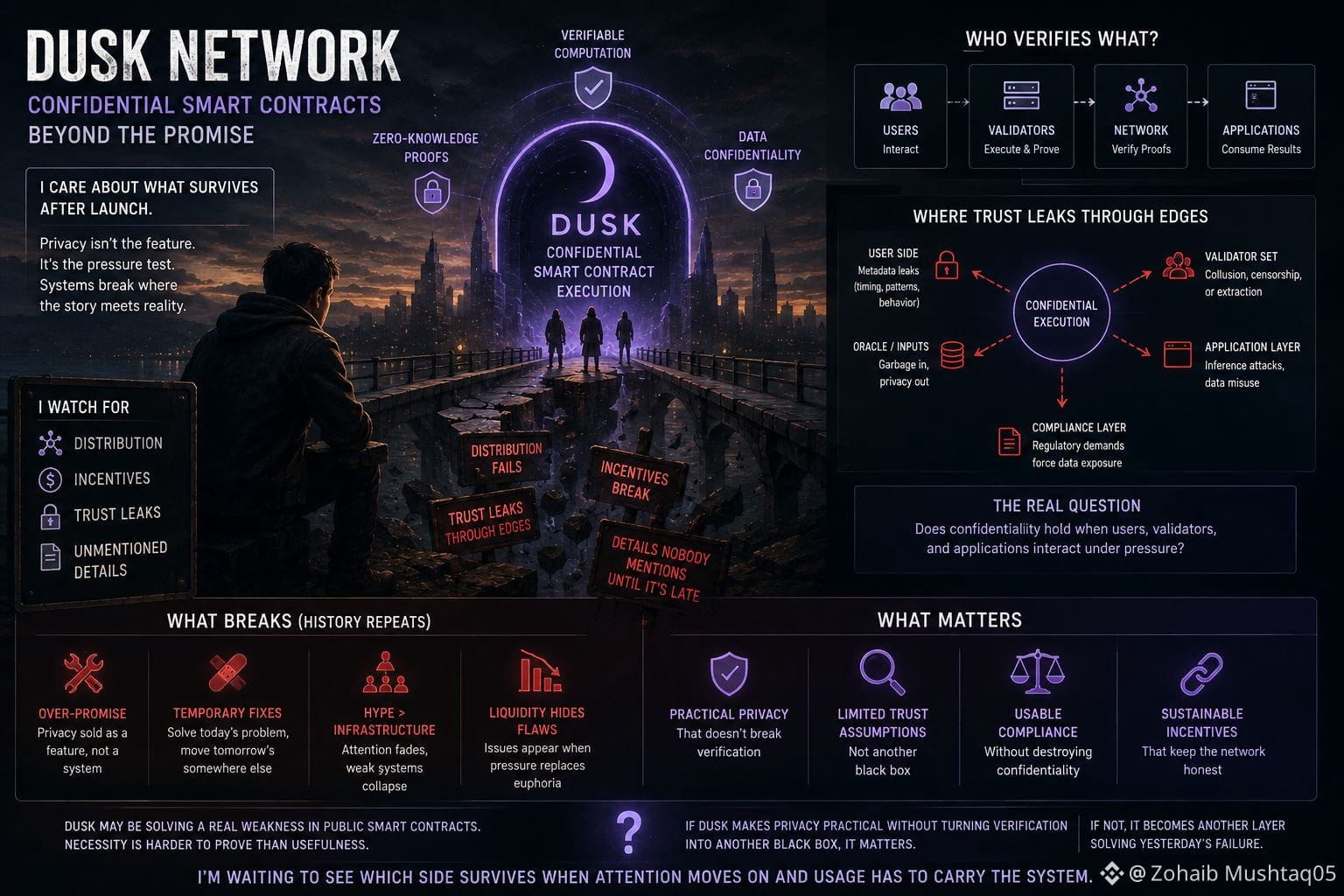
Dusk Network from the angle I usually care about: where systems break once the story meets reality. I’ve seen this before. Privacy gets treated like a feature, then quietly becomes a problem when contracts need real verification, compliance, and usable execution. The interesting part here is confidential smart contract execution, but I’m less interested in the promise than in what survives after launch. Who verifies what, how much trust leaks through edges, and whether confidentiality holds when users, validators, and applications interact under pressure. I focus on where things break, especially around distribution, incentives, and details nobody mentions when liquidity is flowing. Dusk may be addressing a weakness in public smart contracts, but necessity is harder to prove than usefulness. Crypto has a long history of building temporary fixes for problems that later move somewhere else. If Dusk can make privacy practical without turning verification into another black box, that matters. If not, it becomes another layer solving yesterday’s failure. I’m waiting to see which side survives when attention moves on and usage has to carry the system.#dusk $DUSK @Dusk

نشر
إخلاء مسؤولية: يتضمن آراء جهات خارجية. لا تُعدّ نصيحة. يُمكن استخدام Binance AI دون أي ضمان. اطلع على الشروط والأحكام.