ما يزعجني في DUSK الآن ليس السرد. بل هو «التمديدات» الكامنة تحت التداول.
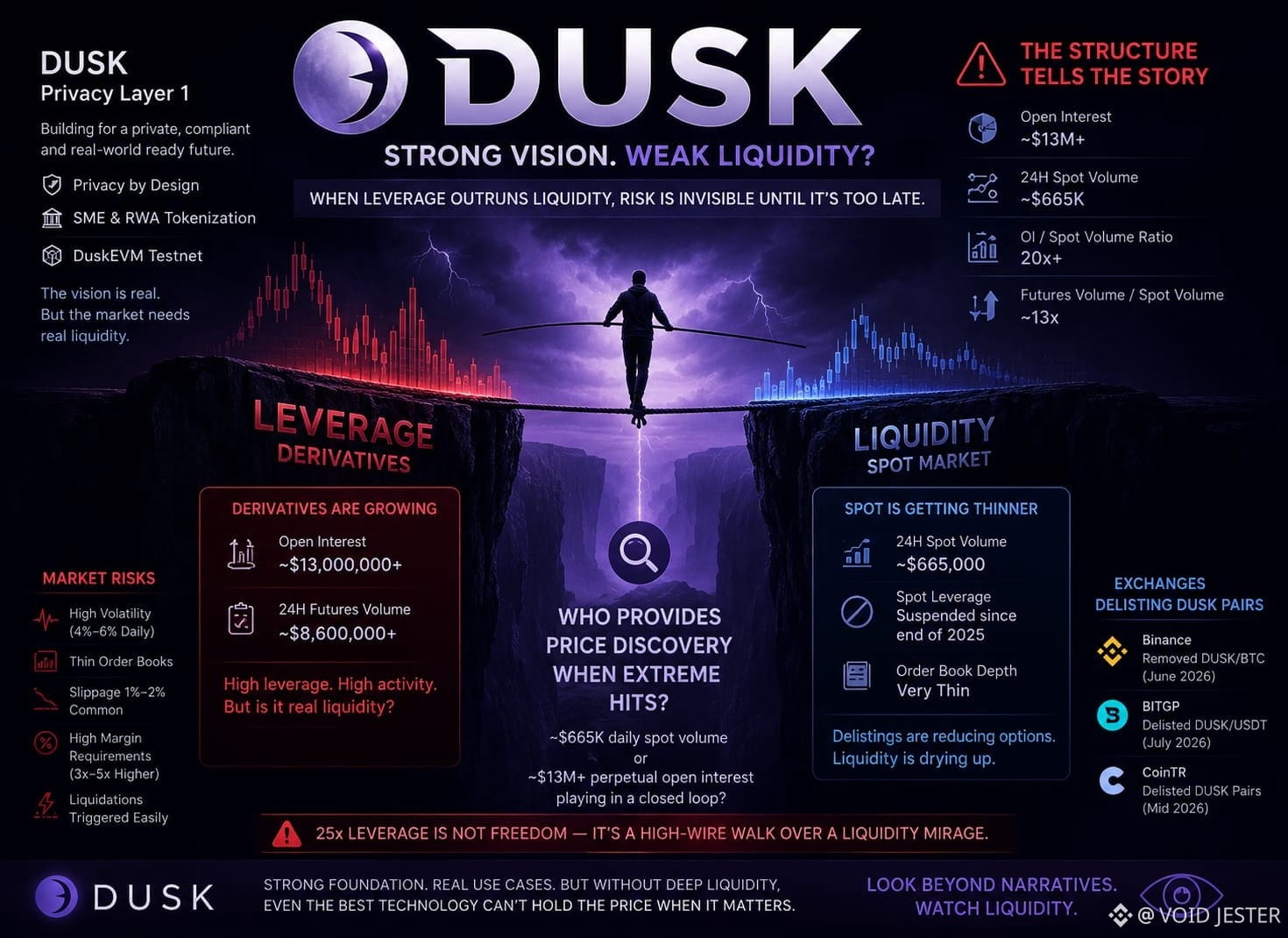
CoinGlass يُظهر سوق مشتقات أكبر بكثير من سوق spot من حيث النشاط اليومي: حوالي 8.6 مليون دولار في حجم العقود المستقبلية مقابل نحو 665 ألف دولار في حجم السوق الفوري، مع وجود فائدة مفتوحة تقارب 13 مليون دولار. هذه الأرقام تتحرك بسرعة، لذا لا ينبغي اعتبارها حالة دائمة، لكن عدم التوازن نفسه يستحق المراقبة.
لقد شاهدت دورات كافية من العملات البديلة لأعرف أن نشاط المشتقات المرتفع قد يجعل السوق يبدو أكثر صحة مما هو عليه فعليًا. الفائدة المفتوحة تُخبرني بوجود مراكز هناك. لكنها لا تُخبرني ما إذا كانت ستكون هناك أعداد كافية من المشترين والبائعين الحقيقيين عندما يريد الجميع فجأة الخروج نفسه.
تُصبح هذه المفارقة أكثر إزعاجًا مع الرموز الصغيرة.
قد تعرض DUSK دفتر أوامر يبدو طبيعيًا تمامًا بينما تكون الظروف هادئة. ثم عندما تأتي التقلبات، يسحب صانعو السوق السيولة، تتسع الفروقات (spreads)، ويبدأ السعر بالتحرك عبر مستويات كانت تبدو متماسكة قبل دقائق. كما تشير الأبحاث حول دفاتر أوامر العملات المشفرة إلى أن ظروف السيولة الموجودة مسبقًا تُعد عاملًا مهمًا في كيفية تصرف الأسواق عندما تتعرض لضغوط.
أنا لا أقول إن سوق مشتقات DUSK مزيف، أو أن استخدام الرافعة المالية يعني تلقائيًا وجود خطأ. الأمر فقط يجعلني أطرح سؤالًا مختلفًا.
إذا كان معظم النشاط المرئي يحدث داخل العقود، فمن أين يأتي اكتشاف السعر الموثوق عندما يصبح دفتر spot رقيقًا؟
هذه هي الجزء من DUSK الذي أراه أكثر إثارة للاهتمام من أي إعلان آخر أو توقع آخر. يمكن أن تكون التقنية جادة، ويمكن أن تكون قصة الخصوصية مشروعة، ويمكن للنظام البيئي أن يواصل التطور. لكن لا شيء من ذلك يلغي مشكلة البنية السوقية الأساسية.
السيولة سهلة الإعجاب بها عندما لا يحتاجها أحد بشكل عاجل.
@Dusk #dusk $DUSK
CoinGlass يُظهر سوق مشتقات أكبر بكثير من سوق spot من حيث النشاط اليومي: حوالي 8.6 مليون دولار في حجم العقود المستقبلية مقابل نحو 665 ألف دولار في حجم السوق الفوري، مع وجود فائدة مفتوحة تقارب 13 مليون دولار. هذه الأرقام تتحرك بسرعة، لذا لا ينبغي اعتبارها حالة دائمة، لكن عدم التوازن نفسه يستحق المراقبة.
لقد شاهدت دورات كافية من العملات البديلة لأعرف أن نشاط المشتقات المرتفع قد يجعل السوق يبدو أكثر صحة مما هو عليه فعليًا. الفائدة المفتوحة تُخبرني بوجود مراكز هناك. لكنها لا تُخبرني ما إذا كانت ستكون هناك أعداد كافية من المشترين والبائعين الحقيقيين عندما يريد الجميع فجأة الخروج نفسه.
تُصبح هذه المفارقة أكثر إزعاجًا مع الرموز الصغيرة.
قد تعرض DUSK دفتر أوامر يبدو طبيعيًا تمامًا بينما تكون الظروف هادئة. ثم عندما تأتي التقلبات، يسحب صانعو السوق السيولة، تتسع الفروقات (spreads)، ويبدأ السعر بالتحرك عبر مستويات كانت تبدو متماسكة قبل دقائق. كما تشير الأبحاث حول دفاتر أوامر العملات المشفرة إلى أن ظروف السيولة الموجودة مسبقًا تُعد عاملًا مهمًا في كيفية تصرف الأسواق عندما تتعرض لضغوط.
أنا لا أقول إن سوق مشتقات DUSK مزيف، أو أن استخدام الرافعة المالية يعني تلقائيًا وجود خطأ. الأمر فقط يجعلني أطرح سؤالًا مختلفًا.
إذا كان معظم النشاط المرئي يحدث داخل العقود، فمن أين يأتي اكتشاف السعر الموثوق عندما يصبح دفتر spot رقيقًا؟
هذه هي الجزء من DUSK الذي أراه أكثر إثارة للاهتمام من أي إعلان آخر أو توقع آخر. يمكن أن تكون التقنية جادة، ويمكن أن تكون قصة الخصوصية مشروعة، ويمكن للنظام البيئي أن يواصل التطور. لكن لا شيء من ذلك يلغي مشكلة البنية السوقية الأساسية.
السيولة سهلة الإعجاب بها عندما لا يحتاجها أحد بشكل عاجل.
@Dusk #dusk $DUSK