
ما ظلّ عالقًا في ذهني هو سطرٌ صغير في سجلّ تغييرات Dusk (ديُسك) يتحدث عن نقل منطق الإفصاح إلى طبقة البروتوكول بدلًا من تركه لمطوّري التطبيقات. لا إعلان ولا ضجّة — فقط اعترافٌ هادئ بأن حدود الثقة هي قراراتٌ بنيوية وليست ميزاتٍ يمكن إضافتها لاحقًا. تعلّمت ذلك من بيتكوين قبل سنوات: كانت العبقرية ليست في إخفاء المعلومات، بل في جعل التحقق رخيصًا بدرجة تكفي بحيث لم يعد الإخفاء مهمًا.
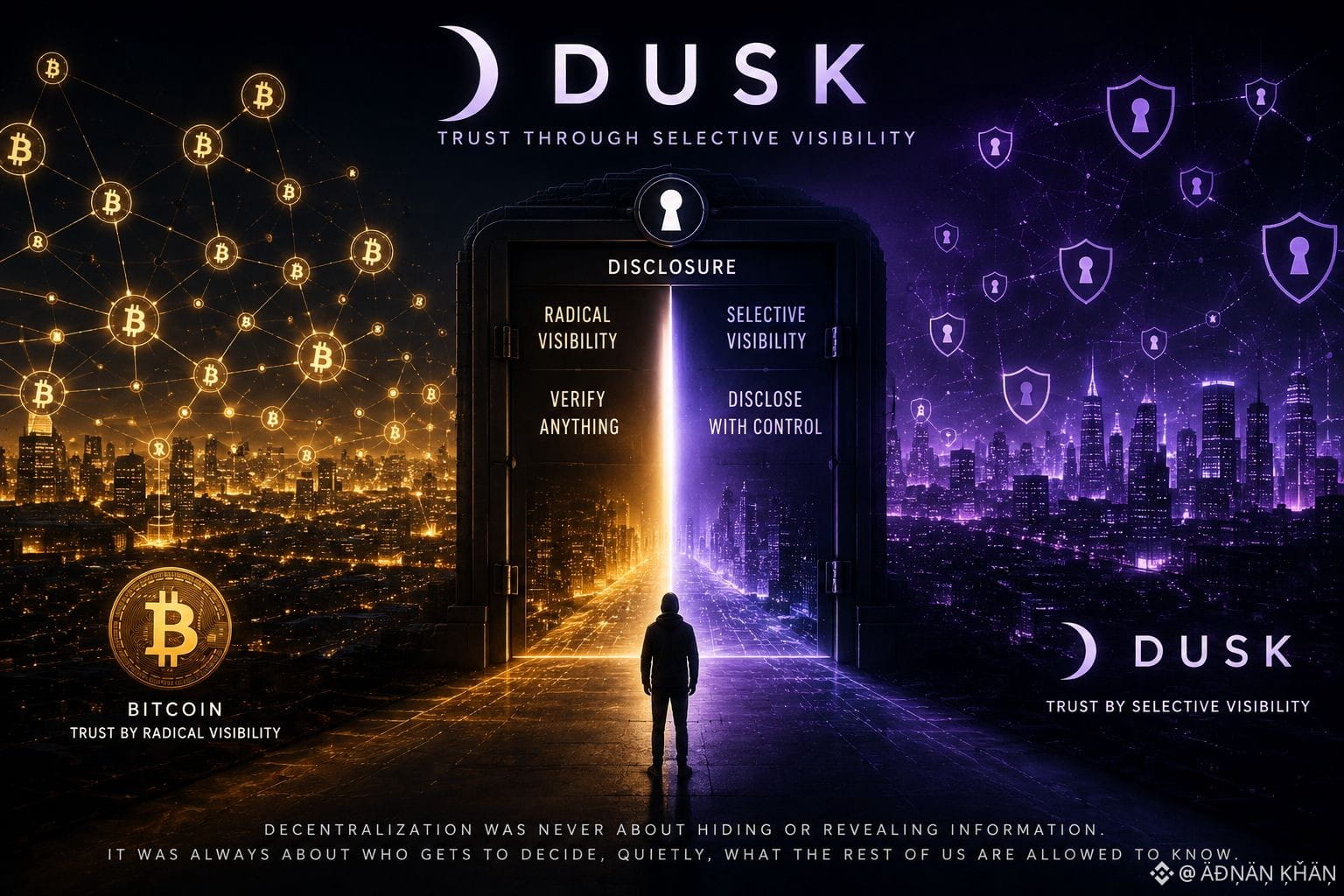
لكن Dusk يقلب تلك الدروس بدلًا من تجاهلها. في حين تحقق بيتكوين الثقة عبر الظهور الجذري، يختبر Dusk ما إذا كانت الثقة يمكن أن تنجو من الظهور الانتقائي — ما إذا كان النظام يستطيع أن يبقى صادقًا عندما لا يرى الجميع الشيء نفسه في الوقت نفسه. هذا ادعاء أصعب بكثير، وما زال غير مثبت على نطاق واسع.
ما أستمر في ملاحظته هو كم أن تصميم Dusk يدور فعلًا حول مَن يحتفظ بمفاتيح الإفصاح، لا حول ما إذا كانت الخصوصية ممكنة تقنيًا. تجنّبت بيتكوين تلك المواجهة عبر رفض منح أيّ شخص هذا النوع من السلطة أصلًا.
مشاهدة Dusk وهي تعمل ضمن هذا المنظور تجعلني أعتقد أن اللامركزية لم تكن يومًا تتعلق حقًا بإخفاء المعلومات أو كشفها. كانت دائمًا حول مَن يُسمح له — بهدوء — أن يقرر ما هو المسموح لنا نحن الباقين أن نعرفه.
@Dusk $DUSK #dusk
لكن Dusk يقلب تلك الدروس بدلًا من تجاهلها. في حين تحقق بيتكوين الثقة عبر الظهور الجذري، يختبر Dusk ما إذا كانت الثقة يمكن أن تنجو من الظهور الانتقائي — ما إذا كان النظام يستطيع أن يبقى صادقًا عندما لا يرى الجميع الشيء نفسه في الوقت نفسه. هذا ادعاء أصعب بكثير، وما زال غير مثبت على نطاق واسع.
ما أستمر في ملاحظته هو كم أن تصميم Dusk يدور فعلًا حول مَن يحتفظ بمفاتيح الإفصاح، لا حول ما إذا كانت الخصوصية ممكنة تقنيًا. تجنّبت بيتكوين تلك المواجهة عبر رفض منح أيّ شخص هذا النوع من السلطة أصلًا.
مشاهدة Dusk وهي تعمل ضمن هذا المنظور تجعلني أعتقد أن اللامركزية لم تكن يومًا تتعلق حقًا بإخفاء المعلومات أو كشفها. كانت دائمًا حول مَن يُسمح له — بهدوء — أن يقرر ما هو المسموح لنا نحن الباقين أن نعرفه.
@Dusk $DUSK #dusk