#dusk $DUSK @Dusk كنت أحدّق في ملاحظات هندسة Dusk بدلًا من سطح السفينة ولو مرة واحدة، وانتهت هذه الحفرة في مكان لم أتوقعه.
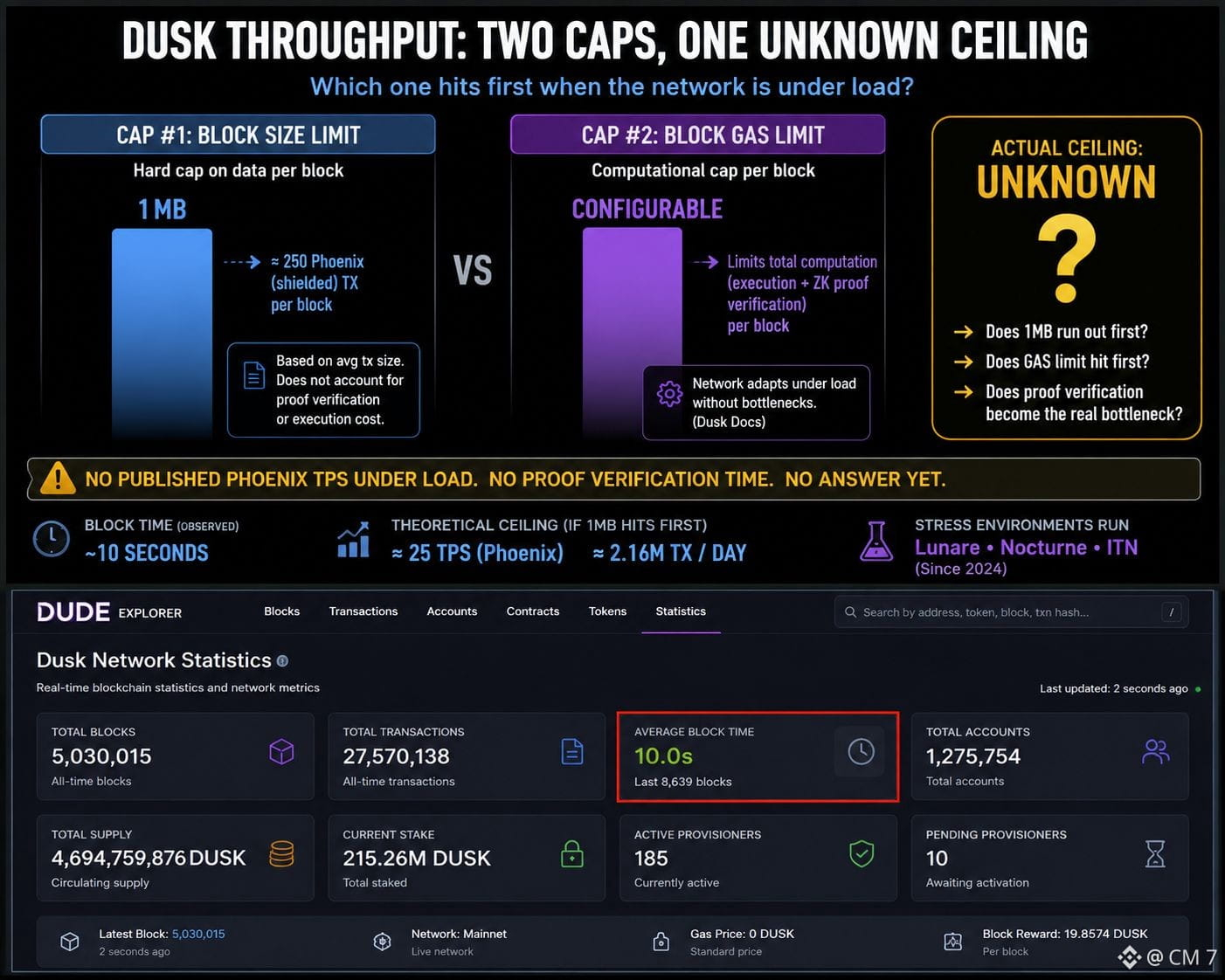
يتم تحديد حجم الكتلة عند 1MB. يقول Dusk إن ذلك يعني تقريبًا 250 معاملة Phoenix (مشفّرة) لكل كتلة، وهذا مقصود لإيقاف بعض الهجمات.
ثم تذكّرت بيانات الرسوم التي سحبتها منذ فترة — صفحة الإحصاءات الخاصة بالمستكشف تضعها عند 8,639 كتلة بمتوسط 10.0 ثوانٍ للكتلة. رقم نظيف، لا حاجة لإجراء القسمة بنفسي هذه المرة.
250 معاملة لكل كتلة، كتلة واحدة كل ~10 ثوانٍ.. وهذا حدّ أقصى يبلغ ~25 معاملة Phoenix مشفّرة/ثانية. وعلى مدار يوم كامل، في أفضل حال، ~2.16 مليون معاملة Phoenix.
بعدها تحققت من DTC — شركة الإيداع والائتمان (Depository Trust Company)، وهي جزء من البنية التحتية تحت تسوية الأوراق المالية في الولايات المتحدة. تعالج أكثر قليلًا من 1.3 مليون معاملة يوميًا.
انتظر.
الحدّ النظري لـ Dusk أعلى من ذلك. على الورق.
لكن لحظة.. المقارنة ماكرة. 1.3M الخاصة بـ DTC حقيقية، مستمرة، تحدث كل يوم. 2.16M الخاصة بـ Dusk تفترض أن كل كتلة تحقق بالضبط 250 معاملة Phoenix، دون أي منافسة من Moonlight، ودون أي كتل غير ممتلئة. وهذا لم يُلاحظ أبدًا.
ثم إن رقم 250 معاملة نفسه صار أكثر هشاشة كلما جلست معه. حجم البيانات — 1MB ÷ متوسط حجم المعاملة. لكن Phoenix تحمل تحققًا من zk-proof، بينما Moonlight لا. إذا كانتا تتنافسان على نفس الكتلة، هل تُفَرِّغ 1MB أولًا أم أن شيئًا آخر — عبء التحقق، زمن التنفيذ — سيصل إلى الحدّ بشكل أسرع؟
بحثت في هذه النقطة بدلًا من تركها. اتضح أن Dusk أضافت حدًا ثانيًا — حد غاز للكتلة قابل للتكوين، صُمّم صراحةً كي «يتكيف الشبكة تحت الحمل دون اختناقات». هذه كلماتهم. كان شخص ما يشتبه أن الغاز، وليس الحجم، هو الحد الحقيقي.
وقد أجروا بيئات إجهاد مسمّاة لهذا منذ 2024 — Lunare وNocturne وITN.
لذا ليس الأمر أن أحدًا لم يختبره. الأدوات موجودة. لم ينشر أحد الرقم — لا يوجد Phoenix TPS تحت الحمل، لا وقت تحقق الإثبات، ولا إجابة حول أي حد يسبق الآخر.
هل يُعدّ حدٌّ غير مُختبَر شيئًا تبني عليه ثقة مؤسسية، أم أنه مجرد حسابات حتى ينشر أحد ما الإيصالات؟
#zkProofs
يتم تحديد حجم الكتلة عند 1MB. يقول Dusk إن ذلك يعني تقريبًا 250 معاملة Phoenix (مشفّرة) لكل كتلة، وهذا مقصود لإيقاف بعض الهجمات.
ثم تذكّرت بيانات الرسوم التي سحبتها منذ فترة — صفحة الإحصاءات الخاصة بالمستكشف تضعها عند 8,639 كتلة بمتوسط 10.0 ثوانٍ للكتلة. رقم نظيف، لا حاجة لإجراء القسمة بنفسي هذه المرة.
250 معاملة لكل كتلة، كتلة واحدة كل ~10 ثوانٍ.. وهذا حدّ أقصى يبلغ ~25 معاملة Phoenix مشفّرة/ثانية. وعلى مدار يوم كامل، في أفضل حال، ~2.16 مليون معاملة Phoenix.
بعدها تحققت من DTC — شركة الإيداع والائتمان (Depository Trust Company)، وهي جزء من البنية التحتية تحت تسوية الأوراق المالية في الولايات المتحدة. تعالج أكثر قليلًا من 1.3 مليون معاملة يوميًا.
انتظر.
الحدّ النظري لـ Dusk أعلى من ذلك. على الورق.
لكن لحظة.. المقارنة ماكرة. 1.3M الخاصة بـ DTC حقيقية، مستمرة، تحدث كل يوم. 2.16M الخاصة بـ Dusk تفترض أن كل كتلة تحقق بالضبط 250 معاملة Phoenix، دون أي منافسة من Moonlight، ودون أي كتل غير ممتلئة. وهذا لم يُلاحظ أبدًا.
ثم إن رقم 250 معاملة نفسه صار أكثر هشاشة كلما جلست معه. حجم البيانات — 1MB ÷ متوسط حجم المعاملة. لكن Phoenix تحمل تحققًا من zk-proof، بينما Moonlight لا. إذا كانتا تتنافسان على نفس الكتلة، هل تُفَرِّغ 1MB أولًا أم أن شيئًا آخر — عبء التحقق، زمن التنفيذ — سيصل إلى الحدّ بشكل أسرع؟
بحثت في هذه النقطة بدلًا من تركها. اتضح أن Dusk أضافت حدًا ثانيًا — حد غاز للكتلة قابل للتكوين، صُمّم صراحةً كي «يتكيف الشبكة تحت الحمل دون اختناقات». هذه كلماتهم. كان شخص ما يشتبه أن الغاز، وليس الحجم، هو الحد الحقيقي.
وقد أجروا بيئات إجهاد مسمّاة لهذا منذ 2024 — Lunare وNocturne وITN.
لذا ليس الأمر أن أحدًا لم يختبره. الأدوات موجودة. لم ينشر أحد الرقم — لا يوجد Phoenix TPS تحت الحمل، لا وقت تحقق الإثبات، ولا إجابة حول أي حد يسبق الآخر.
هل يُعدّ حدٌّ غير مُختبَر شيئًا تبني عليه ثقة مؤسسية، أم أنه مجرد حسابات حتى ينشر أحد ما الإيصالات؟
#zkProofs