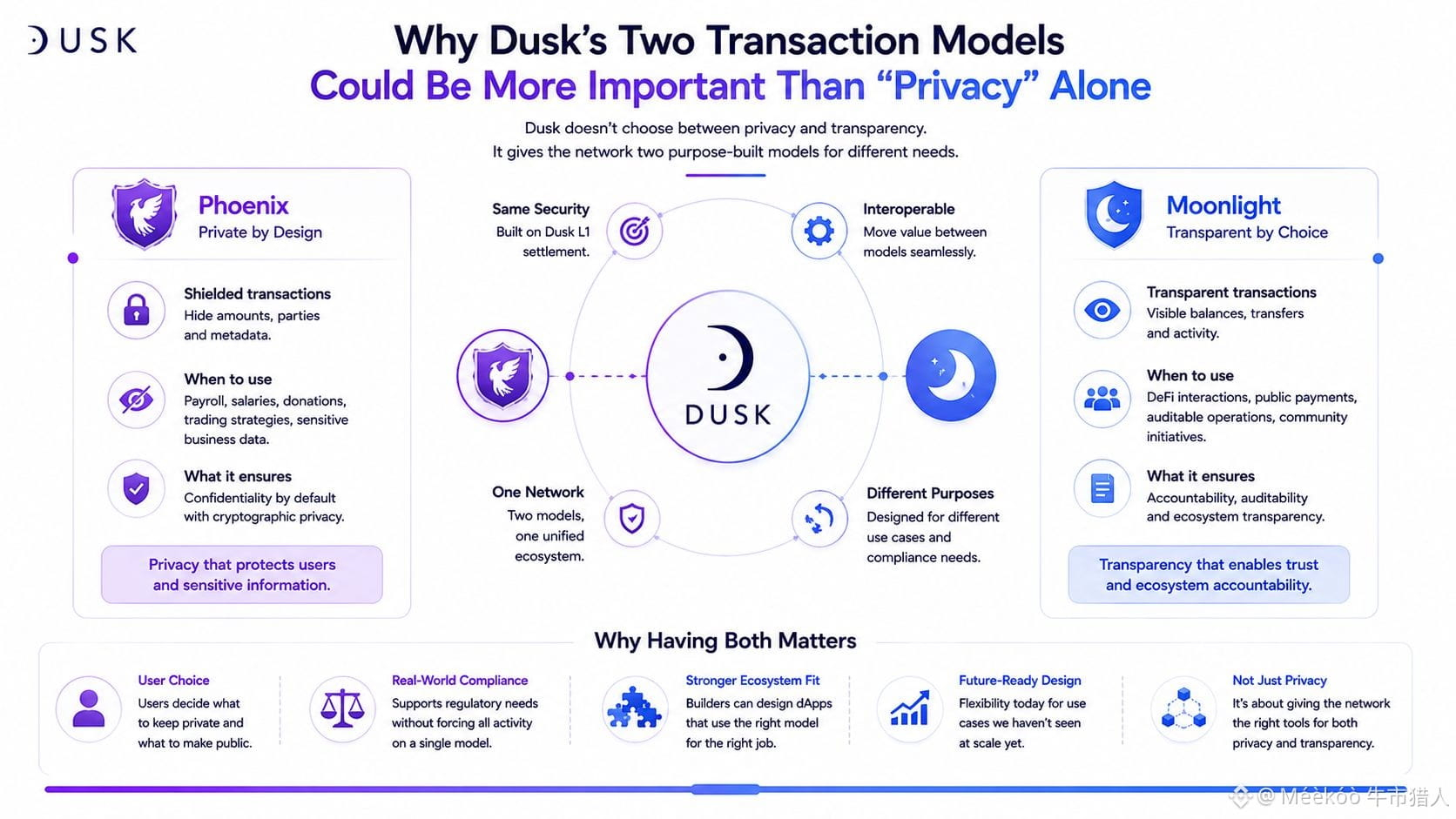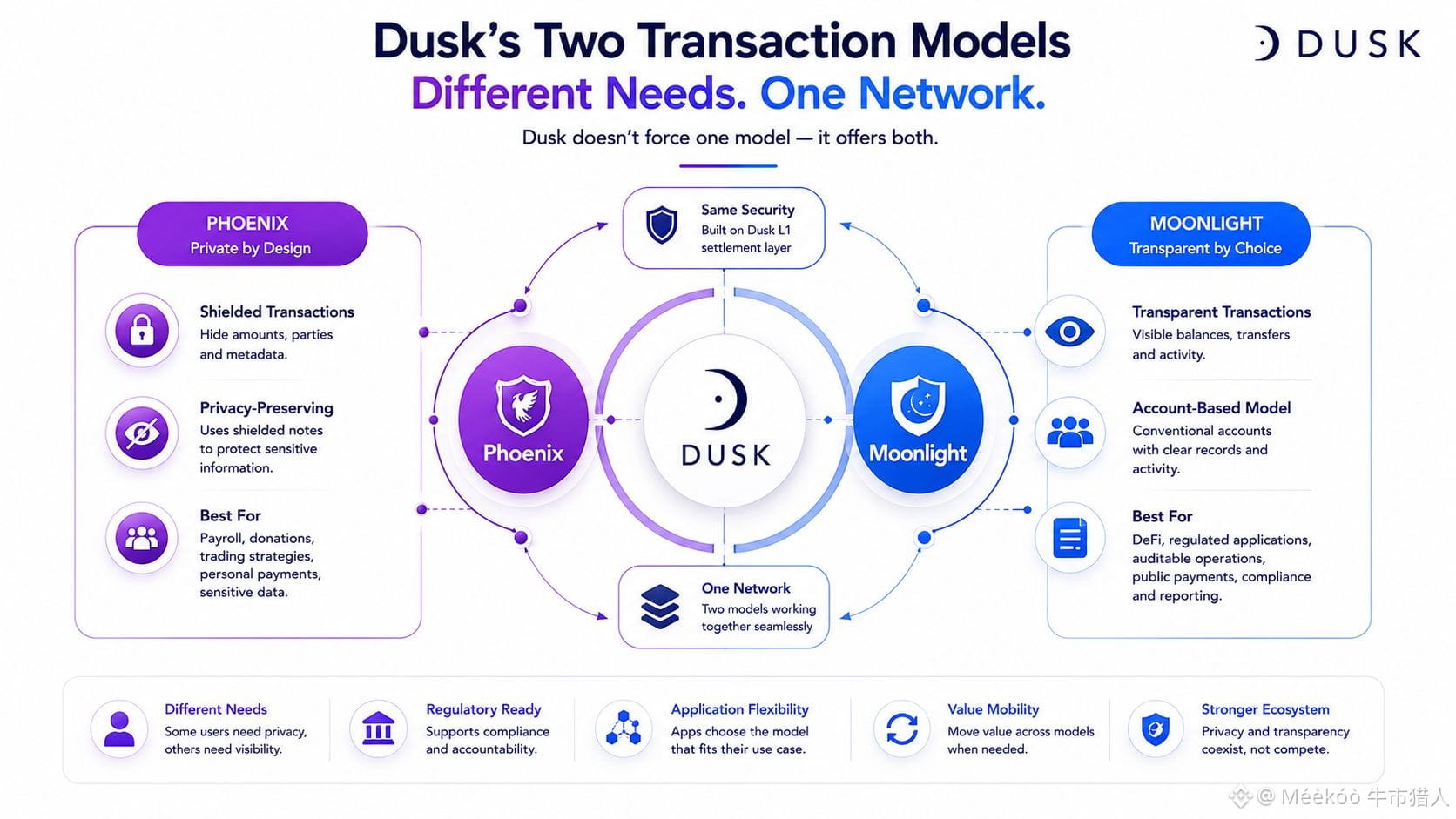
#dusk $DUSK @Dusk I keep thinking about how @Dusk approaches transactions from two different directions. Phoenix keeps transaction details private, while Moonlight uses a transparent account based model. What interests me is not just privacy, but why having both matters.
That distinction matters more than it first appears.
A blockchain serving real-world applications cannot assume every transaction should be completely private or completely visible. Some users may need confidentiality, while regulated applications may require clearer records and accountability.
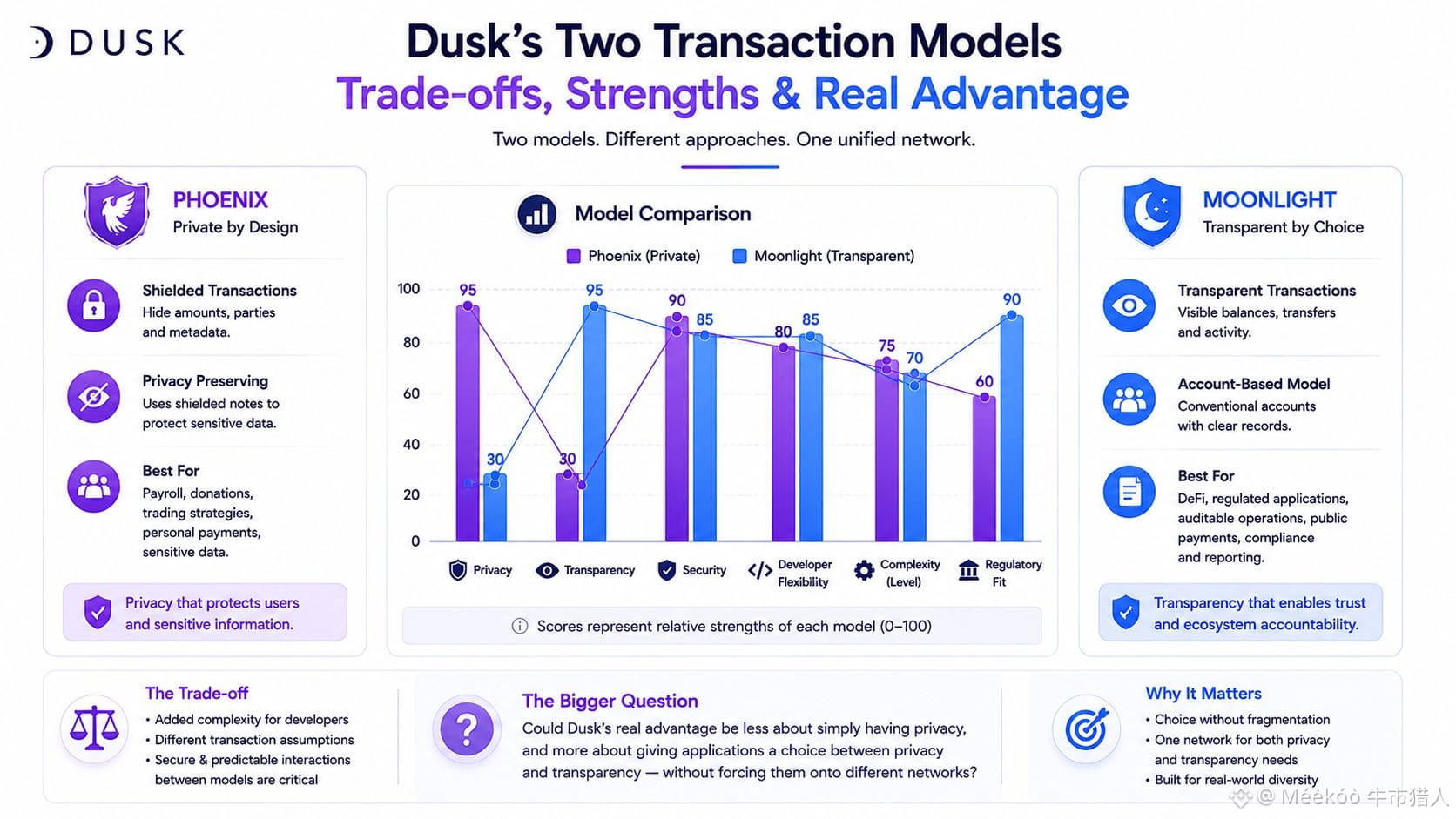
Dusk separates these needs instead of forcing one model onto everything. Phoenix uses shielded notes and privacy-preserving transactions, while Moonlight provides a conventional account model with transparent balances and activity. This gives applications different ways to handle value based on their requirements.
This is where I find the design interesting.
The trade off is added complexity. Developers must understand different transaction assumptions, while interactions between privacy and transparency need to remain secure and predictable.
So I keep wondering: could Dusk’s real advantage be less about simply having privacy, and more about giving applications a choice between privacy and transparency without forcing them onto completely different networks?
That distinction matters more than it first appears.
A blockchain serving real-world applications cannot assume every transaction should be completely private or completely visible. Some users may need confidentiality, while regulated applications may require clearer records and accountability.
Dusk separates these needs instead of forcing one model onto everything. Phoenix uses shielded notes and privacy-preserving transactions, while Moonlight provides a conventional account model with transparent balances and activity. This gives applications different ways to handle value based on their requirements.
This is where I find the design interesting.
The trade off is added complexity. Developers must understand different transaction assumptions, while interactions between privacy and transparency need to remain secure and predictable.
So I keep wondering: could Dusk’s real advantage be less about simply having privacy, and more about giving applications a choice between privacy and transparency without forcing them onto completely different networks?