@Dusk
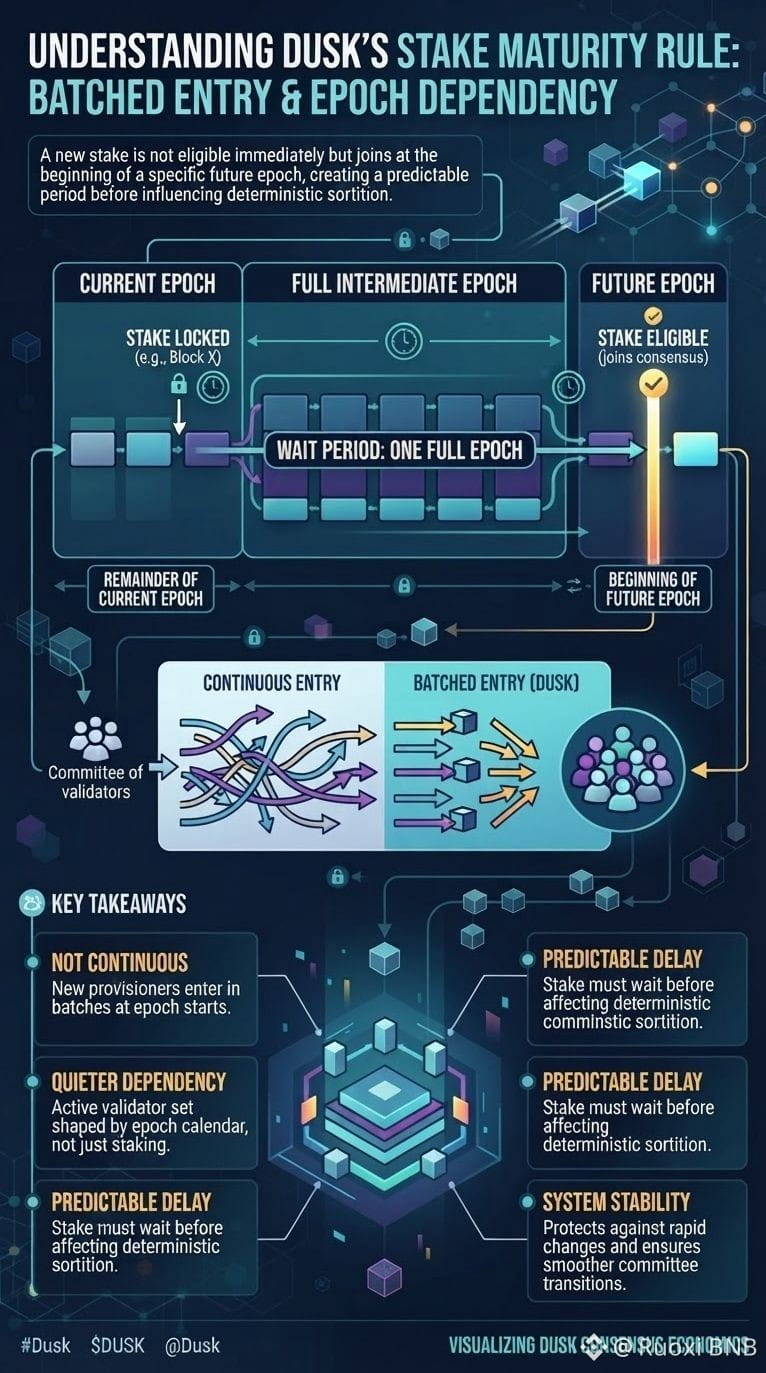
في البداية افترضت أن قاعدة النضج/الاستحقاق الخاصة بحصة “ديُسك” كانت في الغالب فترة انتظار لمنع شخص ما من الانضمام إلى الإجماع بسرعة كبيرة. لكن كلما نظرت أكثر، بدا أن التوقيت نفسه مدروس أكثر. لا تكون الحصة الجديدة مؤهلة على الفور، ولا تصبح مؤهلة عند بلوكٍ عشوائي أيضًا. يضع الورق الأبيض الأهلية في بداية حقبة (epoch)، بعد أن تكون بقايا الحقبة الحالية قد انقضت، إضافةً إلى حقبة كاملة أخرى. ما لفت انتباهي هو أن القاعدة تجعل عمليًا المُقدِّمين الجدد يدخلون الإجماع على دفعات بدلًا من أن يحدث ذلك بشكل مستمر. وهذا يخلق اعتمادًا أكثر هدوءًا: فمجموعة المدققين النشطين تتشكل جزئيًا وفق تقويم الحقَب، لا فقط وفق من قام بالإيداع/التأمين. كما يعني ذلك أن الحصة التي تم قفلها حديثًا يتعين عليها الانتظار مدةً متوقعة قبل أن تتمكن من التأثير في الاختيار الحتمي (deterministic sortition). ربما يجعل هذا تغييرات اللجان أسهل للفهم والشرح، لكنه في المقابل يُؤخِّر مدى سرعة تأثير المشاركين الجدد في النظام.
لذا ربما لا تكمن المسألة في “لماذا” يوجد تأخير في الإيداع، بل في “ما الذي يحميه” هذا التأخير فعلًا؟
@Dusk #dusk $DUSK
في البداية افترضت أن قاعدة النضج/الاستحقاق الخاصة بحصة “ديُسك” كانت في الغالب فترة انتظار لمنع شخص ما من الانضمام إلى الإجماع بسرعة كبيرة. لكن كلما نظرت أكثر، بدا أن التوقيت نفسه مدروس أكثر. لا تكون الحصة الجديدة مؤهلة على الفور، ولا تصبح مؤهلة عند بلوكٍ عشوائي أيضًا. يضع الورق الأبيض الأهلية في بداية حقبة (epoch)، بعد أن تكون بقايا الحقبة الحالية قد انقضت، إضافةً إلى حقبة كاملة أخرى. ما لفت انتباهي هو أن القاعدة تجعل عمليًا المُقدِّمين الجدد يدخلون الإجماع على دفعات بدلًا من أن يحدث ذلك بشكل مستمر. وهذا يخلق اعتمادًا أكثر هدوءًا: فمجموعة المدققين النشطين تتشكل جزئيًا وفق تقويم الحقَب، لا فقط وفق من قام بالإيداع/التأمين. كما يعني ذلك أن الحصة التي تم قفلها حديثًا يتعين عليها الانتظار مدةً متوقعة قبل أن تتمكن من التأثير في الاختيار الحتمي (deterministic sortition). ربما يجعل هذا تغييرات اللجان أسهل للفهم والشرح، لكنه في المقابل يُؤخِّر مدى سرعة تأثير المشاركين الجدد في النظام.
لذا ربما لا تكمن المسألة في “لماذا” يوجد تأخير في الإيداع، بل في “ما الذي يحميه” هذا التأخير فعلًا؟
@Dusk #dusk $DUSK