
#dusk $DUSK @Dusk
I’ve been looking deeper into Dusk, and one detail changed how I was thinking about the project.
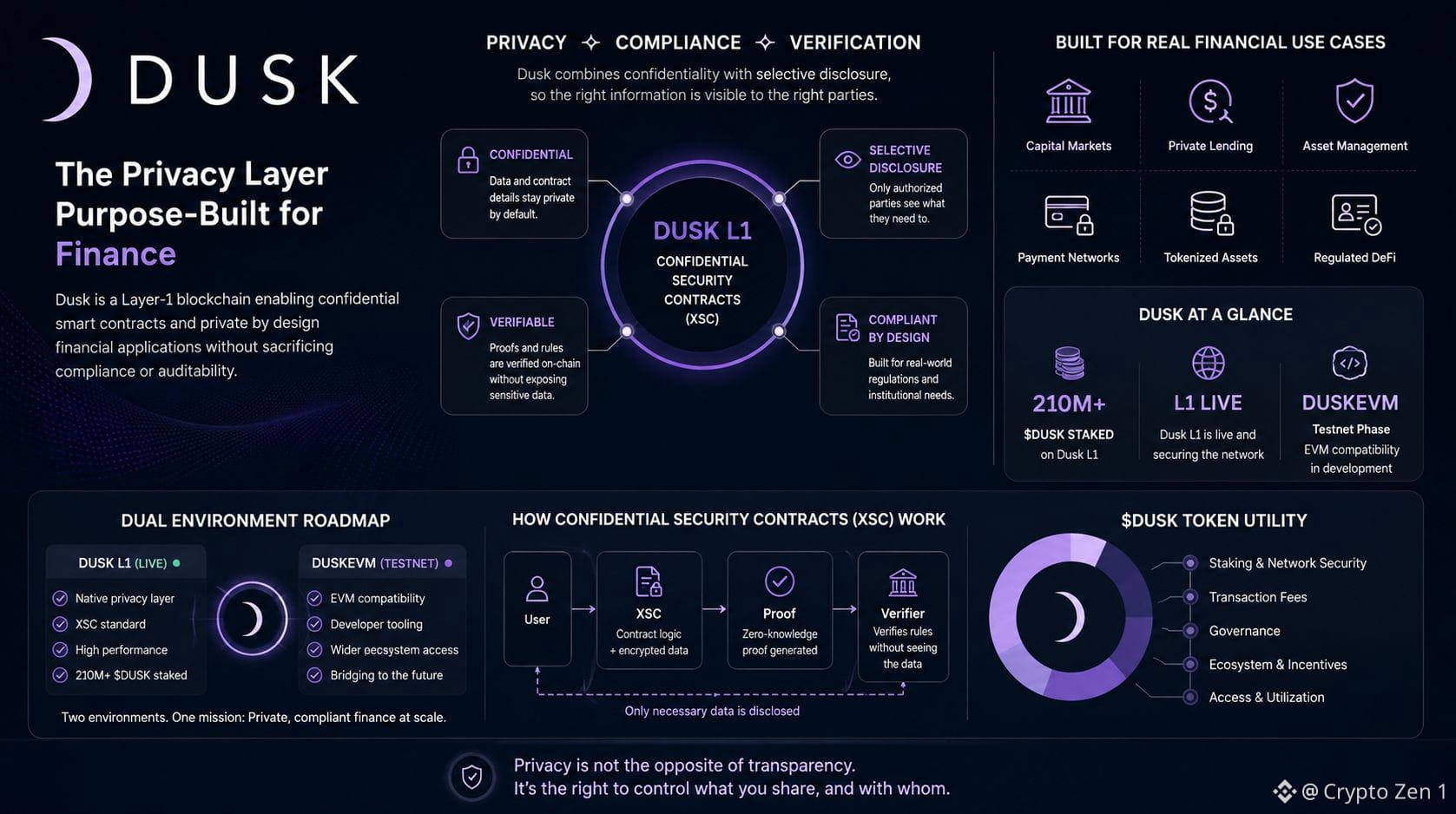
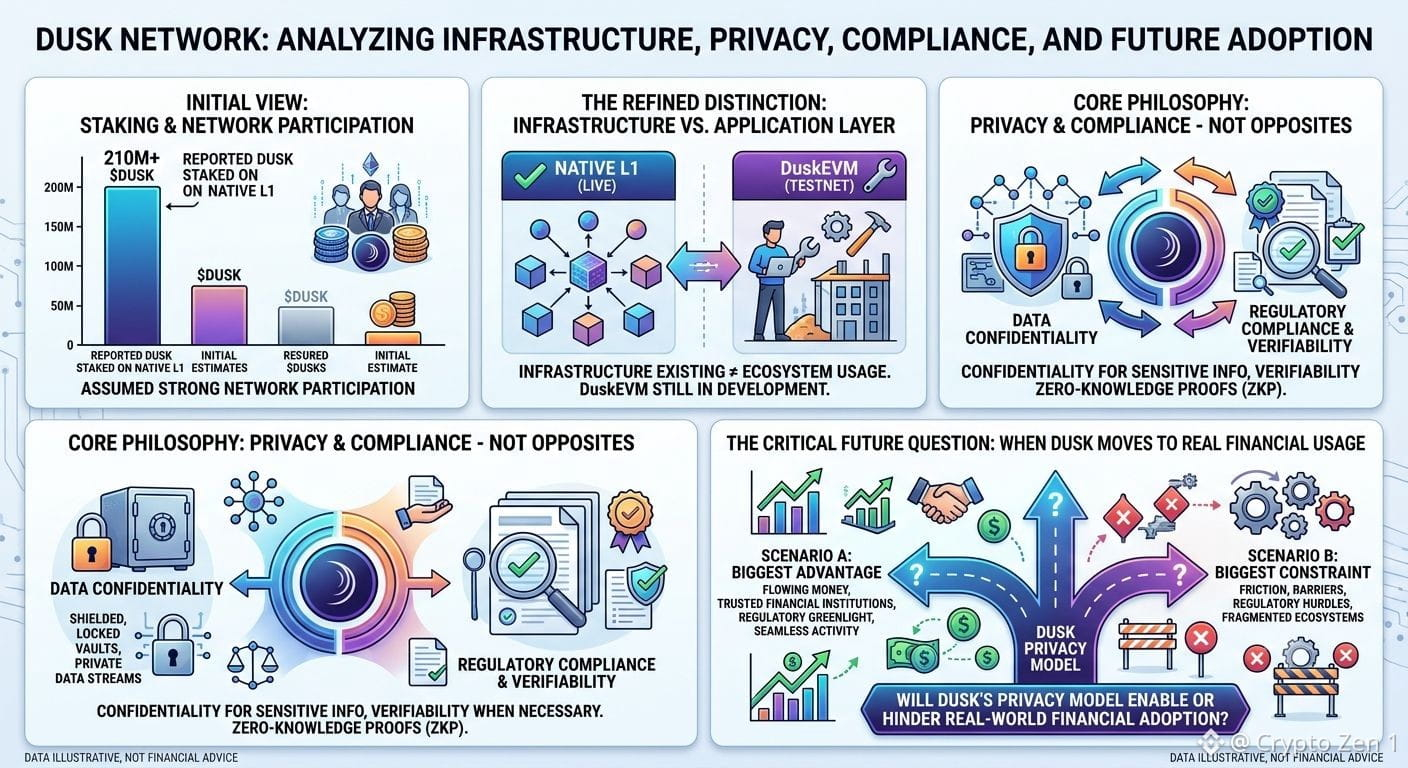
At first, I looked at the 210M+ $DUSK reportedly staked on the native Dusk L1 and assumed the obvious thing: that staking mainly showed strong network participation.
Then I checked the other side.
DuskEVM is still in testnet, while the native L1 is already live. That distinction matters because staking a token and actually using it across a broader financial ecosystem are two different things.
What I found more interesting is how #Dusk seems to be positioning privacy alongside compliance rather than treating them as opposites. The idea isn't simply to hide everything. It is about keeping sensitive financial information confidential while still allowing the right information to be verified when necessary.
That creates an interesting tension.
A network can have significant token participation, but that doesn't automatically mean real-world financial usage has arrived. The infrastructure can be live while some of the access and application layers are still developing.
That distinction stood out to me because Dusk isn't only solving a privacy problem. It is also trying to solve the much harder question of how private financial activity can remain verifiable and compliant.
So the question I keep coming back to is: when Dusk moves from infrastructure into real financial usage, will its privacy model become its biggest advantage or its biggest constraint?
I’ve been looking deeper into Dusk, and one detail changed how I was thinking about the project.
At first, I looked at the 210M+ $DUSK reportedly staked on the native Dusk L1 and assumed the obvious thing: that staking mainly showed strong network participation.
Then I checked the other side.
DuskEVM is still in testnet, while the native L1 is already live. That distinction matters because staking a token and actually using it across a broader financial ecosystem are two different things.
What I found more interesting is how #Dusk seems to be positioning privacy alongside compliance rather than treating them as opposites. The idea isn't simply to hide everything. It is about keeping sensitive financial information confidential while still allowing the right information to be verified when necessary.
That creates an interesting tension.
A network can have significant token participation, but that doesn't automatically mean real-world financial usage has arrived. The infrastructure can be live while some of the access and application layers are still developing.
That distinction stood out to me because Dusk isn't only solving a privacy problem. It is also trying to solve the much harder question of how private financial activity can remain verifiable and compliant.
So the question I keep coming back to is: when Dusk moves from infrastructure into real financial usage, will its privacy model become its biggest advantage or its biggest constraint?