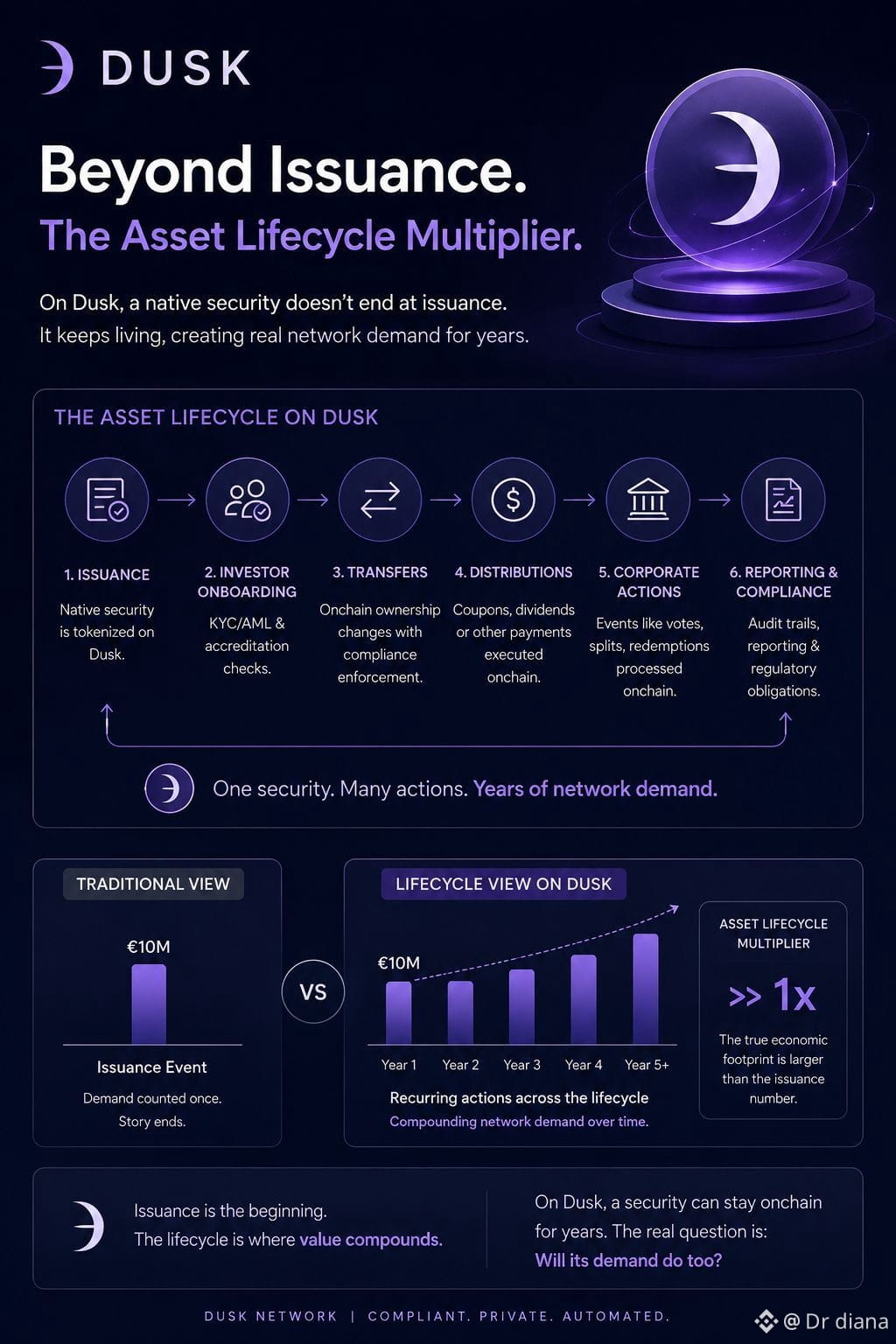
أظل أفكر في مدى غرابة طريقتنا في قياس الأصول المُجزّأة إلى رموز. مُصدِر يقدّم 10 ملايين يورو من الأوراق المالية على السلسلة، فيقوم الجميع بعدّ الـ10 ملايين يورو، ومع ذلك تكاد القصة تتوقف عند هذا الحد.
لكن الورقة المالية لا تتوقف عن الوجود بعد الإصدار.
إذا كنت أفهم DUSK بشكل صحيح، فإن الإصدار الأصلي يعني أن الأصل يمكنه الاستمرار بالعيش على نفس البنية التحتية مع تغيّر الملكية؛ إذ يتم التحقق من المستثمرين، وتسوية عمليات النقل، وتحدث التوزيعات، وتُعالَج الإجراءات المؤسسية، وفي النهاية تظهر التقارير أو مراجعات الامتثال. يمكن لورقة مالية واحدة أن تواصل توليد نشاط على الشبكة طويلاً بعد حدث التحويل الأولي إلى رمز.
وهذا يجعلني أتساءل عن «مُضاعِف دورة حياة الأصل».
ربما لا يكون 1 يورو من الإصدار في الحقيقة هو 1 يورو من الطلب على الشبكة. إذا كان هذا الأصل يطلق 20 إجراءً ذا معنى عبر عدة سنوات، فقد يكون أثره الاقتصادي على الشبكة أكبر بكثير مما توحي به الأرقام الخاصة بالإصدار الأصلي.
لكن بصراحة، هنا أيضًا أشك. لا تَعتبر DUSK أن هذه الإجراءات مهمة إلا إذا ظلت فعلاً على Dusk. فإذا انتقلت خدمات الامتثال أو المدفوعات أو التقارير بهدوء إلى الأنظمة التقليدية، فإن دورة الحياة تتجزأ ويختفي المُضاعِف.
لذا ربما يكون الإصدار المؤكَّد هو الرقم الابتدائي فقط.
ما أودّ معرفته حقًا هو مقدار النشاط المتكرر الذي يُولّده كل أصل مُصدَر بعد السنة الأولى، السنة الثانية، السنة الخامسة.
قد يبقى أصل واحد على السلسلة لسنوات.
أما ما إذا كان الطلب المرتبط به يفعل الشيء ذاته، فهذا يبدو كأنه السؤال الأصعب.
#dusk $DUSK @Dusk $TRUMP $MOVE
لكن الورقة المالية لا تتوقف عن الوجود بعد الإصدار.
إذا كنت أفهم DUSK بشكل صحيح، فإن الإصدار الأصلي يعني أن الأصل يمكنه الاستمرار بالعيش على نفس البنية التحتية مع تغيّر الملكية؛ إذ يتم التحقق من المستثمرين، وتسوية عمليات النقل، وتحدث التوزيعات، وتُعالَج الإجراءات المؤسسية، وفي النهاية تظهر التقارير أو مراجعات الامتثال. يمكن لورقة مالية واحدة أن تواصل توليد نشاط على الشبكة طويلاً بعد حدث التحويل الأولي إلى رمز.
وهذا يجعلني أتساءل عن «مُضاعِف دورة حياة الأصل».
ربما لا يكون 1 يورو من الإصدار في الحقيقة هو 1 يورو من الطلب على الشبكة. إذا كان هذا الأصل يطلق 20 إجراءً ذا معنى عبر عدة سنوات، فقد يكون أثره الاقتصادي على الشبكة أكبر بكثير مما توحي به الأرقام الخاصة بالإصدار الأصلي.
لكن بصراحة، هنا أيضًا أشك. لا تَعتبر DUSK أن هذه الإجراءات مهمة إلا إذا ظلت فعلاً على Dusk. فإذا انتقلت خدمات الامتثال أو المدفوعات أو التقارير بهدوء إلى الأنظمة التقليدية، فإن دورة الحياة تتجزأ ويختفي المُضاعِف.
لذا ربما يكون الإصدار المؤكَّد هو الرقم الابتدائي فقط.
ما أودّ معرفته حقًا هو مقدار النشاط المتكرر الذي يُولّده كل أصل مُصدَر بعد السنة الأولى، السنة الثانية، السنة الخامسة.
قد يبقى أصل واحد على السلسلة لسنوات.
أما ما إذا كان الطلب المرتبط به يفعل الشيء ذاته، فهذا يبدو كأنه السؤال الأصعب.
#dusk $DUSK @Dusk $TRUMP $MOVE