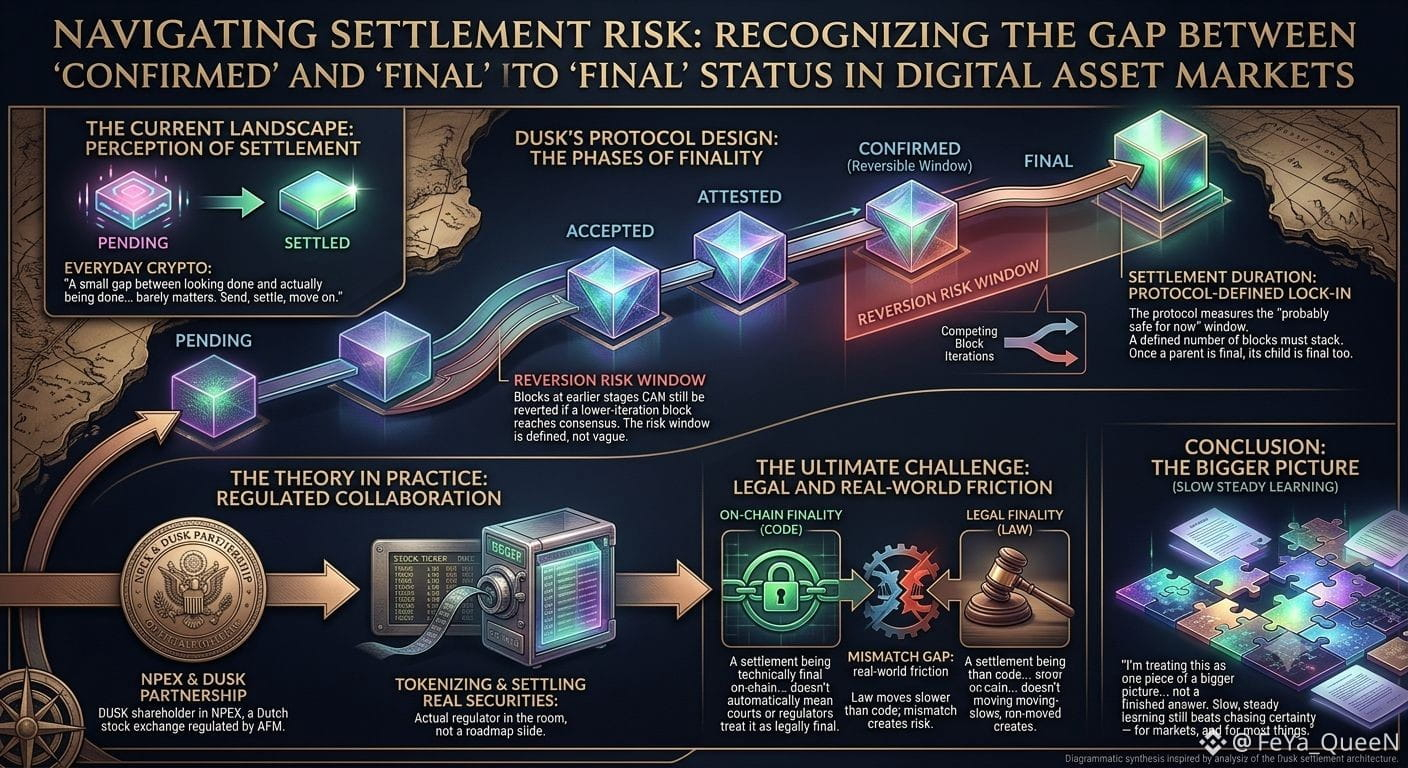
لقد كنت أقرأ وثائق Dusk الخاصة بتسوية المعاملات، وظلت فكرة واحدة تلازمني: إن «confirmed» و«final» ليستا دائمًا الشيء نفسه. في التحويلات اليومية للعملات الرقمية، هذا التمييز لا يهم كثيرًا — ترسل توكنًا، فيتم تسويته، ثم تمضي قدمًا. لكن في الأسواق المالية، فإن هذه الفجوة الصغيرة بين اعتبار الأمر «تم» وبين كونه «تم بالفعل» هي المكان الذي تختبئ فيه المخاطر الحقيقية.
هذه هي الجزئية من تصميم Dusk التي لفتت انتباهي — لكن ليس بالطريقة التي افترضتها أولًا. فالبلوك هنا لا ينتقل مباشرةً من «pending» إلى «final». بل يمر بمراحل: accepted، ثم attested، ثم confirmed، ثم final — وفي المراحل المبكرة، يمكن أن يُعاد تراجعه فعليًا إذا وصل إلى الإجماع بلوك منافس، ذو تكرار أقل. والاختلاف هو أن Dusk لا يترك هذه النافذة غامضة. فالبروتوكول يحدد بدقة عدد التأكيدات التي تُغلقها: يجب أن يتراكم عدد محدد من البلوكات فوقه كي يصبح الإقرار مؤمّنًا، وبمجرد أن يصبح والده نهائيًا (final)، يصبح هو أيضًا نهائيًا. تلك النافذة التي غالبًا ما يتركها معظم السلاسل بلا كلام — «يُحتمل أنه آمن الآن» — يحددها Dusk بالفعل بدلًا من إخفائها.
ما يجعل الأمر يبدو أقل كونه مجرد نظرية هو أن Dusk أصبحت مساهمًا في NPEX، وهي بورصة أوراق مالية هولندية منظَّمة من قِبل AFM، والآن يعمل الطرفان معًا على ترميز وتيسير تسوية الأوراق المالية الحقيقية. هذا تنظيم فعلي موجود في الغرفة، وليس مجرد شريحة في خارطة طريق.
ومع ذلك، لست جاهزًا للإعلان أن الفجوة قد أُغلقت. كون التسوية نهائية تقنيًا على السلسلة لا يعني تلقائيًا أن كل محكمة أو طرف مقابل أو جهة تنظيمية تتعامل معها على أنها نهائية قانونيًا. يميل القانون إلى التحرك ببطء أكثر من البرمجيات، وغالبًا ما يكون عدم التطابق هذا هو المكان الذي تظهر فيه الاحتكاكات على أرض الواقع.
أنا أتعامل مع هذا باعتباره جزءًا من صورة أكبر، لا كإجابة مكتملة. التعلم البطيء والمتدرج ما زال يتفوق على مطاردة اليقين — بالنسبة للأسواق، ولأغلب الأشياء.
@Dusk #dusk $DUSK
هذه هي الجزئية من تصميم Dusk التي لفتت انتباهي — لكن ليس بالطريقة التي افترضتها أولًا. فالبلوك هنا لا ينتقل مباشرةً من «pending» إلى «final». بل يمر بمراحل: accepted، ثم attested، ثم confirmed، ثم final — وفي المراحل المبكرة، يمكن أن يُعاد تراجعه فعليًا إذا وصل إلى الإجماع بلوك منافس، ذو تكرار أقل. والاختلاف هو أن Dusk لا يترك هذه النافذة غامضة. فالبروتوكول يحدد بدقة عدد التأكيدات التي تُغلقها: يجب أن يتراكم عدد محدد من البلوكات فوقه كي يصبح الإقرار مؤمّنًا، وبمجرد أن يصبح والده نهائيًا (final)، يصبح هو أيضًا نهائيًا. تلك النافذة التي غالبًا ما يتركها معظم السلاسل بلا كلام — «يُحتمل أنه آمن الآن» — يحددها Dusk بالفعل بدلًا من إخفائها.
ما يجعل الأمر يبدو أقل كونه مجرد نظرية هو أن Dusk أصبحت مساهمًا في NPEX، وهي بورصة أوراق مالية هولندية منظَّمة من قِبل AFM، والآن يعمل الطرفان معًا على ترميز وتيسير تسوية الأوراق المالية الحقيقية. هذا تنظيم فعلي موجود في الغرفة، وليس مجرد شريحة في خارطة طريق.
ومع ذلك، لست جاهزًا للإعلان أن الفجوة قد أُغلقت. كون التسوية نهائية تقنيًا على السلسلة لا يعني تلقائيًا أن كل محكمة أو طرف مقابل أو جهة تنظيمية تتعامل معها على أنها نهائية قانونيًا. يميل القانون إلى التحرك ببطء أكثر من البرمجيات، وغالبًا ما يكون عدم التطابق هذا هو المكان الذي تظهر فيه الاحتكاكات على أرض الواقع.
أنا أتعامل مع هذا باعتباره جزءًا من صورة أكبر، لا كإجابة مكتملة. التعلم البطيء والمتدرج ما زال يتفوق على مطاردة اليقين — بالنسبة للأسواق، ولأغلب الأشياء.
@Dusk #dusk $DUSK