أمر كنت أفكر فيه طوال اليوم أثناء بحثي عن Dusk وهو الهوية.
افتراضي الأول كان أن الخصوصية في التطبيقات المالية تعني أساسًا إخفاء تفاصيل المعاملات. لكن كلما تعمقت في بنية Dusk، أدركت أن هناك مشكلة أخرى بنفس القدر من الأهمية: إثبات أن شخصًا ما لديه الصلاحية للقيام بشيء ما دون كشف كل شيء عن هويته.
وهذا ما جعل Citadel مثيرًا للاهتمام بالنسبة لي.
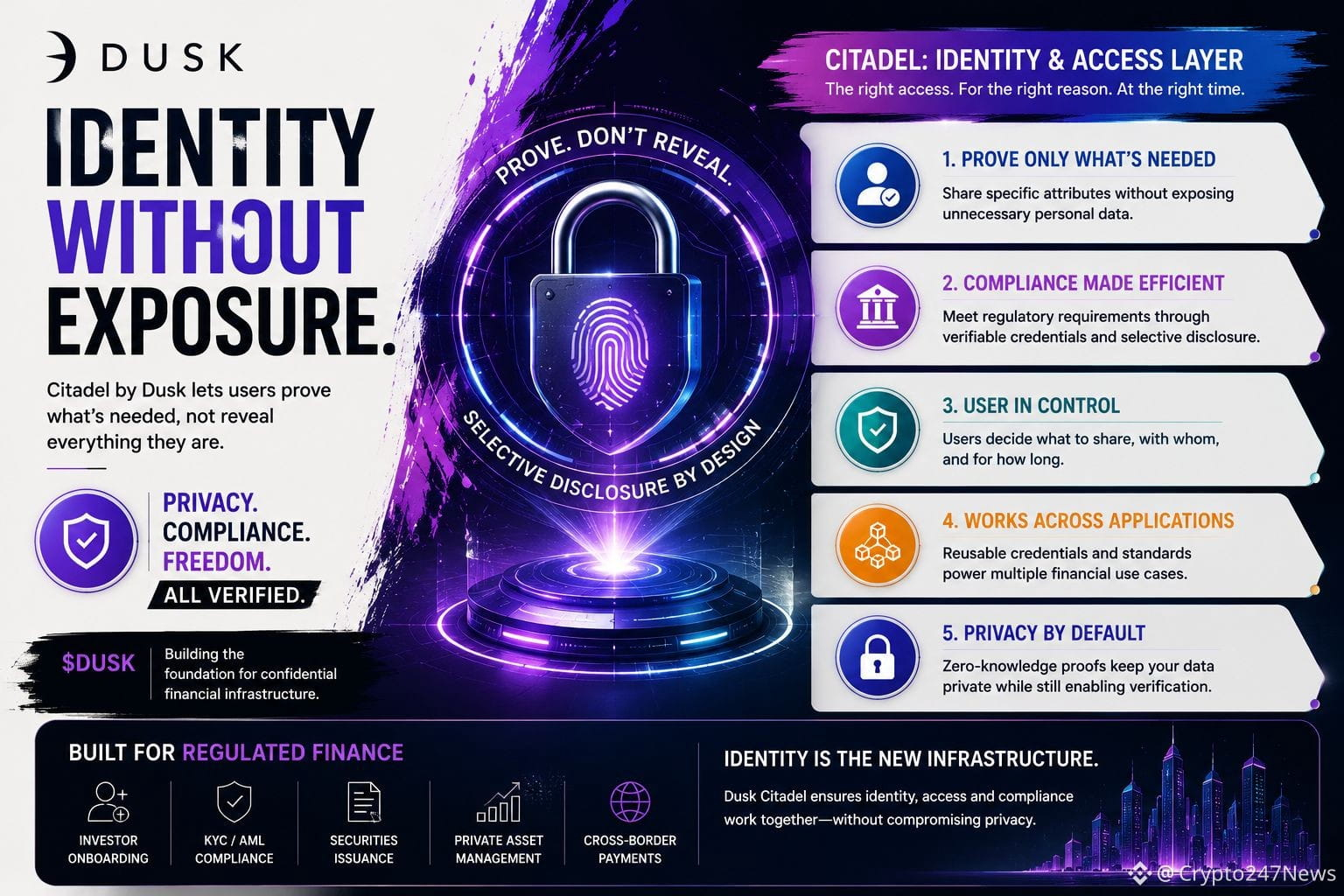
يصف Dusk Citadel بوصفه طبقة هوية وإتاحة مبنية حول الإفصاح الانتقائي. بدلًا من وضع السمات الشخصية مباشرةً على السلسلة، يمكن للنظام أن يتيح للمستخدم إثبات المعلومات المطلوبة من تطبيق معيّن مع إبقاء تفاصيل أخرى خاصة.
أجد هذا أكثر إثارة للاهتمام من مجرد قول «هوية بلوكتشين».
تخيّل تطبيقًا ماليًا خاضعًا للتنظيم. قد يحتاج إلى معرفة أن المستثمر يستوفي شرطًا معيّنًا، لكن ليس بالضرورة أن يحتاج إلى معرفة كل قطعة من المعلومات الشخصية عن هذا المستثمر.
وهذا يطرح سؤال تصميم مختلف: هل يمكن أن تصبح الامتثال أمرًا يُثبت عند الحاجة بدلًا من كونه يتطلب كشف البيانات الشخصية بشكل دائم؟
ما زلت أحاول فهم الجانب العملي لذلك.
من يقرر ما هي السمات التي يُسمح للتطبيق بطلبها؟ وكيف يتم إلغاء بيانات الاعتماد أو تحديثها؟ ومع قيام منصات مالية مختلفة بوضع متطلباتها الخاصة، هل يمكن للإفصاح الانتقائي أن يظل بسيطًا بالنسبة للمستخدمين العاديين؟
تهمني هذه الأسئلة لأن الهوية قد تصبح بسهولة الجزء من النظام المالي الذي تختفي فيه الخصوصية.
نهج Dusk يجعلني أعتقد أن التحدي الحقيقي ليس فقط إبقاء المعاملات سرّية. بل هو إنشاء نظام يمكن فيه أن تعمل الهوية والإتاحة والامتثال والخصوصية معًا دون إجبار المستخدمين على كشف أكثر مما هو ضروري.
وهذا هو الجزء من Dusk الذي سأبحث عنه بعد ذلك. #dusk $DUSK @Dusk
افتراضي الأول كان أن الخصوصية في التطبيقات المالية تعني أساسًا إخفاء تفاصيل المعاملات. لكن كلما تعمقت في بنية Dusk، أدركت أن هناك مشكلة أخرى بنفس القدر من الأهمية: إثبات أن شخصًا ما لديه الصلاحية للقيام بشيء ما دون كشف كل شيء عن هويته.
وهذا ما جعل Citadel مثيرًا للاهتمام بالنسبة لي.
يصف Dusk Citadel بوصفه طبقة هوية وإتاحة مبنية حول الإفصاح الانتقائي. بدلًا من وضع السمات الشخصية مباشرةً على السلسلة، يمكن للنظام أن يتيح للمستخدم إثبات المعلومات المطلوبة من تطبيق معيّن مع إبقاء تفاصيل أخرى خاصة.
أجد هذا أكثر إثارة للاهتمام من مجرد قول «هوية بلوكتشين».
تخيّل تطبيقًا ماليًا خاضعًا للتنظيم. قد يحتاج إلى معرفة أن المستثمر يستوفي شرطًا معيّنًا، لكن ليس بالضرورة أن يحتاج إلى معرفة كل قطعة من المعلومات الشخصية عن هذا المستثمر.
وهذا يطرح سؤال تصميم مختلف: هل يمكن أن تصبح الامتثال أمرًا يُثبت عند الحاجة بدلًا من كونه يتطلب كشف البيانات الشخصية بشكل دائم؟
ما زلت أحاول فهم الجانب العملي لذلك.
من يقرر ما هي السمات التي يُسمح للتطبيق بطلبها؟ وكيف يتم إلغاء بيانات الاعتماد أو تحديثها؟ ومع قيام منصات مالية مختلفة بوضع متطلباتها الخاصة، هل يمكن للإفصاح الانتقائي أن يظل بسيطًا بالنسبة للمستخدمين العاديين؟
تهمني هذه الأسئلة لأن الهوية قد تصبح بسهولة الجزء من النظام المالي الذي تختفي فيه الخصوصية.
نهج Dusk يجعلني أعتقد أن التحدي الحقيقي ليس فقط إبقاء المعاملات سرّية. بل هو إنشاء نظام يمكن فيه أن تعمل الهوية والإتاحة والامتثال والخصوصية معًا دون إجبار المستخدمين على كشف أكثر مما هو ضروري.
وهذا هو الجزء من Dusk الذي سأبحث عنه بعد ذلك. #dusk $DUSK @Dusk