Something about @Dusk ’s architecture really caught my attention.
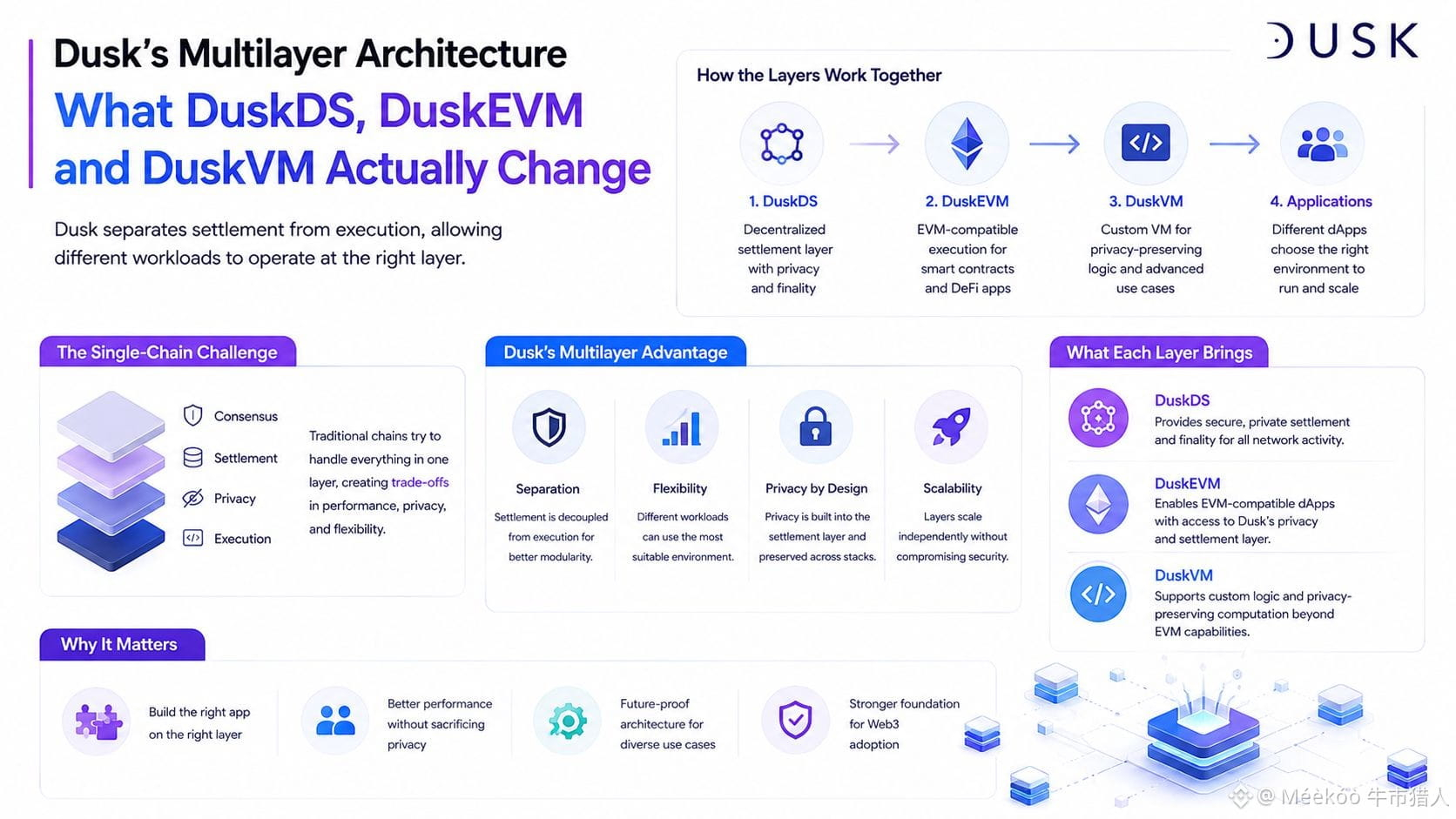
Instead of forcing every application into one execution environment, Dusk separates settlement from execution. It sounds simple, but it can make a big difference in how different applications fit into the network.
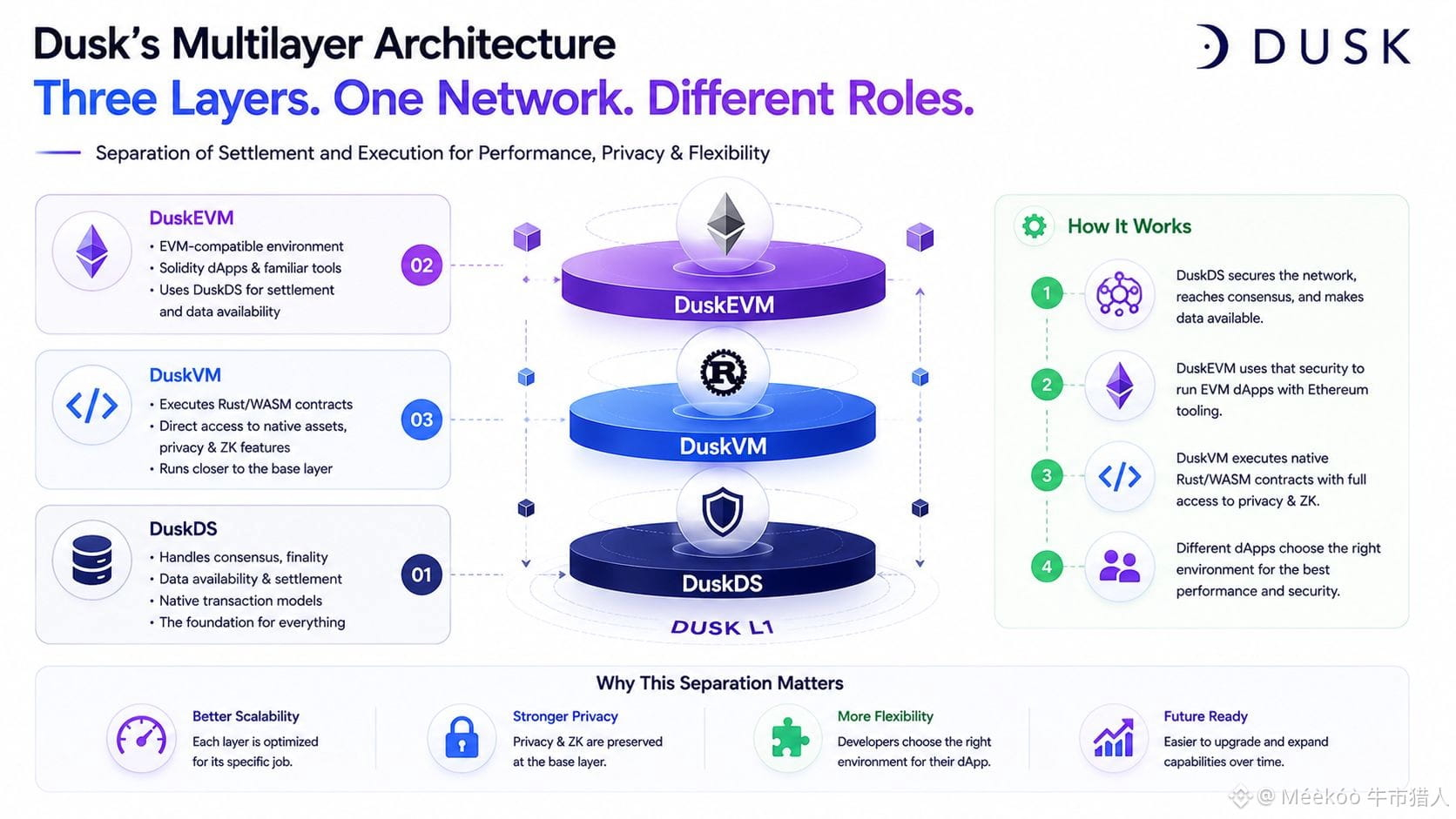
At the foundation is DuskDS, handling consensus, finality, data availability, and native transactions.
Then there’s DuskEVM, which brings EVM compatibility to Dusk. Developers can use Solidity and familiar Ethereum tooling while relying on DuskDS for settlement and data availability.
DuskVM takes things closer to the base layer. It allows Rust/WASM contracts to execute directly on Dusk L1, giving applications deeper access to native assets, privacy, and zero-knowledge capabilities.
That separation is what interests me most.
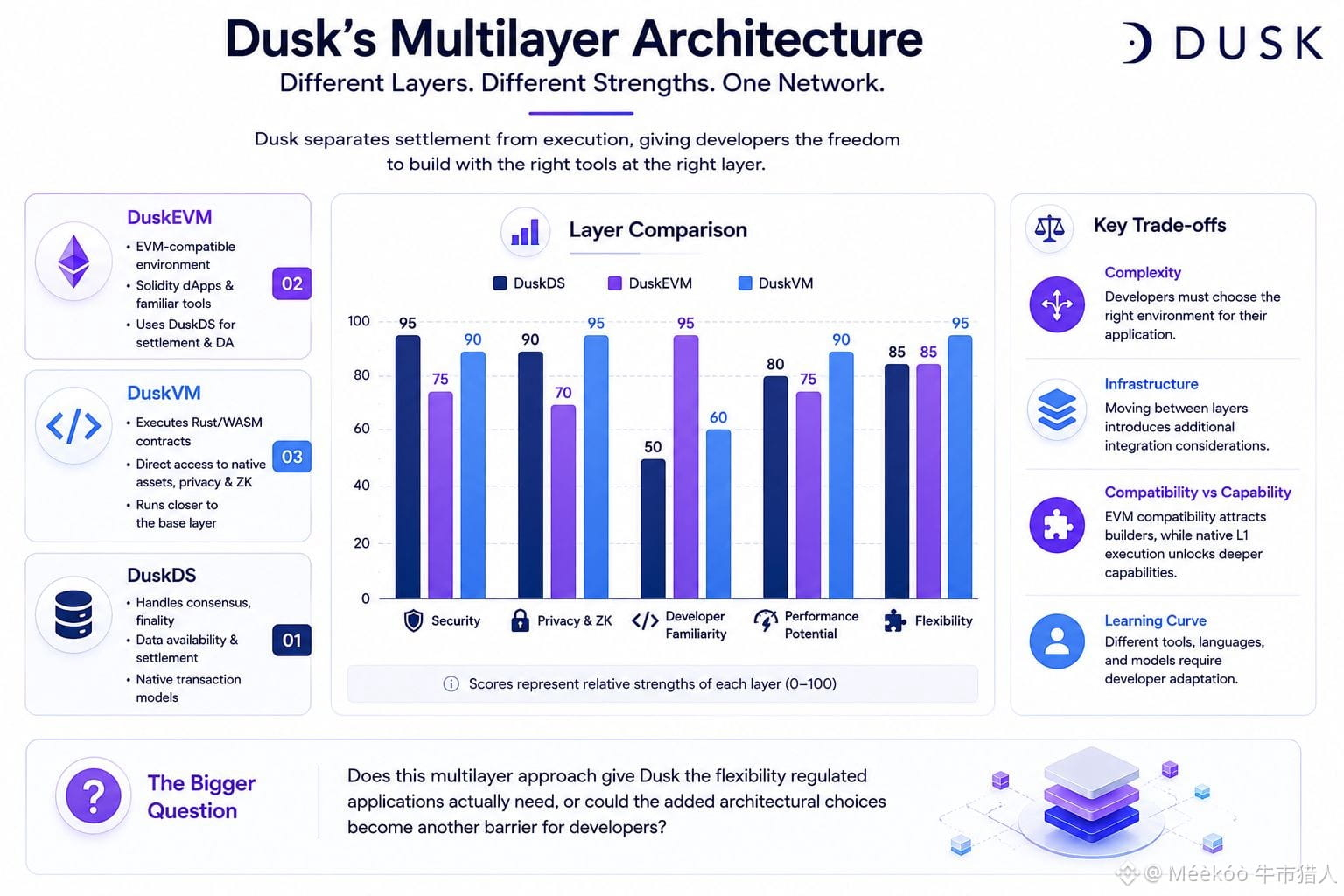
Of course, more flexibility also means more choices for developers, and that can add complexity. But for Dusk’s focus on regulated applications, privacy, and on-chain finance, having different execution environments could be a real advantage.
The big question is
Can Dusk turn this architectural flexibility into a genuine edge for regulated applications, without making development unnecessarily complicated?
#dusk $DUSK @Dusk
Instead of forcing every application into one execution environment, Dusk separates settlement from execution. It sounds simple, but it can make a big difference in how different applications fit into the network.
At the foundation is DuskDS, handling consensus, finality, data availability, and native transactions.
Then there’s DuskEVM, which brings EVM compatibility to Dusk. Developers can use Solidity and familiar Ethereum tooling while relying on DuskDS for settlement and data availability.
DuskVM takes things closer to the base layer. It allows Rust/WASM contracts to execute directly on Dusk L1, giving applications deeper access to native assets, privacy, and zero-knowledge capabilities.
That separation is what interests me most.
Of course, more flexibility also means more choices for developers, and that can add complexity. But for Dusk’s focus on regulated applications, privacy, and on-chain finance, having different execution environments could be a real advantage.
The big question is
Can Dusk turn this architectural flexibility into a genuine edge for regulated applications, without making development unnecessarily complicated?
#dusk $DUSK @Dusk