
#termmax @TermMax بدأتُ بقراءة أدوار مستخدمي TermMax على أنها إعداد بسيط من جهة المقترض مقابل جهة المُقرض.
ثم وصلت إلى مُعيّن أوامر نطاق ثنائي الاتجاه.
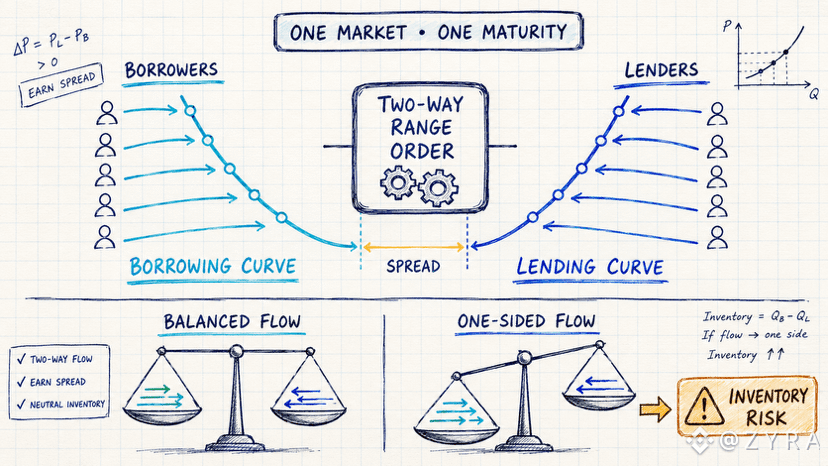
يمكن لأمر واحد أن يُسعّر كلا جانبي نفس سوق الفائدة الثابتة باستخدام منحنيَي اقتراض وإقراض منفصلين. في عقود V2، يستطيع المُنشئ (maker) تهيئة تلك المنحنيات والأسعار بدلًا من قبول سعر يختاره البروتوكول.
وهذا يغيّر نظرتي إلى @TermMax .
الفائدة الثابتة ليست رقمًا عالميًا واحدًا يظهره مجمع إقراض. بل تتكوّن عبر سيولة خاصة بكل استحقاق تُقدَّم بمعدلات وأحجام تداول مختلفة.
قد يتمكّن المُنشئ ذو القدرة على الاتجاهين من التقاط الفارق بين المنحنيين. لكن ذلك الفارق ليس عائدًا مجانيًا.
إذا هيمن طلب الاقتراض، فقد يصبح الأمر أكثر انكشافًا إلى جهة واحدة. وإذا هيمن طلب الإقراض، فإن المخزون يتحوّل إلى الجهة الأخرى. لذلك يعتمد الربح على مكان وضع المنحنيين، وكيف تصل السيولة/التدفّقات (flow)، وما إذا كان بإمكان المُنشئ إعادة التسعير قبل أن تتحرك السوق.
يُحمي MLTV القرض عبر ضمانات (collateral). لكنه لا يحمي منحنىً موضوعًا بشكل ضعيف من تدفق أوامر غير متماثل.
لذا فالرقم الذي سأراقبه ليس مجرد APY المُعلن.
سأراقب مقدار العمق القابل للاستخدام على كلا الجانبين لكل استحقاق، ومدى سرعة قيام المُنشئين بتعديل الأسعار عندما يتغير هذا التوازن.
يبدو TermMax هنا أقل مثل مجمّع إقراض بفائدة ثابتة وأكثر مثل سوق فائدة على السلسلة (onchain). $TMX
ثم وصلت إلى مُعيّن أوامر نطاق ثنائي الاتجاه.
يمكن لأمر واحد أن يُسعّر كلا جانبي نفس سوق الفائدة الثابتة باستخدام منحنيَي اقتراض وإقراض منفصلين. في عقود V2، يستطيع المُنشئ (maker) تهيئة تلك المنحنيات والأسعار بدلًا من قبول سعر يختاره البروتوكول.
وهذا يغيّر نظرتي إلى @TermMax .
الفائدة الثابتة ليست رقمًا عالميًا واحدًا يظهره مجمع إقراض. بل تتكوّن عبر سيولة خاصة بكل استحقاق تُقدَّم بمعدلات وأحجام تداول مختلفة.
قد يتمكّن المُنشئ ذو القدرة على الاتجاهين من التقاط الفارق بين المنحنيين. لكن ذلك الفارق ليس عائدًا مجانيًا.
إذا هيمن طلب الاقتراض، فقد يصبح الأمر أكثر انكشافًا إلى جهة واحدة. وإذا هيمن طلب الإقراض، فإن المخزون يتحوّل إلى الجهة الأخرى. لذلك يعتمد الربح على مكان وضع المنحنيين، وكيف تصل السيولة/التدفّقات (flow)، وما إذا كان بإمكان المُنشئ إعادة التسعير قبل أن تتحرك السوق.
يُحمي MLTV القرض عبر ضمانات (collateral). لكنه لا يحمي منحنىً موضوعًا بشكل ضعيف من تدفق أوامر غير متماثل.
لذا فالرقم الذي سأراقبه ليس مجرد APY المُعلن.
سأراقب مقدار العمق القابل للاستخدام على كلا الجانبين لكل استحقاق، ومدى سرعة قيام المُنشئين بتعديل الأسعار عندما يتغير هذا التوازن.
يبدو TermMax هنا أقل مثل مجمّع إقراض بفائدة ثابتة وأكثر مثل سوق فائدة على السلسلة (onchain). $TMX