
إصدار جديد. أوقف العقدة. استبدل الملفات التنفيذية. ثم تحقّق مما إذا كان كل ما حمّلته صحيحًا فعلًا.
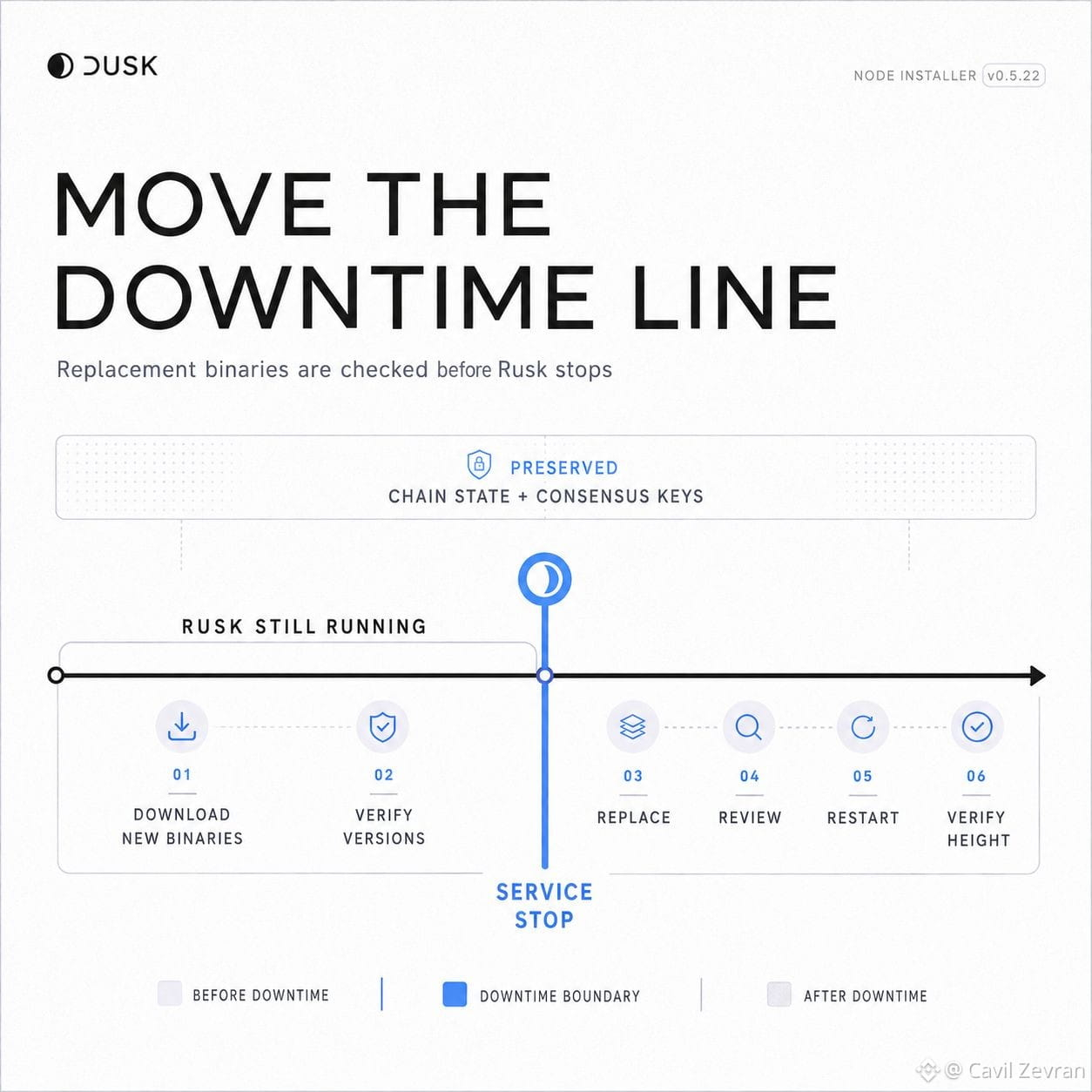
هذا هو النوع من إجراءات الصيانة التي افترضت أن مشغّلي Dusk كان عليهم فقط إدارتها بعناية. لكن مسار مُثبّت العقدة الأحدث غيّر تفصيلًا واحدًا أعتقد أنه أهم مما يبدو. لقد قَسَّمت ترقية الإصدار 0.5.22 عملية التحديث بحيث يتم تجهيز بدائل التالف قبل استبدال الملفات المباشرة والتحقق منها. تتبع إجراءات ترقية Dusk الترتيب نفسه: يقوم المُثبّت بتنزيل ملفات Rusk وملفات المحفظة المدعومة، ويقوم بفحصها، ولا يتوقف بعد ذلك خدمة Rusk قيد التشغيل. كما يحافظ على حالة السلسلة للمشغّل ومفاتيح الإجماع وعمليات تجاوز الخدمات المقصودة، بدلًا من التعامل مع الترقية كأنها تثبيت عقدة جديد. تبقى الخدمة متوقفة بعد ذلك حتى يتمكّن المشغّل من مراجعة الإعداد المُعاد إنشاؤه، وتشغيل Rusk عمدًا، والتأكد من تقدم الأقران وارتفاع الكتلة قبل اعتبار المهمة قد اكتملت.
إنها معلم تشغيل صغير لكنه مفيد.
تبدأ نافذة الترقية الآن بعد أن يصبح الاستبدال جاهزًا، وليس بينما ما زال المشغّل يكتشف إن كان قابلًا للاستخدام.
بالنسبة للبنية التحتية التي يُفترض أن تظل متاحة، فإن هذا الترتيب يستحق أكثر من مجرد أمرٍ مناسب آخر.
@Dusk $DUSK #dusk
هذا هو النوع من إجراءات الصيانة التي افترضت أن مشغّلي Dusk كان عليهم فقط إدارتها بعناية. لكن مسار مُثبّت العقدة الأحدث غيّر تفصيلًا واحدًا أعتقد أنه أهم مما يبدو. لقد قَسَّمت ترقية الإصدار 0.5.22 عملية التحديث بحيث يتم تجهيز بدائل التالف قبل استبدال الملفات المباشرة والتحقق منها. تتبع إجراءات ترقية Dusk الترتيب نفسه: يقوم المُثبّت بتنزيل ملفات Rusk وملفات المحفظة المدعومة، ويقوم بفحصها، ولا يتوقف بعد ذلك خدمة Rusk قيد التشغيل. كما يحافظ على حالة السلسلة للمشغّل ومفاتيح الإجماع وعمليات تجاوز الخدمات المقصودة، بدلًا من التعامل مع الترقية كأنها تثبيت عقدة جديد. تبقى الخدمة متوقفة بعد ذلك حتى يتمكّن المشغّل من مراجعة الإعداد المُعاد إنشاؤه، وتشغيل Rusk عمدًا، والتأكد من تقدم الأقران وارتفاع الكتلة قبل اعتبار المهمة قد اكتملت.
إنها معلم تشغيل صغير لكنه مفيد.
تبدأ نافذة الترقية الآن بعد أن يصبح الاستبدال جاهزًا، وليس بينما ما زال المشغّل يكتشف إن كان قابلًا للاستخدام.
بالنسبة للبنية التحتية التي يُفترض أن تظل متاحة، فإن هذا الترتيب يستحق أكثر من مجرد أمرٍ مناسب آخر.
@Dusk $DUSK #dusk