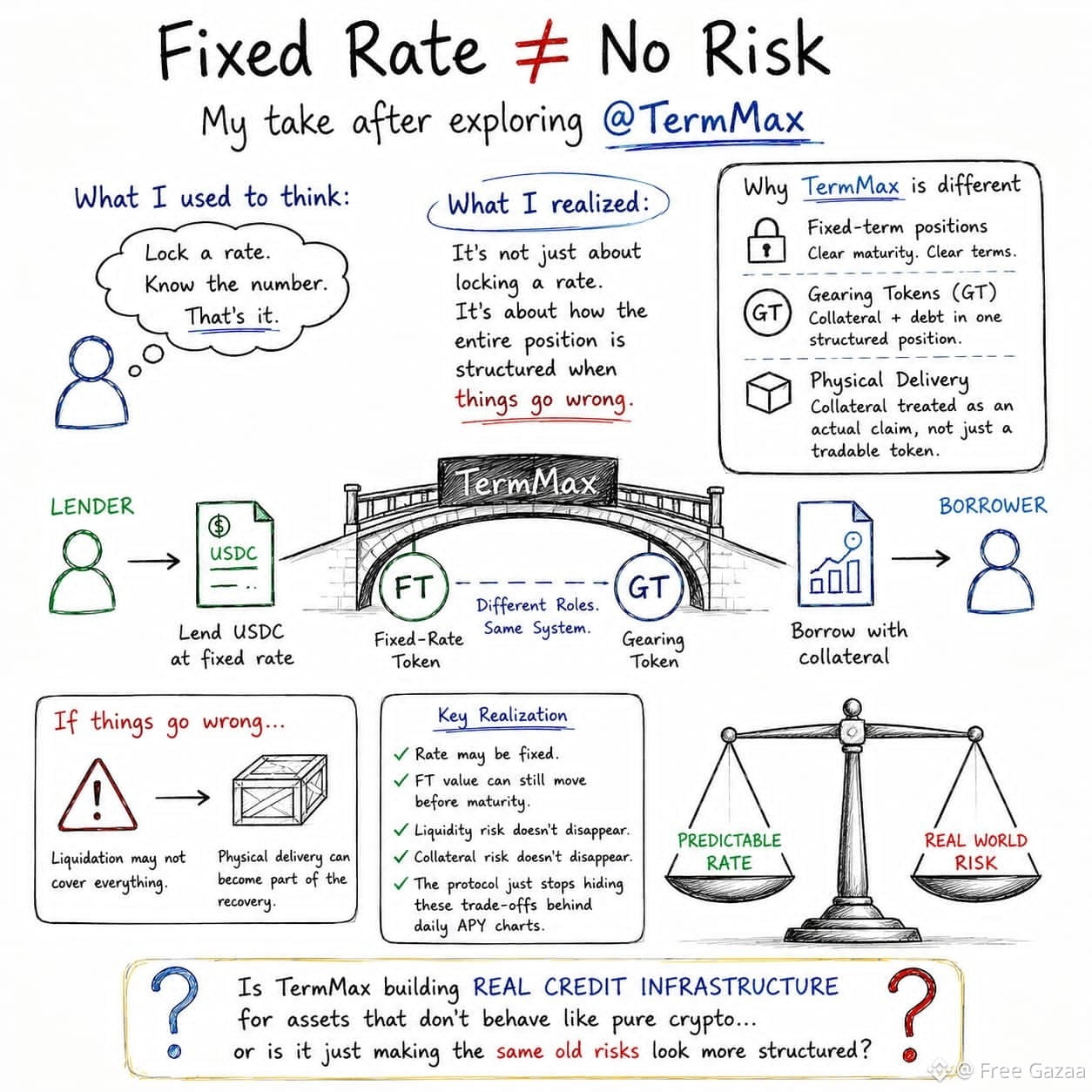
كنت أنظر إلى الإقراض بسعر ثابت بالطريقة نفسها التي يفعلها معظم الناس، فقط كأرقام أنظف من رقم الفائدة السنوية المتغيّرة المعتادة.
ثم بدأت أقضي وقتًا فعليًا مع @TermMax ، ومع كل ما قرأته، بدأ هذا التصوّر البسيط يتهاوى أكثر فأكثر. لم يكن الأمر مجرد قفل سعر. كان الأمر متعلقًا بكيفية هيكلة كامل الموقف عندما لا تسير الأمور كما خُطط لها.
لا يزال معظم التمويل اللامركزي يعتمد على عمليات التصفية والأسواق الثانوية لتنظيف الفوضى. يسلك TermMax طريقًا مختلفًا. ومن خلال المراكز محددة المدة، وGearing Tokens، وإمكانية التسليم المادي، يتعامل النظام مع الضمانات بدرجة أقل على أنها “رمز قابل للتداول”، وبدرجة أكبر على أنها “حق/ادعاء” فعلي. الـ FT ليس مجرد وعد بالفائدة بل إنه يحمل إجابة أوضح لما يحدث إذا تعثّر المقترض.
غيّرت هذه القناعة طريقة تفكيري في المخاطر. قد يكون السعر ثابتًا، لكن قيمة الـ FT في السوق الثانوية ما زالت يمكن أن تتحرك قبل الاستحقاق. مخاطر السيولة لا تختفي. مخاطر الضمانات لا تختفي. البروتوكول فقط يتوقف عن إخفاء هذه المفاضلات خلف مخططات APY اليومية.
الآن بقيت لديّ سؤال واحد يواصل العودة:
هل يقوم TermMax ببناء بنية ائتمانية حقيقية للأصول التي لا تتصرف مثل “كريبتو” خالص… أم أنه فقط يجعل نفس المخاطر القديمة تبدو أكثر تنظيمًا؟
#TermMax @TermMax
$ENA $PROM $BCH
ثم بدأت أقضي وقتًا فعليًا مع @TermMax ، ومع كل ما قرأته، بدأ هذا التصوّر البسيط يتهاوى أكثر فأكثر. لم يكن الأمر مجرد قفل سعر. كان الأمر متعلقًا بكيفية هيكلة كامل الموقف عندما لا تسير الأمور كما خُطط لها.
لا يزال معظم التمويل اللامركزي يعتمد على عمليات التصفية والأسواق الثانوية لتنظيف الفوضى. يسلك TermMax طريقًا مختلفًا. ومن خلال المراكز محددة المدة، وGearing Tokens، وإمكانية التسليم المادي، يتعامل النظام مع الضمانات بدرجة أقل على أنها “رمز قابل للتداول”، وبدرجة أكبر على أنها “حق/ادعاء” فعلي. الـ FT ليس مجرد وعد بالفائدة بل إنه يحمل إجابة أوضح لما يحدث إذا تعثّر المقترض.
غيّرت هذه القناعة طريقة تفكيري في المخاطر. قد يكون السعر ثابتًا، لكن قيمة الـ FT في السوق الثانوية ما زالت يمكن أن تتحرك قبل الاستحقاق. مخاطر السيولة لا تختفي. مخاطر الضمانات لا تختفي. البروتوكول فقط يتوقف عن إخفاء هذه المفاضلات خلف مخططات APY اليومية.
الآن بقيت لديّ سؤال واحد يواصل العودة:
هل يقوم TermMax ببناء بنية ائتمانية حقيقية للأصول التي لا تتصرف مثل “كريبتو” خالص… أم أنه فقط يجعل نفس المخاطر القديمة تبدو أكثر تنظيمًا؟
#TermMax @TermMax
$ENA $PROM $BCH