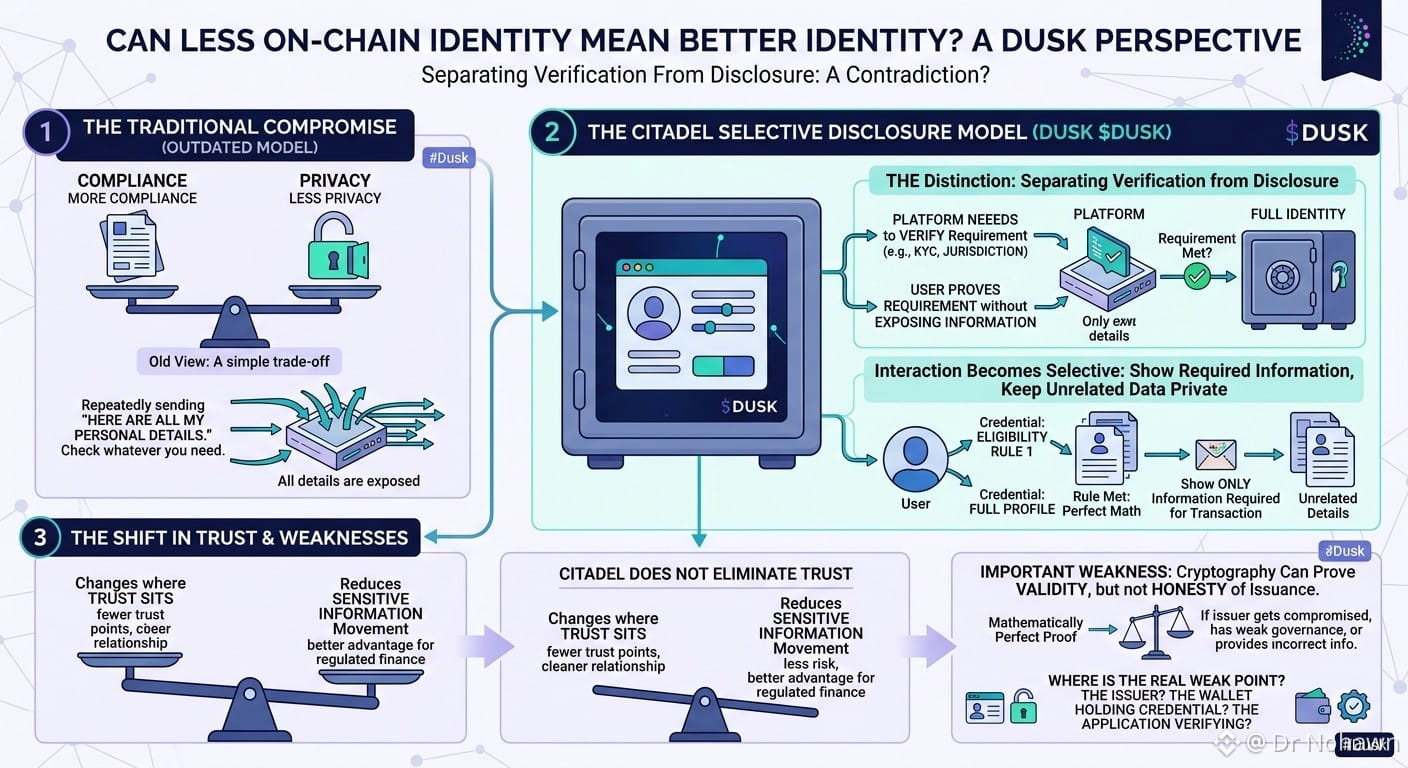

هل يمكن أن تعني مستقبل الهوية على السلسلة أن نضع - هوية أقل على السلسلة؟
كانت هذه الفكرة تبدو غريبة بالنسبة لي في البداية.
كنت أرى في السابق التمويل عبر سلاسل الكتل المُنظَّم كتجارة معقّدة من نوع ما:
امتثالٌ أكثر = خصوصية أقل.
خصوصية أكثر = امتثال أقل.
ثم بدأت أبحث بعمق أكبر في Citadel على @Dusk ، وبدأت تلك الافتراضات تتغير.
إن الفكرة المثيرة ليست مجرد إخفاء الهوية.
بل هي القدرة على إثبات شيء ما دون كشف كل شيء.
تخيّل تطبيقًا ماليًا يحتاج إلى التحقق من أنني أكملت KYC، وأنني أعيش في نطاق اختصاص معتمد، أو أنني أستوفي شرط أهلية معيّن.
يجب أن يعرف أن المتطلب قد تم استيفاؤه.
لكن لماذا ينبغي أن يعني ذلك تلقائيًا مشاركة جواز سفري وعنواني وغيرها من المعلومات الشخصية مرة أخرى؟
هنا تصبح الإفصاحات الانتقائية قوية.
بدلًا من قول:
“هذه هويتي. تحقّق مما تحتاج إليه.”
يصبح النموذج:
“هذا إثباتٌ تشفيري بأنني مؤهل. لا تحتاج إلى الباقي.”
هذا يغيّر الطريقة التي أفكر بها في الخصوصية على $DUSK .
الأمر ليس بالضرورة يتعلق بإخفاء الهوية.
بل يتعلق بالإفصاح المُتحكَّم فيه.
كشف ما تتطلبه المعاملة.
إبعاد كل ما لا علاقة له بالمعاملة.
هناك جزء ما لا يمكن للتشفير وحده حله.
يجب أن يقوم شخصٌ بإصدار الشهادة الأصلية.
إذا كانت جهة الإصدار مُعرّضة للاختراق أو كانت مهملة أو وفّرت معلومات غير صحيحة، يمكن لإثبات المعرفة الصفرية أن يظل قادرًا على إثبات أن تلك الشهادة صحيحة تمامًا.
لذلك قد لا يلغي Citadel الثقة.
بدلًا من ذلك، قد ينقل حدود الثقة مع تقليل كمية المعلومات الحساسة التي يجب أن تعبرها.
بالنسبة لي، هذا أكثر إثارة بكثير من مجرد وصف Dusk بأنه بلوكتشين للخصوصية.
ومع انتقال التمويل المُنظَّم إلى السلسلة، أين تعتقد أن أكبر نقطة ضعف ستظل قائمة: جهة الإصدار أم المحفظة أم التطبيق الذي يتحقق من الشهادة؟
#dusk $DUSK @Dusk
كانت هذه الفكرة تبدو غريبة بالنسبة لي في البداية.
كنت أرى في السابق التمويل عبر سلاسل الكتل المُنظَّم كتجارة معقّدة من نوع ما:
امتثالٌ أكثر = خصوصية أقل.
خصوصية أكثر = امتثال أقل.
ثم بدأت أبحث بعمق أكبر في Citadel على @Dusk ، وبدأت تلك الافتراضات تتغير.
إن الفكرة المثيرة ليست مجرد إخفاء الهوية.
بل هي القدرة على إثبات شيء ما دون كشف كل شيء.
تخيّل تطبيقًا ماليًا يحتاج إلى التحقق من أنني أكملت KYC، وأنني أعيش في نطاق اختصاص معتمد، أو أنني أستوفي شرط أهلية معيّن.
يجب أن يعرف أن المتطلب قد تم استيفاؤه.
لكن لماذا ينبغي أن يعني ذلك تلقائيًا مشاركة جواز سفري وعنواني وغيرها من المعلومات الشخصية مرة أخرى؟
هنا تصبح الإفصاحات الانتقائية قوية.
بدلًا من قول:
“هذه هويتي. تحقّق مما تحتاج إليه.”
يصبح النموذج:
“هذا إثباتٌ تشفيري بأنني مؤهل. لا تحتاج إلى الباقي.”
هذا يغيّر الطريقة التي أفكر بها في الخصوصية على $DUSK .
الأمر ليس بالضرورة يتعلق بإخفاء الهوية.
بل يتعلق بالإفصاح المُتحكَّم فيه.
كشف ما تتطلبه المعاملة.
إبعاد كل ما لا علاقة له بالمعاملة.
هناك جزء ما لا يمكن للتشفير وحده حله.
يجب أن يقوم شخصٌ بإصدار الشهادة الأصلية.
إذا كانت جهة الإصدار مُعرّضة للاختراق أو كانت مهملة أو وفّرت معلومات غير صحيحة، يمكن لإثبات المعرفة الصفرية أن يظل قادرًا على إثبات أن تلك الشهادة صحيحة تمامًا.
لذلك قد لا يلغي Citadel الثقة.
بدلًا من ذلك، قد ينقل حدود الثقة مع تقليل كمية المعلومات الحساسة التي يجب أن تعبرها.
بالنسبة لي، هذا أكثر إثارة بكثير من مجرد وصف Dusk بأنه بلوكتشين للخصوصية.
ومع انتقال التمويل المُنظَّم إلى السلسلة، أين تعتقد أن أكبر نقطة ضعف ستظل قائمة: جهة الإصدار أم المحفظة أم التطبيق الذي يتحقق من الشهادة؟
#dusk $DUSK @Dusk