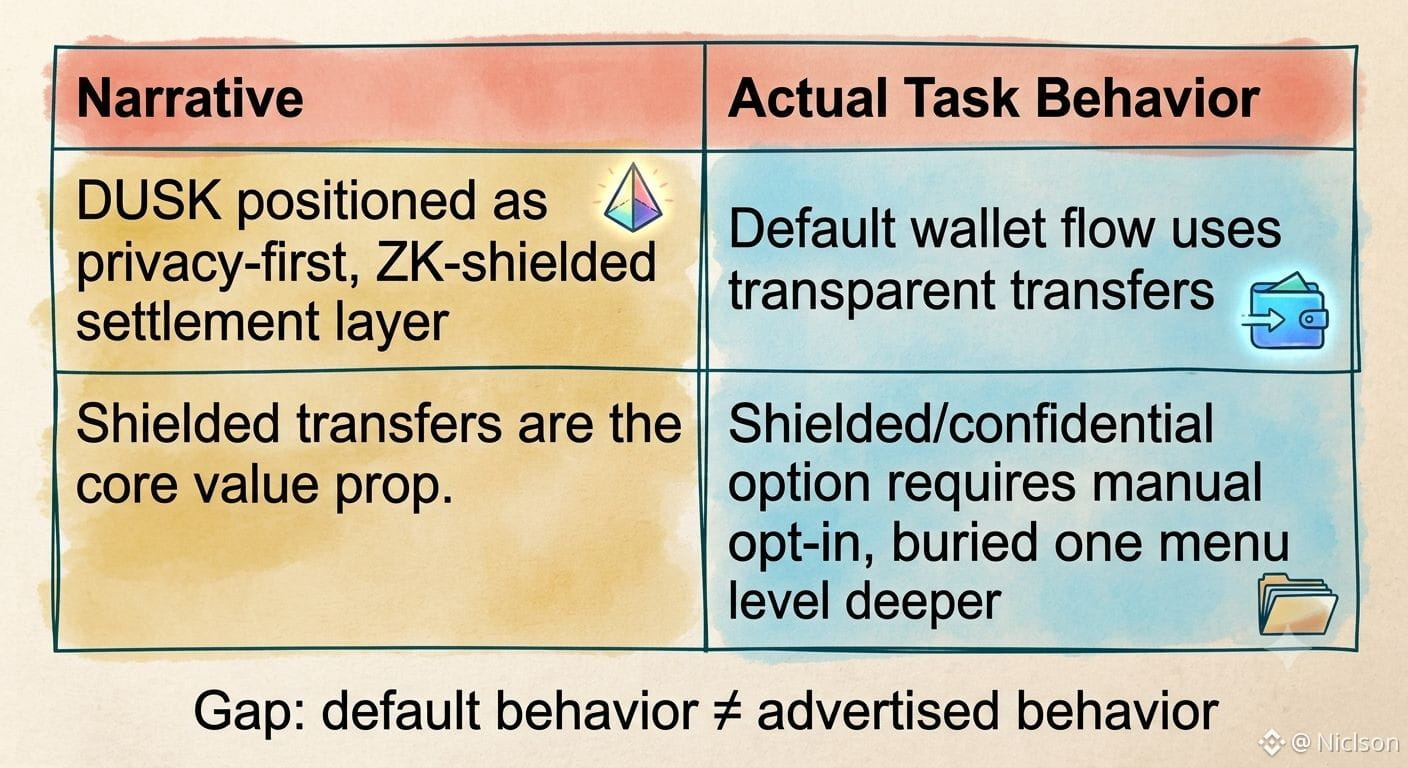
قضيت ساعة أُدقّق في تدفّق المعاملات الحقيقي لـ DUSK بدلًا من قراءة العرض مرة أخرى، وبرزت نقطة واحدة: كم القليل من أدوات “التحويل السري” يتم استخدامها افتراضيًا. يروّج Dusk Network، $DUSK ، #Dusk، @Dusk_Network نفسه لتسوية منظمة تحفظ الخصوصية، ومع ذلك فإن مسار المحفظة الافتراضي يوجّه المستخدمين عبر تحويل شفاف عادي. خيار الحماية المُشفّرة بالصفر (Zero-knowledge) موجود في القائمة التالية وهو مُفعّل بالاختيار وليس هو الإعداد الافتراضي.
إنها مجرد بادرة تصميم صغيرة، لكنها تكشف بهدوء من يُفترض أنه “المستخدم الافتراضي”: شخص لا يحتاج إلى الخصوصية بعد، ويمتلك مسارات اختبار قد تحتاجها المؤسسات لاحقًا. المسار المتقدم موجود ويعمل، لكن المستخدمين الذين ينجزون المهام الأساسية ليس بالضرورة أن يكتشفوه تلقائيًا دون توجيه.
وهذا يجعل قصة الخصوصية بمستوى الامتثال وحقيقة نمط الاستخدام اليومي يشعران كأنهما منتجان مختلفان يعيش كل منهما داخل التطبيق نفسه. كما يثير سؤالًا أكبر: هل يتم بناء المنفعة قبل أن يأتي إليها المستخدمون الذين سيطلبونها لاحقًا، بدلًا من البناء استجابةً لطلب قائم؟ قد تكون البنية التحتية تنتظر حالة الاستخدام لتلحق بها.
#dusk $DUSK @Dusk
إنها مجرد بادرة تصميم صغيرة، لكنها تكشف بهدوء من يُفترض أنه “المستخدم الافتراضي”: شخص لا يحتاج إلى الخصوصية بعد، ويمتلك مسارات اختبار قد تحتاجها المؤسسات لاحقًا. المسار المتقدم موجود ويعمل، لكن المستخدمين الذين ينجزون المهام الأساسية ليس بالضرورة أن يكتشفوه تلقائيًا دون توجيه.
وهذا يجعل قصة الخصوصية بمستوى الامتثال وحقيقة نمط الاستخدام اليومي يشعران كأنهما منتجان مختلفان يعيش كل منهما داخل التطبيق نفسه. كما يثير سؤالًا أكبر: هل يتم بناء المنفعة قبل أن يأتي إليها المستخدمون الذين سيطلبونها لاحقًا، بدلًا من البناء استجابةً لطلب قائم؟ قد تكون البنية التحتية تنتظر حالة الاستخدام لتلحق بها.
#dusk $DUSK @Dusk