أستمر في التعثّر مع المُصدّقين (الـ validators).
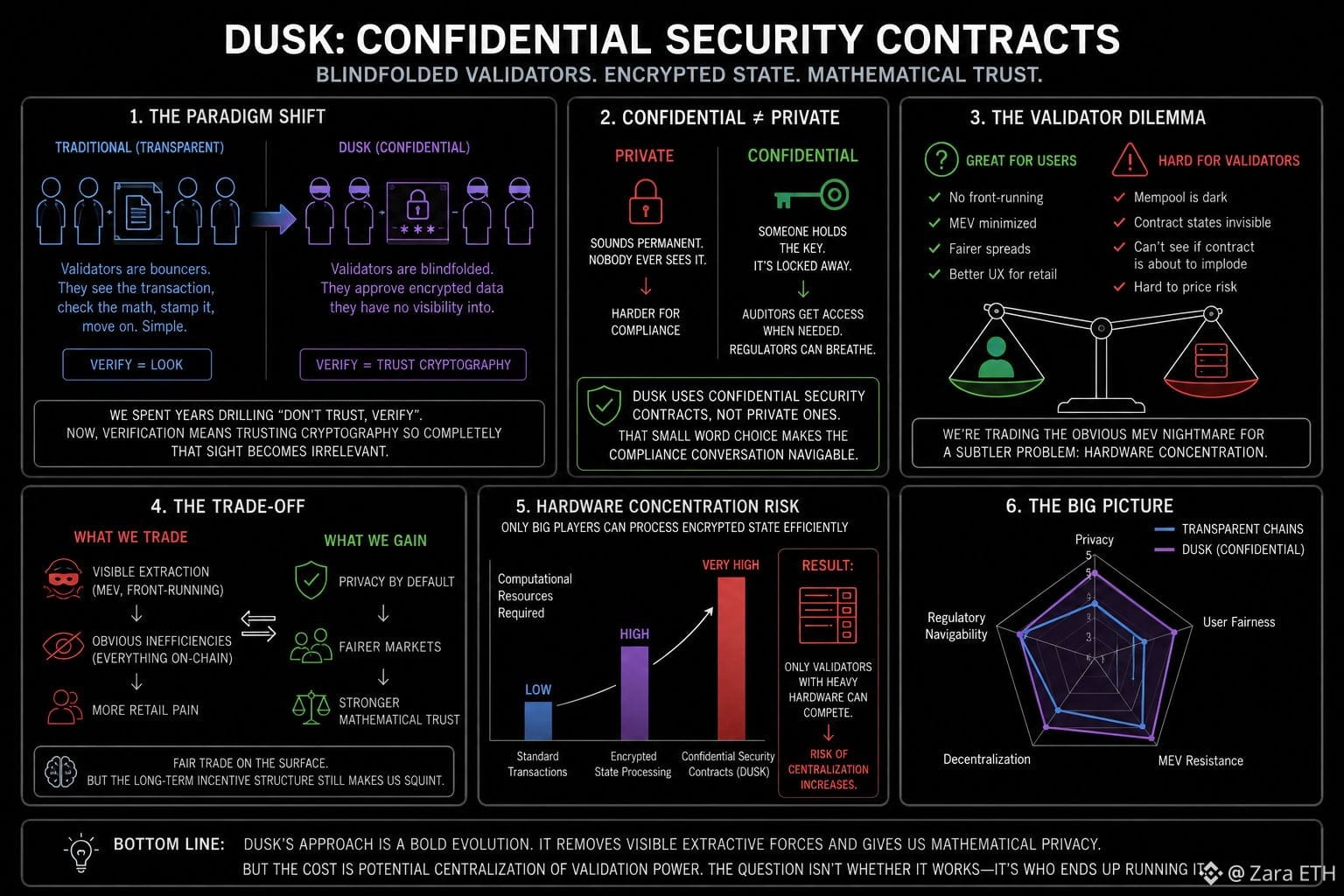
عادةً، هم فقط مثل الحُرّاس على البوابات. يرون المعاملة، يتأكدون من الحسابات، يضعون ختمها، ثم يمضون. بسيط.
لكن على Dusk، نطلب منهم أن يتفقوا على تغيّرات في الحالة لا يمكنهم قراءتها حرفيًا. إنهم يعملون وهم معصوبون العينين، يوافقون على بيانات مُشفّرة لا يملكون أي رؤية لها.
لقد أمضينا سنوات نُلقّن منظومتنا عبارة: "لا تثق، تحقّق". التحقّق يعني النظر. لكن هنا، يعني التحقّق الثقة بالترميز التشفيري إلى درجة كاملة بحيث يصبح البصر غير ذي صلة. تحوّل مجنون. الشفافية التي كنا نتباهى بها اختفت، ومع ذلك يبدو أن اللا-ثقة (trustlessness) أكثر رياضية، وأكثر إطلاقًا.
حتى العلامات التجارية تُصيب الفرق بدقة. فهم يستخدمون عقود الأمان السرّية (Confidential Security Contracts) وليس الخاصة (Private). "خاصة" تبدو دائمة—لا يراها أحد أبدًا. "سرّية" توحي بأن هناك من يملك المفتاح، لكنه مُغلَق فقط. هذا الاختيار الدقيق للكلمة يجعل حديث الامتثال قابلاً للملاحة فعلًا. يحصل المدققون على الوصول عند الحاجة. ويمكن للجهات التنظيمية أن تتنفس.
لكنني أظل أعود إلى المُصدّقين. إذا كانت الميمبول (mempool) مظلمة، وحالات العقود غير مرئية، فكيف يقيّمون مخاطر التحقق؟ لا يمكنك الاستباق (front-run)، وهذا رائع للمستخدمين. لكنك أيضًا لا تستطيع معرفة ما إذا كان العقد متجهًا إلى الانهيار.
نحن نتخلّى عن كابوس MEV الواضح مقابل مشكلة أكثر خفاءً: تركّز العتاد. فالحلفاء الكبار فقط الذين لديهم تجهيزات ثقيلة يمكنهم معالجة انتقالات الحالة المُشفّرة بكفاءة.
لذا، نعم، تضيق الفروقات (spreads) لتجار التجزئة لأن الروبوتات لا تستطيع نَهشَنا. لكن هل نحن فقط نستبدل الاستخراج المرئي بت केंदرة غير مرئية؟
صفقة عادلة على السطح. لكن هيكل الحوافز على المدى الطويل لا يزال يجعلني أضيق عينيّ.
@Dusk #dusk $DUSK
عادةً، هم فقط مثل الحُرّاس على البوابات. يرون المعاملة، يتأكدون من الحسابات، يضعون ختمها، ثم يمضون. بسيط.
لكن على Dusk، نطلب منهم أن يتفقوا على تغيّرات في الحالة لا يمكنهم قراءتها حرفيًا. إنهم يعملون وهم معصوبون العينين، يوافقون على بيانات مُشفّرة لا يملكون أي رؤية لها.
لقد أمضينا سنوات نُلقّن منظومتنا عبارة: "لا تثق، تحقّق". التحقّق يعني النظر. لكن هنا، يعني التحقّق الثقة بالترميز التشفيري إلى درجة كاملة بحيث يصبح البصر غير ذي صلة. تحوّل مجنون. الشفافية التي كنا نتباهى بها اختفت، ومع ذلك يبدو أن اللا-ثقة (trustlessness) أكثر رياضية، وأكثر إطلاقًا.
حتى العلامات التجارية تُصيب الفرق بدقة. فهم يستخدمون عقود الأمان السرّية (Confidential Security Contracts) وليس الخاصة (Private). "خاصة" تبدو دائمة—لا يراها أحد أبدًا. "سرّية" توحي بأن هناك من يملك المفتاح، لكنه مُغلَق فقط. هذا الاختيار الدقيق للكلمة يجعل حديث الامتثال قابلاً للملاحة فعلًا. يحصل المدققون على الوصول عند الحاجة. ويمكن للجهات التنظيمية أن تتنفس.
لكنني أظل أعود إلى المُصدّقين. إذا كانت الميمبول (mempool) مظلمة، وحالات العقود غير مرئية، فكيف يقيّمون مخاطر التحقق؟ لا يمكنك الاستباق (front-run)، وهذا رائع للمستخدمين. لكنك أيضًا لا تستطيع معرفة ما إذا كان العقد متجهًا إلى الانهيار.
نحن نتخلّى عن كابوس MEV الواضح مقابل مشكلة أكثر خفاءً: تركّز العتاد. فالحلفاء الكبار فقط الذين لديهم تجهيزات ثقيلة يمكنهم معالجة انتقالات الحالة المُشفّرة بكفاءة.
لذا، نعم، تضيق الفروقات (spreads) لتجار التجزئة لأن الروبوتات لا تستطيع نَهشَنا. لكن هل نحن فقط نستبدل الاستخراج المرئي بت केंदرة غير مرئية؟
صفقة عادلة على السطح. لكن هيكل الحوافز على المدى الطويل لا يزال يجعلني أضيق عينيّ.
@Dusk #dusk $DUSK