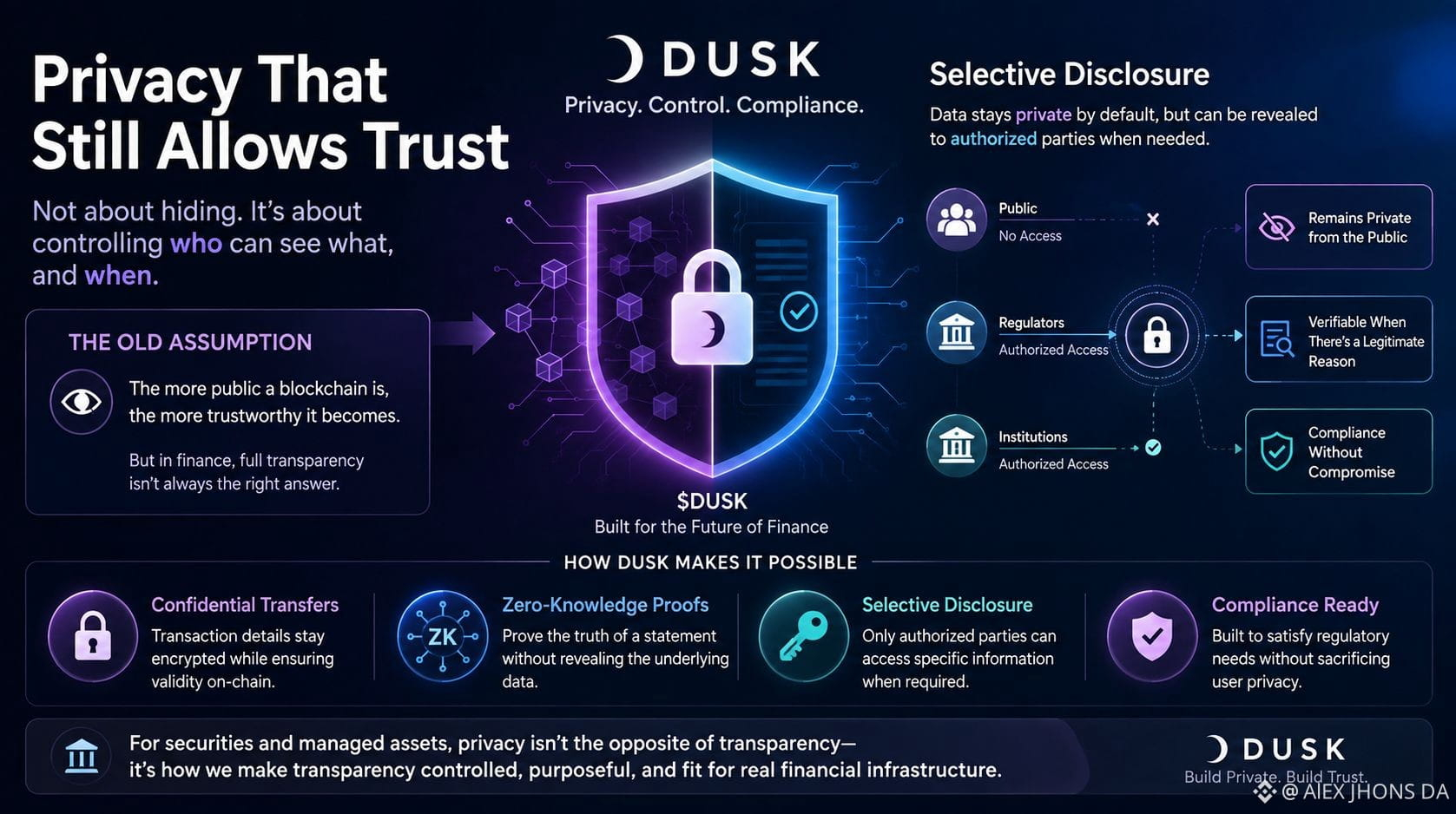
الخصوصية التي لا تزال تتيح الثقة
كنت أعتقد سابقًا أن كلما كانت سلسلة الكتل أكثر علنًا، زادت موثوقيتها. إذا كان بإمكان الجميع رؤية البيانات والتحقق من المعاملات معًا، افترضت أن هناك مجالًا أقل لحدوث أي غموض.
لكن تعلّمي عن Dusk غيّر نظرتي إلى هذه الفكرة، خصوصًا في الأسواق المالية.
ما لفت انتباهي هو أن Dusk لا تتعامل مع الخصوصية بوصفها ستارًا مطلقًا. أرى قيمة أكبر في نهجها الخاص بالإفصاح الانتقائي؛ حيث يمكن أن تظل المعلومات الحساسة خاصة عن الجمهور، بينما تكون متاحة للأطراف المخوّلة عند الحاجة إلى التحقق.
كما أجد الجمع بين التحويلات السرّية وبراهين المعرفة الصفرية أمرًا مثيرًا للاهتمام، لأنه ينقل السؤال من “علني أم خاص؟” إلى شيء أكثر عملية: من ينبغي أن يرى ماذا، ومتى؟
بالنسبة للأصول المُدارة والأوراق المالية، أعتقد أن هذا التمييز مهم. لا أتوقع أن تُكشف كل تفاصيل المعاملات علنًا، بينما ما يزال المنظمون والمؤسسات المخوّلة بحاجة إلى طرق ذات معنى للتحقق من الامتثال والملكية.
هذا التوازن هو ما يجعل Dusk مثيرة للاهتمام بالنسبة لي. أبدأ في رؤية الخصوصية ليس كعكس الشفافية، بل كوسيلة لجعل الشفافية أكثر تحكمًا وهدفًا، ومناسبة للبنية التحتية المالية الواقعية.
#dusk $DUSK @Dusk
كنت أعتقد سابقًا أن كلما كانت سلسلة الكتل أكثر علنًا، زادت موثوقيتها. إذا كان بإمكان الجميع رؤية البيانات والتحقق من المعاملات معًا، افترضت أن هناك مجالًا أقل لحدوث أي غموض.
لكن تعلّمي عن Dusk غيّر نظرتي إلى هذه الفكرة، خصوصًا في الأسواق المالية.
ما لفت انتباهي هو أن Dusk لا تتعامل مع الخصوصية بوصفها ستارًا مطلقًا. أرى قيمة أكبر في نهجها الخاص بالإفصاح الانتقائي؛ حيث يمكن أن تظل المعلومات الحساسة خاصة عن الجمهور، بينما تكون متاحة للأطراف المخوّلة عند الحاجة إلى التحقق.
كما أجد الجمع بين التحويلات السرّية وبراهين المعرفة الصفرية أمرًا مثيرًا للاهتمام، لأنه ينقل السؤال من “علني أم خاص؟” إلى شيء أكثر عملية: من ينبغي أن يرى ماذا، ومتى؟
بالنسبة للأصول المُدارة والأوراق المالية، أعتقد أن هذا التمييز مهم. لا أتوقع أن تُكشف كل تفاصيل المعاملات علنًا، بينما ما يزال المنظمون والمؤسسات المخوّلة بحاجة إلى طرق ذات معنى للتحقق من الامتثال والملكية.
هذا التوازن هو ما يجعل Dusk مثيرة للاهتمام بالنسبة لي. أبدأ في رؤية الخصوصية ليس كعكس الشفافية، بل كوسيلة لجعل الشفافية أكثر تحكمًا وهدفًا، ومناسبة للبنية التحتية المالية الواقعية.
#dusk $DUSK @Dusk