كنت أعتقد أن طبقة 1 للتمويل تحتاج فقط إلى أن تكون سريعة بما يكفي، ورخيصة بما يكفي، وقادرة على التعامل مع الأصول المُرمّزة. حلّ مشكلة التسوية، والباقي أساسًا تطبيقات تُبنى فوق ذلك — أو هكذا ظننت.
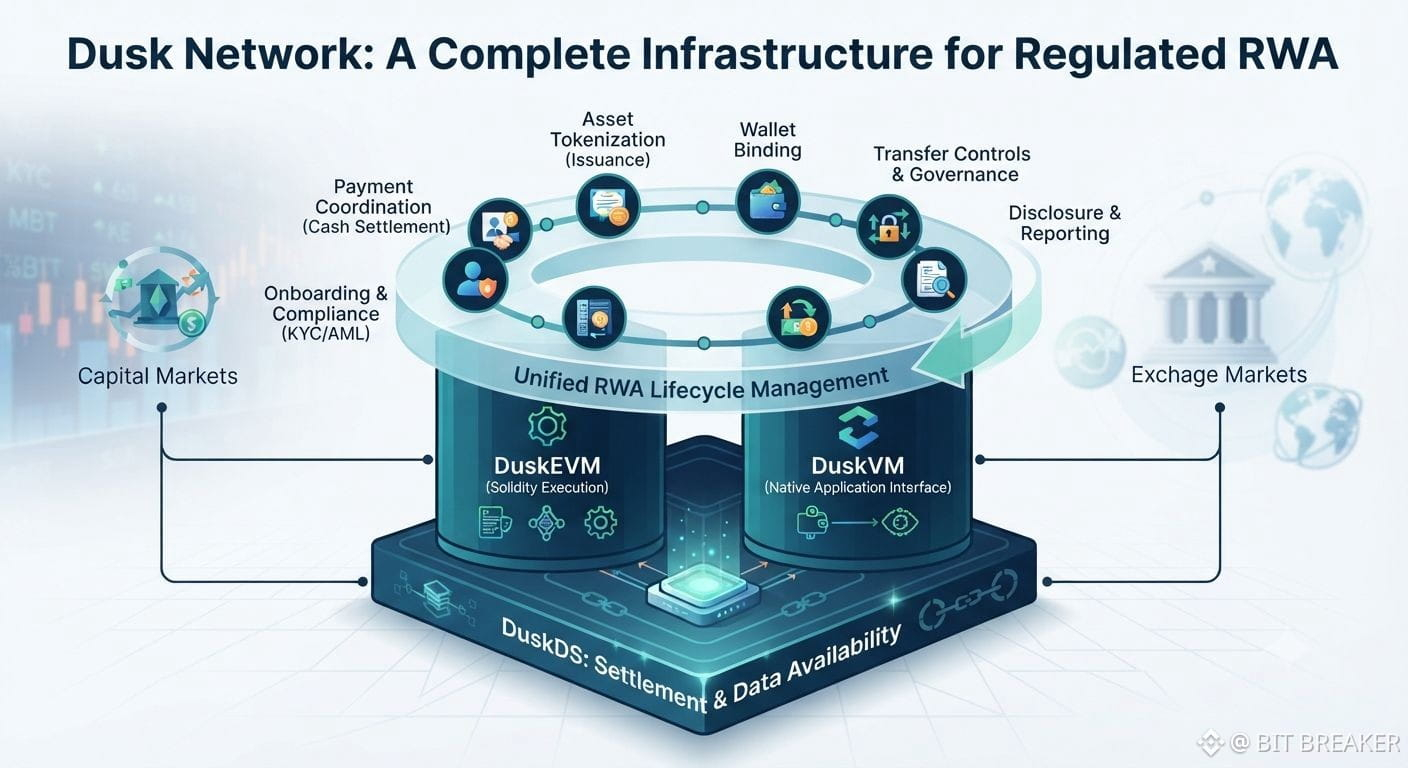
لكن قراءة المزيد عن Dusk غيّرت رأيي. ما لفتني لم يكن جزء “الترميز” بحد ذاته — بل أن Dusk تُبنى حول دورة حياة الأصل كاملة. إتمام بدء المستثمرين، ربط المحفظة، ضوابط التحويل، الإفصاح، تنسيق المدفوعات — كل ذلك، وليس مجرد الرمز نفسه.
أعاد هذا تشكيل طريقة تفكيري حول RWA. الرمز الذي يمثل سندًا أو صندوقًا لا يصبح قابلاً للاستخدام لمجرد وجوده على بلوكتشين. ما يزال هناك من يجب أن يجيب: من المسموح له بشرائه؟ من يمكنه الاحتفاظ به؟ ما الذي يجب الإفصاح عنه علنًا؟ ما الذي يجب أن يبقى خاصًا؟ وكيف تتم تسوية جانب النقد فعليًا. لا يختفي شيء من ذلك لمجرد أنه أصبح على السلسلة.
كما أن Dusk يفصل بين التنفيذ والتسوية، وهي برأيي خيار تصميم أكثر إثارة للاهتمام. DuskEVM يتعامل مع Solidity. أما DuskVM فهو للتطبيقات التي تحتاج إلى الحديث مباشرةً مع L1. وتأتي DuskDS في الأسفل، لتقوم بالتسوية وتوفير البيانات.
لست مقتنعًا بأن هذا الإعداد متعدد الطبقات يجعل Dusk تلقائيًا بنية تحتية مالية جيدة — بل ربما يعني عددًا أكبر من الأجزاء المتحركة أن هناك المزيد مما يجب أن يصمد أمام الاستخدام الفعلي. لكن هذه هي بالضبط النقطة التي أريد الاستمرار في مراقبتها: هل يمكن لـ Dusk فعلًا تحويل شيء مجزأ مثل متطلبات أسواق رأس المال التقليدية إلى سير عمل أونتشين واحد متماسك؟ هذه مطالبة أصعب بكثير للإثبات من “سريع ورخيص”، وهي التي تهم فعلًا.
$DUSK #dusk @Dusk
$AAVE
$BTW
لكن قراءة المزيد عن Dusk غيّرت رأيي. ما لفتني لم يكن جزء “الترميز” بحد ذاته — بل أن Dusk تُبنى حول دورة حياة الأصل كاملة. إتمام بدء المستثمرين، ربط المحفظة، ضوابط التحويل، الإفصاح، تنسيق المدفوعات — كل ذلك، وليس مجرد الرمز نفسه.
أعاد هذا تشكيل طريقة تفكيري حول RWA. الرمز الذي يمثل سندًا أو صندوقًا لا يصبح قابلاً للاستخدام لمجرد وجوده على بلوكتشين. ما يزال هناك من يجب أن يجيب: من المسموح له بشرائه؟ من يمكنه الاحتفاظ به؟ ما الذي يجب الإفصاح عنه علنًا؟ ما الذي يجب أن يبقى خاصًا؟ وكيف تتم تسوية جانب النقد فعليًا. لا يختفي شيء من ذلك لمجرد أنه أصبح على السلسلة.
كما أن Dusk يفصل بين التنفيذ والتسوية، وهي برأيي خيار تصميم أكثر إثارة للاهتمام. DuskEVM يتعامل مع Solidity. أما DuskVM فهو للتطبيقات التي تحتاج إلى الحديث مباشرةً مع L1. وتأتي DuskDS في الأسفل، لتقوم بالتسوية وتوفير البيانات.
لست مقتنعًا بأن هذا الإعداد متعدد الطبقات يجعل Dusk تلقائيًا بنية تحتية مالية جيدة — بل ربما يعني عددًا أكبر من الأجزاء المتحركة أن هناك المزيد مما يجب أن يصمد أمام الاستخدام الفعلي. لكن هذه هي بالضبط النقطة التي أريد الاستمرار في مراقبتها: هل يمكن لـ Dusk فعلًا تحويل شيء مجزأ مثل متطلبات أسواق رأس المال التقليدية إلى سير عمل أونتشين واحد متماسك؟ هذه مطالبة أصعب بكثير للإثبات من “سريع ورخيص”، وهي التي تهم فعلًا.
$DUSK #dusk @Dusk
$AAVE
$BTW