One thing I hadn't expected from shared liquidity is how quickly one market can affect another.
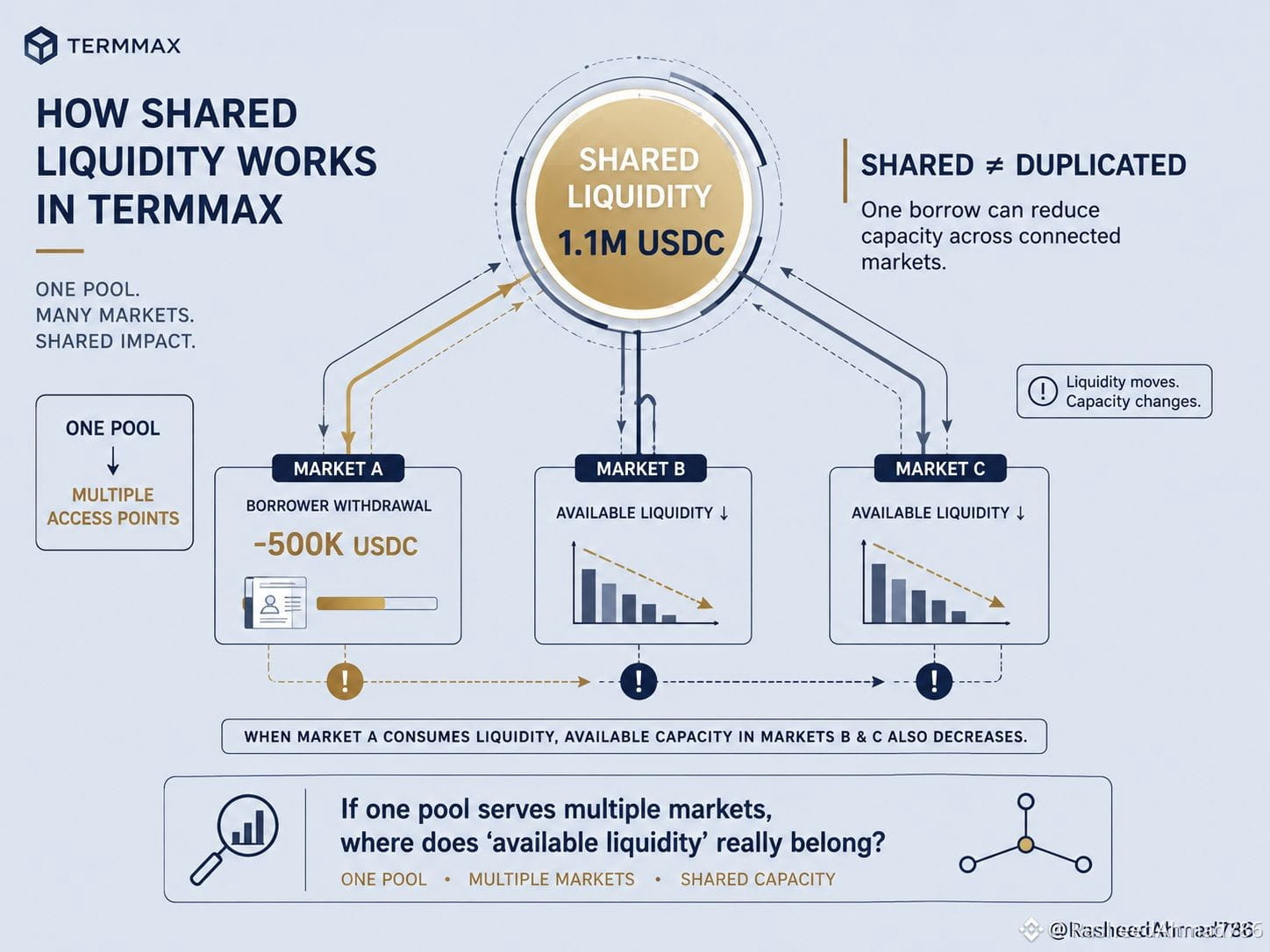
@TermMax V2 material describes a setup where multiple markets can draw from the same liquidity pool rather than holding completely separate reserves. In its example, a 500K borrow from one market causes the available liquidity shown in other connected markets to fall by the same amount in the same block.
The interesting part isn't simply that liquidity is shared. It's that a transaction in one market can immediately change the capacity visible through another market.
That gives "available liquidity" a different meaning. The number shown beside a market isn't necessarily an isolated reserve; it can represent access to capital that is also being used elsewhere.
For borrowers, that creates a practical consideration: a large transaction in one market can reduce the capacity available to other users without those markets having received a separate borrow themselves.
This doesn't make shared liquidity inherently better or worse. It is a trade-off between using capital across multiple markets and keeping each market's liquidity completely isolated.
When several markets depend on the same pool, should liquidity be evaluated by the number shown in each market — or by the total capital shared underneath them?
#termmax @TermMax
@TermMax V2 material describes a setup where multiple markets can draw from the same liquidity pool rather than holding completely separate reserves. In its example, a 500K borrow from one market causes the available liquidity shown in other connected markets to fall by the same amount in the same block.
The interesting part isn't simply that liquidity is shared. It's that a transaction in one market can immediately change the capacity visible through another market.
That gives "available liquidity" a different meaning. The number shown beside a market isn't necessarily an isolated reserve; it can represent access to capital that is also being used elsewhere.
For borrowers, that creates a practical consideration: a large transaction in one market can reduce the capacity available to other users without those markets having received a separate borrow themselves.
This doesn't make shared liquidity inherently better or worse. It is a trade-off between using capital across multiple markets and keeping each market's liquidity completely isolated.
When several markets depend on the same pool, should liquidity be evaluated by the number shown in each market — or by the total capital shared underneath them?
#termmax @TermMax