#samsungtoannouncenewshareholderreturnplanfriday
سامسونج: رهان جديد على قيمة المساهمين
لماذا هذا مهم
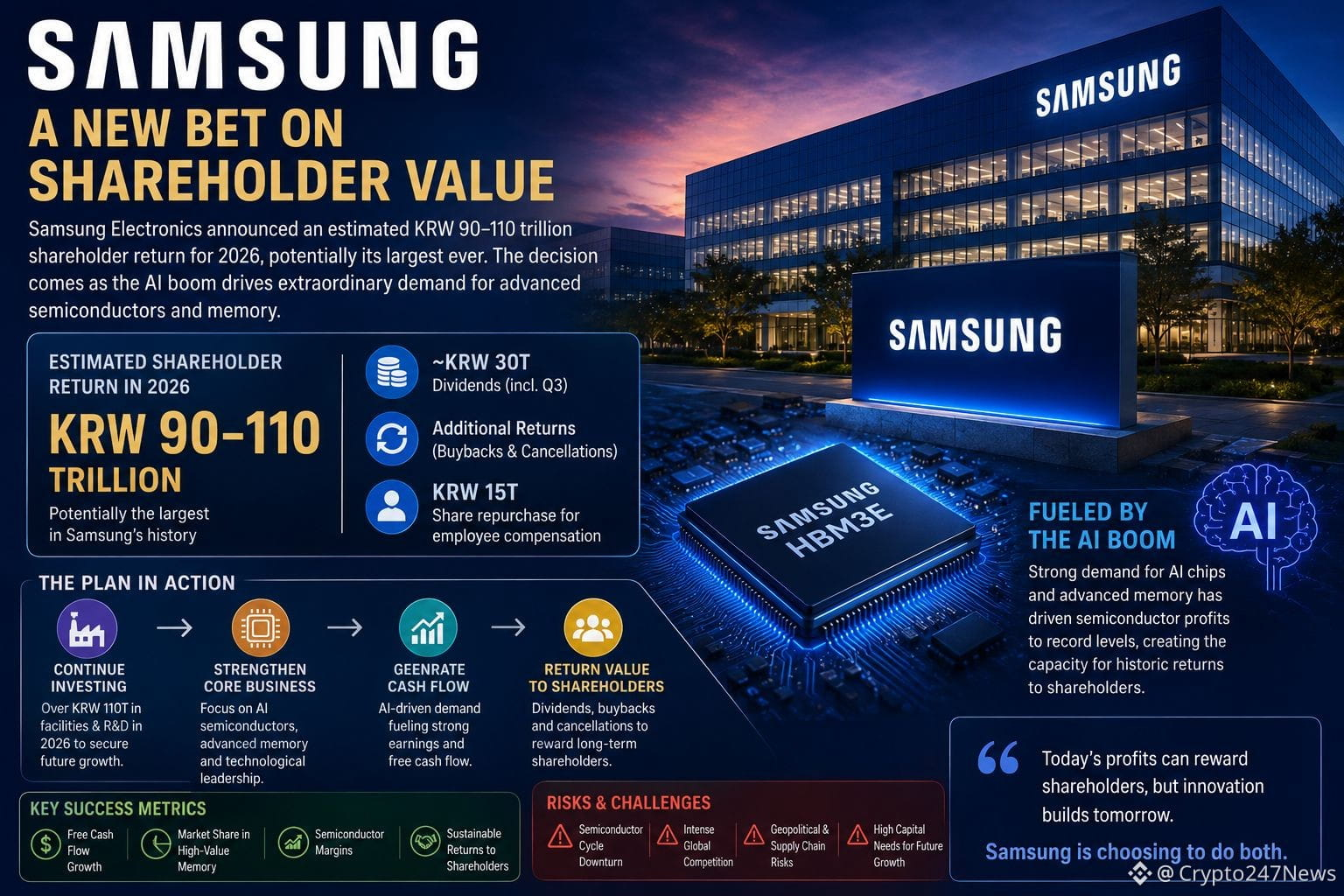
تدخل شركة سامسونج إلكترونيات فصلاً جديداً. أعلنت الشركة عن تقدير لعائد للمساهمين بقيمة 90–110 تريليون وون كوري في عام 2026، وربما يكون الأكبر على الإطلاق. يأتي هذا التحول في ظل طفرة عالمية في مجال الذكاء الاصطناعي تعزز الطلب على أشباه الموصلات والذاكرة المتقدمة.
بنت سامسونج قوتها عبر المصانع والأبحاث والتقنية. أما الآن فالسؤال مختلف: كم من التدفقات النقدية التي تحققها اليوم دورة الذكاء الاصطناعي ينبغي أن يعود للمساهمين؟
المحرك وراء الأموال
ترتبط أعمال سامسونج ارتباطاً وثيقاً بدورة أشباه الموصلات. عندما يرتفع الطلب على الذاكرة والرقائق المتقدمة، يمكن أن تتصاعد الأسعار والأرباح بسرعة. لكن إنتاج تلك الرقائق يتطلب أيضاً إنفاقاً ضخماً على المعدات والمصانع والبحث والتطوير.
تعتزم سامسونج الاستمرار في الاستثمار مع تعزيز أشباه موصلات الذكاء الاصطناعي والذاكرة المتقدمة. والخطة ليست تخلّياً عن النمو؛ بل هي موازنة بين الاستثمار المستقبلي ومكافآت المساهمين.
توفر توزيعات الأرباح نقداً مباشراً، بينما يمكن أن تقلل عمليات إعادة الشراء الملغاة من عدد الأسهم القائمة وتزيد نسبة ملكية كل مساهم متبقٍ.
المخاطر الكامنة خلف الرقم القياسي
أكبر خطر هو أن طفرة الذكاء الاصطناعي الحالية قد تتراجع في نهاية المطاف. قد تنخفض أسعار الذاكرة، وقد يتمكن المنافسون من اللحاق بالركب، وقد يصبح من الصعب تبرير الاستثمارات الضخمة إذا تغيرت وتيرة الطلب.
الاختبار الحقيقي سيتمثل في التدفق النقدي الحر، وهوامش أشباه الموصلات، وقدرة الذاكرة المرتكزة على الذكاء الاصطناعي على المنافسة، والإنفاق الرأسمالي، وعوائد المساهمين المستدامة.
ما الذي سيأتي بعد ذلك
إعلان سامسونج أكبر من مجرد قصة حول توزيع أرباح. إنه اختبار لما إذا كان عملاق التكنولوجيا قادراً على تمويل ابتكارات الغد مع مكافأة الأشخاص الذين يملكون الشركة.
إذا نجحت سامسونج في تحقيق تلك الموازنة، فقد تتحول أرباح الذكاء الاصطناعي اليوم إلى مصانع الغد ومختبراته والابتكارات التي ستُبنى لاحقاً.
الرقم ضخم، لكن القصة الحقيقية هي ما الذي ستقوم سامسونج ببنائه بعد احتساب الأموال. مستقبل التكنولوجيا لا يزال يُكتب—وسامسونج تنوي الاستمرار في بنائه.
سامسونج: رهان جديد على قيمة المساهمين
لماذا هذا مهم
تدخل شركة سامسونج إلكترونيات فصلاً جديداً. أعلنت الشركة عن تقدير لعائد للمساهمين بقيمة 90–110 تريليون وون كوري في عام 2026، وربما يكون الأكبر على الإطلاق. يأتي هذا التحول في ظل طفرة عالمية في مجال الذكاء الاصطناعي تعزز الطلب على أشباه الموصلات والذاكرة المتقدمة.
بنت سامسونج قوتها عبر المصانع والأبحاث والتقنية. أما الآن فالسؤال مختلف: كم من التدفقات النقدية التي تحققها اليوم دورة الذكاء الاصطناعي ينبغي أن يعود للمساهمين؟
المحرك وراء الأموال
ترتبط أعمال سامسونج ارتباطاً وثيقاً بدورة أشباه الموصلات. عندما يرتفع الطلب على الذاكرة والرقائق المتقدمة، يمكن أن تتصاعد الأسعار والأرباح بسرعة. لكن إنتاج تلك الرقائق يتطلب أيضاً إنفاقاً ضخماً على المعدات والمصانع والبحث والتطوير.
تعتزم سامسونج الاستمرار في الاستثمار مع تعزيز أشباه موصلات الذكاء الاصطناعي والذاكرة المتقدمة. والخطة ليست تخلّياً عن النمو؛ بل هي موازنة بين الاستثمار المستقبلي ومكافآت المساهمين.
توفر توزيعات الأرباح نقداً مباشراً، بينما يمكن أن تقلل عمليات إعادة الشراء الملغاة من عدد الأسهم القائمة وتزيد نسبة ملكية كل مساهم متبقٍ.
المخاطر الكامنة خلف الرقم القياسي
أكبر خطر هو أن طفرة الذكاء الاصطناعي الحالية قد تتراجع في نهاية المطاف. قد تنخفض أسعار الذاكرة، وقد يتمكن المنافسون من اللحاق بالركب، وقد يصبح من الصعب تبرير الاستثمارات الضخمة إذا تغيرت وتيرة الطلب.
الاختبار الحقيقي سيتمثل في التدفق النقدي الحر، وهوامش أشباه الموصلات، وقدرة الذاكرة المرتكزة على الذكاء الاصطناعي على المنافسة، والإنفاق الرأسمالي، وعوائد المساهمين المستدامة.
ما الذي سيأتي بعد ذلك
إعلان سامسونج أكبر من مجرد قصة حول توزيع أرباح. إنه اختبار لما إذا كان عملاق التكنولوجيا قادراً على تمويل ابتكارات الغد مع مكافأة الأشخاص الذين يملكون الشركة.
إذا نجحت سامسونج في تحقيق تلك الموازنة، فقد تتحول أرباح الذكاء الاصطناعي اليوم إلى مصانع الغد ومختبراته والابتكارات التي ستُبنى لاحقاً.
الرقم ضخم، لكن القصة الحقيقية هي ما الذي ستقوم سامسونج ببنائه بعد احتساب الأموال. مستقبل التكنولوجيا لا يزال يُكتب—وسامسونج تنوي الاستمرار في بنائه.