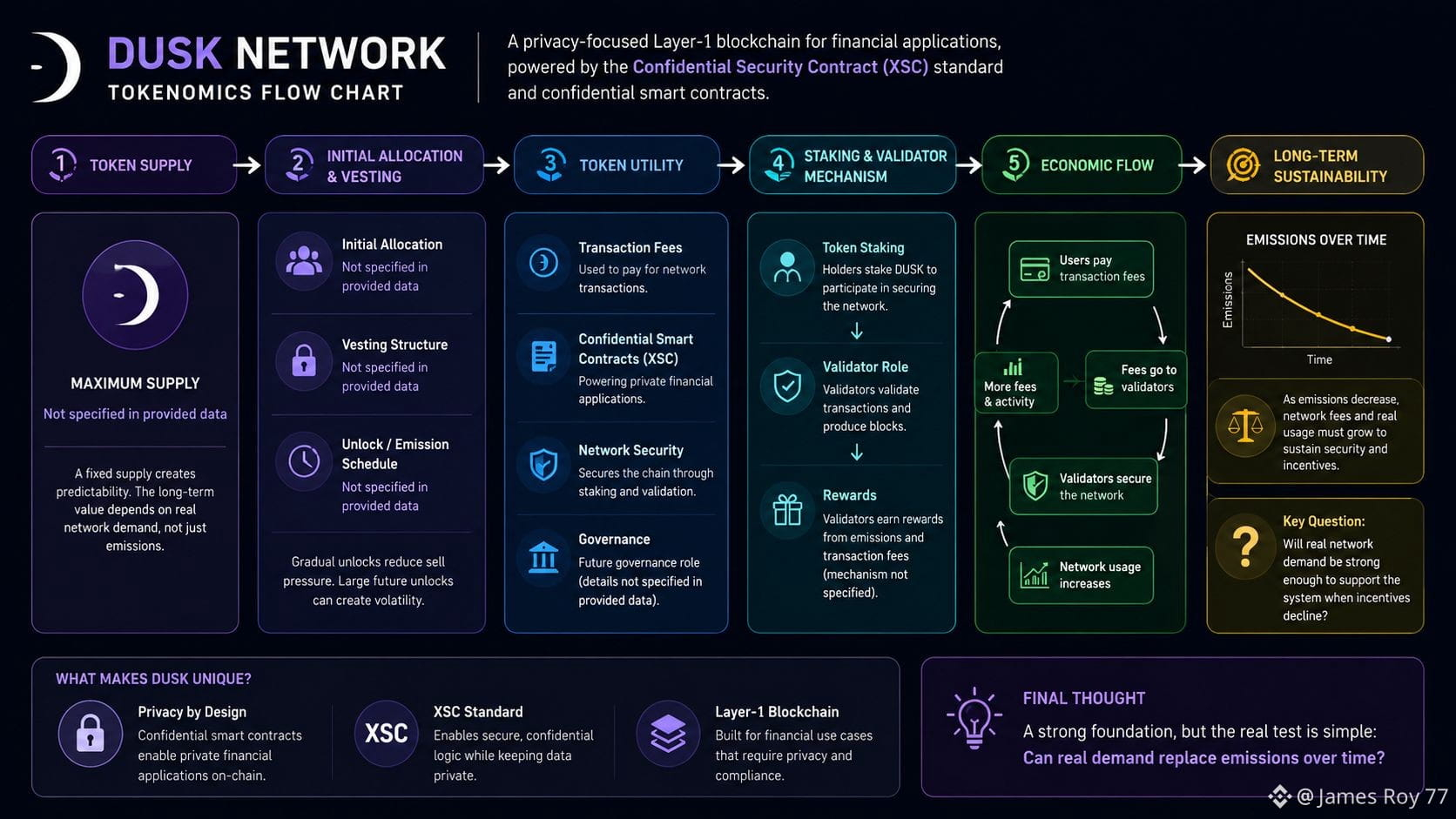
الجزء من تصميم DUSK الاقتصادي الذي أجدّه الأكثر إثارة للاهتمام هو في الواقع ما لا يمكننا استنتاجه من سرد الخصوصية وحده. إن وجود حالة استخدام تقنية قوية لا يؤدي تلقائياً إلى خلق طلب مستدام على الرموز.
يتموضع Dusk Network بوصفه طبقة-1 للتطبيقات المالية، مبنياً حول معيار Confidential Security Contract (XSC) والعقود الذكية السرية. يمنح ذلك الشبكة اتجاهاً واضحاً، لكن اقتصاديات الرموز هي حيث يبدأ الاختبار على المدى الأطول.
لا تقدم المعلومات المرفقة الحد الأقصى لعرض DUSK، أو التخصيص الأولي، أو جدول الإطلاق، أو فترات الاستحقاق، أو المعدل الذي تتناقص به الانبعاثات. لذا لن أختلق هذه الأرقام أو أتظاهر بأن منحنى العرض أكثر قابلية للتنبؤ مما تُظهره البيانات المتاحة. إن هذه التفاصيل مهمة لأن الرمز الذي يواجه عمليات إطلاق مستقبلية كبيرة يمكن أن يتصرف بشكل مختلف جداً عن رمز يمتلك إطلاقاً بطيئاً ومُحكماً. قد يؤدي حدث مفاجئ في جانب العرض إلى خلق ضغط بيع حتى عندما تكون الشبكة الأساسية في طور التطور.
ينطبق التحفظ نفسه على الحصص ومكافآت المدققين. نعلم أن Dusk هي طبقة-1، لكن المعلومات المقدمة لا تحدد معادلة مكافأة المدققين، أو آليات التخزين (staking)، أو كيفية توزيع رسوم المعاملات. هذه عناصر حاسمة عند التساؤل عمّا إذا كان بإمكان النظام أن يظل مستداماً بعد انخفاض الحوافز.
وهذا يترك لي السؤال الذي سأراقبه عن كثب: هل يؤدي الاستخدام الفعلي للتطبيقات المالية السرية إلى توليد طلب متكرر كافٍ لدعم الرمز دون الاعتماد بشكل رئيسي على الانبعاثات؟
يمكن للخصوصية أن تجذب الاهتمام. النشاط الاقتصادي الحقيقي هو ما يجب أن يستمر في جذب الانتباه.
إذا وصل DUSK في النهاية إلى نقطة تصبح فيها رسوم الشبكة والاستخدام الحقيقي أكثر أهمية من الحوافز، فإن ذلك سيخبرني بالكثير عن قوته الاقتصادية أكثر من أي عنوان يخص تكنولوجيته.
#dusk $DUSK @Dusk
يتموضع Dusk Network بوصفه طبقة-1 للتطبيقات المالية، مبنياً حول معيار Confidential Security Contract (XSC) والعقود الذكية السرية. يمنح ذلك الشبكة اتجاهاً واضحاً، لكن اقتصاديات الرموز هي حيث يبدأ الاختبار على المدى الأطول.
لا تقدم المعلومات المرفقة الحد الأقصى لعرض DUSK، أو التخصيص الأولي، أو جدول الإطلاق، أو فترات الاستحقاق، أو المعدل الذي تتناقص به الانبعاثات. لذا لن أختلق هذه الأرقام أو أتظاهر بأن منحنى العرض أكثر قابلية للتنبؤ مما تُظهره البيانات المتاحة. إن هذه التفاصيل مهمة لأن الرمز الذي يواجه عمليات إطلاق مستقبلية كبيرة يمكن أن يتصرف بشكل مختلف جداً عن رمز يمتلك إطلاقاً بطيئاً ومُحكماً. قد يؤدي حدث مفاجئ في جانب العرض إلى خلق ضغط بيع حتى عندما تكون الشبكة الأساسية في طور التطور.
ينطبق التحفظ نفسه على الحصص ومكافآت المدققين. نعلم أن Dusk هي طبقة-1، لكن المعلومات المقدمة لا تحدد معادلة مكافأة المدققين، أو آليات التخزين (staking)، أو كيفية توزيع رسوم المعاملات. هذه عناصر حاسمة عند التساؤل عمّا إذا كان بإمكان النظام أن يظل مستداماً بعد انخفاض الحوافز.
وهذا يترك لي السؤال الذي سأراقبه عن كثب: هل يؤدي الاستخدام الفعلي للتطبيقات المالية السرية إلى توليد طلب متكرر كافٍ لدعم الرمز دون الاعتماد بشكل رئيسي على الانبعاثات؟
يمكن للخصوصية أن تجذب الاهتمام. النشاط الاقتصادي الحقيقي هو ما يجب أن يستمر في جذب الانتباه.
إذا وصل DUSK في النهاية إلى نقطة تصبح فيها رسوم الشبكة والاستخدام الحقيقي أكثر أهمية من الحوافز، فإن ذلك سيخبرني بالكثير عن قوته الاقتصادية أكثر من أي عنوان يخص تكنولوجيته.
#dusk $DUSK @Dusk