لقد عشت في عالم العملات المشفرة مدة كافية تجعلني أشك قليلًا كلما سمعت عبارة «سعر فائدة ثابت».
لقد رأيت الكثير من البروتوكولات تطرح APR نظيفًا بينما تكون الأمور المعقّدة تجري في مكانٍ ما تحت السطح. لذلك عندما بدأت في استكشاف TermMax، وجدت نفسي أقرأ هذه العبارة بطريقة مختلفة.
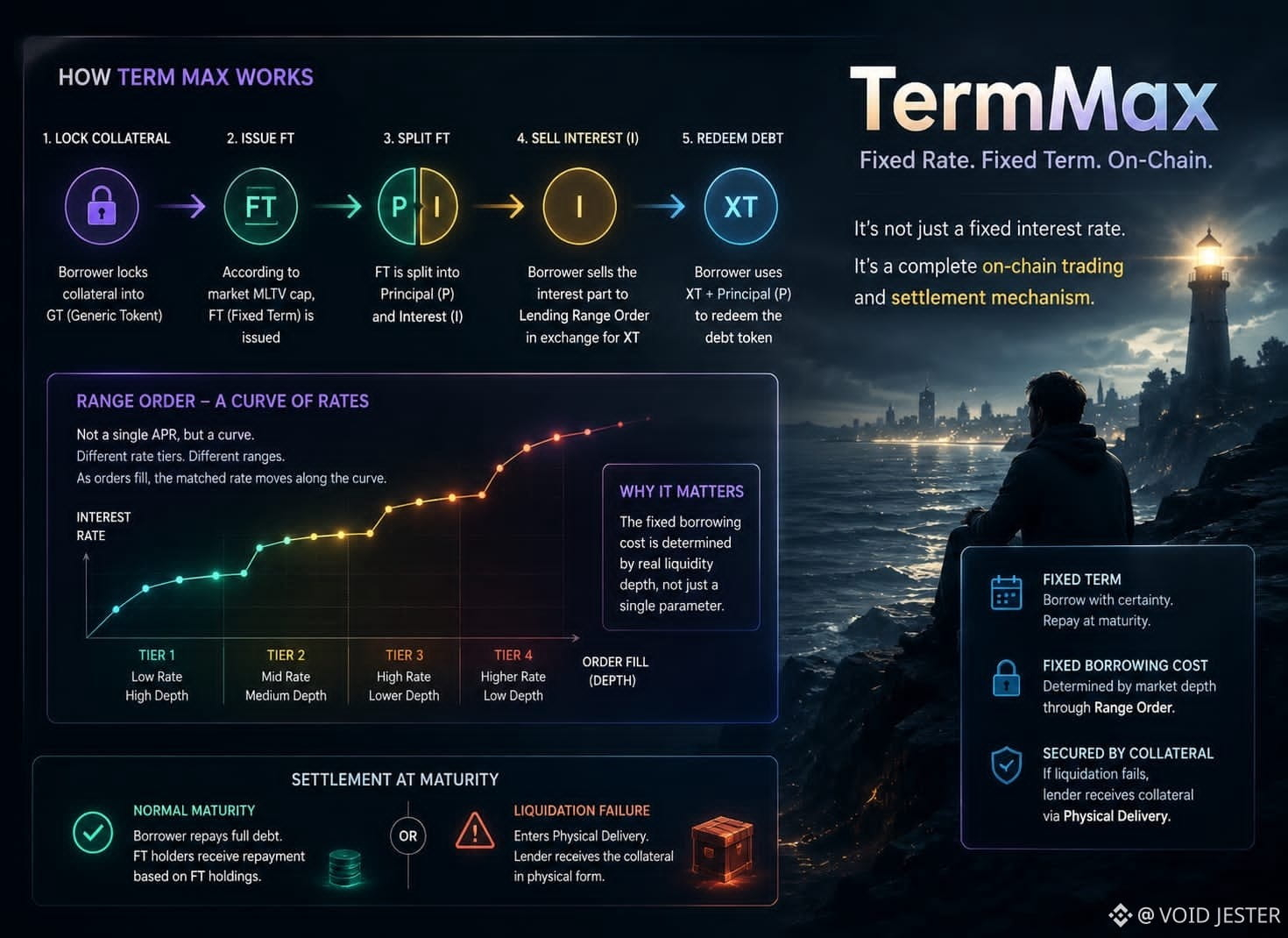
ما لفت انتباهي هو كيفية ارتباط GT وFT وXT وأمر النطاق (Range Order) جميعًا. سعر الفائدة الثابت لا يكون موجودًا فقط كرقم. بل إنه في الواقع يمرّ عبر المسار الكامل لإنشاء القرض وتسعيره وفي النهاية تسويته.
ما زلت أفكر بشكل خاص في أمر النطاق. بدلًا من التظاهر بأن هناك سعرًا مثاليًا واحدًا، يتم توزيع السيولة عبر نطاقات أسعار مختلفة. ومع تنفيذ تلك الأوامر، يمكن أن يتحرك السعر الذي يتم مطابقته فعليًا على طول المنحنى.
تلك الجزئية تبدو أكثر إثارة بالنسبة لي، لأن الأسواق نادرًا ما تتصرف كـ APR واحد فقط.
ثم يأتي موضوع الاستحقاق. عادةً يقوم المقترض بالسداد، ويحصل حاملو FT على ما يستحقونه. لكن إذا لم تنجح عملية التصفية، فقد تنتهي الأمور في التسليم الفعلي (Physical Delivery)، حيث يستلم المُقرِض الضمانات نفسها.
لقد شاهدت ما يكفي من الدورات لأعرف أن الاختبار الحقيقي لأي آلية غالبًا لا يكون مدى نظافة شكلها عندما تعمل كل الأمور كما ينبغي.
بل ما يحدث عندما لا تعمل الأمور.
ما زلت غير متأكدًا أين يقع TermMax ضمن ذلك. لكن شيئًا ما في الطريقة التي يتم بها بناء سعر الفائدة الثابت داخل البنية الفعلية للأصل يجعلني أرى أن الأمر يستحق الاهتمام.
ليس لأنّه يبدو جديدًا.
بل لأن التفاصيل هي المكان الذي تصبح فيه هذه الأمور غالبًا أكثر إثارة للاهتمام.
@TermMax #TermMax
لقد رأيت الكثير من البروتوكولات تطرح APR نظيفًا بينما تكون الأمور المعقّدة تجري في مكانٍ ما تحت السطح. لذلك عندما بدأت في استكشاف TermMax، وجدت نفسي أقرأ هذه العبارة بطريقة مختلفة.
ما لفت انتباهي هو كيفية ارتباط GT وFT وXT وأمر النطاق (Range Order) جميعًا. سعر الفائدة الثابت لا يكون موجودًا فقط كرقم. بل إنه في الواقع يمرّ عبر المسار الكامل لإنشاء القرض وتسعيره وفي النهاية تسويته.
ما زلت أفكر بشكل خاص في أمر النطاق. بدلًا من التظاهر بأن هناك سعرًا مثاليًا واحدًا، يتم توزيع السيولة عبر نطاقات أسعار مختلفة. ومع تنفيذ تلك الأوامر، يمكن أن يتحرك السعر الذي يتم مطابقته فعليًا على طول المنحنى.
تلك الجزئية تبدو أكثر إثارة بالنسبة لي، لأن الأسواق نادرًا ما تتصرف كـ APR واحد فقط.
ثم يأتي موضوع الاستحقاق. عادةً يقوم المقترض بالسداد، ويحصل حاملو FT على ما يستحقونه. لكن إذا لم تنجح عملية التصفية، فقد تنتهي الأمور في التسليم الفعلي (Physical Delivery)، حيث يستلم المُقرِض الضمانات نفسها.
لقد شاهدت ما يكفي من الدورات لأعرف أن الاختبار الحقيقي لأي آلية غالبًا لا يكون مدى نظافة شكلها عندما تعمل كل الأمور كما ينبغي.
بل ما يحدث عندما لا تعمل الأمور.
ما زلت غير متأكدًا أين يقع TermMax ضمن ذلك. لكن شيئًا ما في الطريقة التي يتم بها بناء سعر الفائدة الثابت داخل البنية الفعلية للأصل يجعلني أرى أن الأمر يستحق الاهتمام.
ليس لأنّه يبدو جديدًا.
بل لأن التفاصيل هي المكان الذي تصبح فيه هذه الأمور غالبًا أكثر إثارة للاهتمام.
@TermMax #TermMax