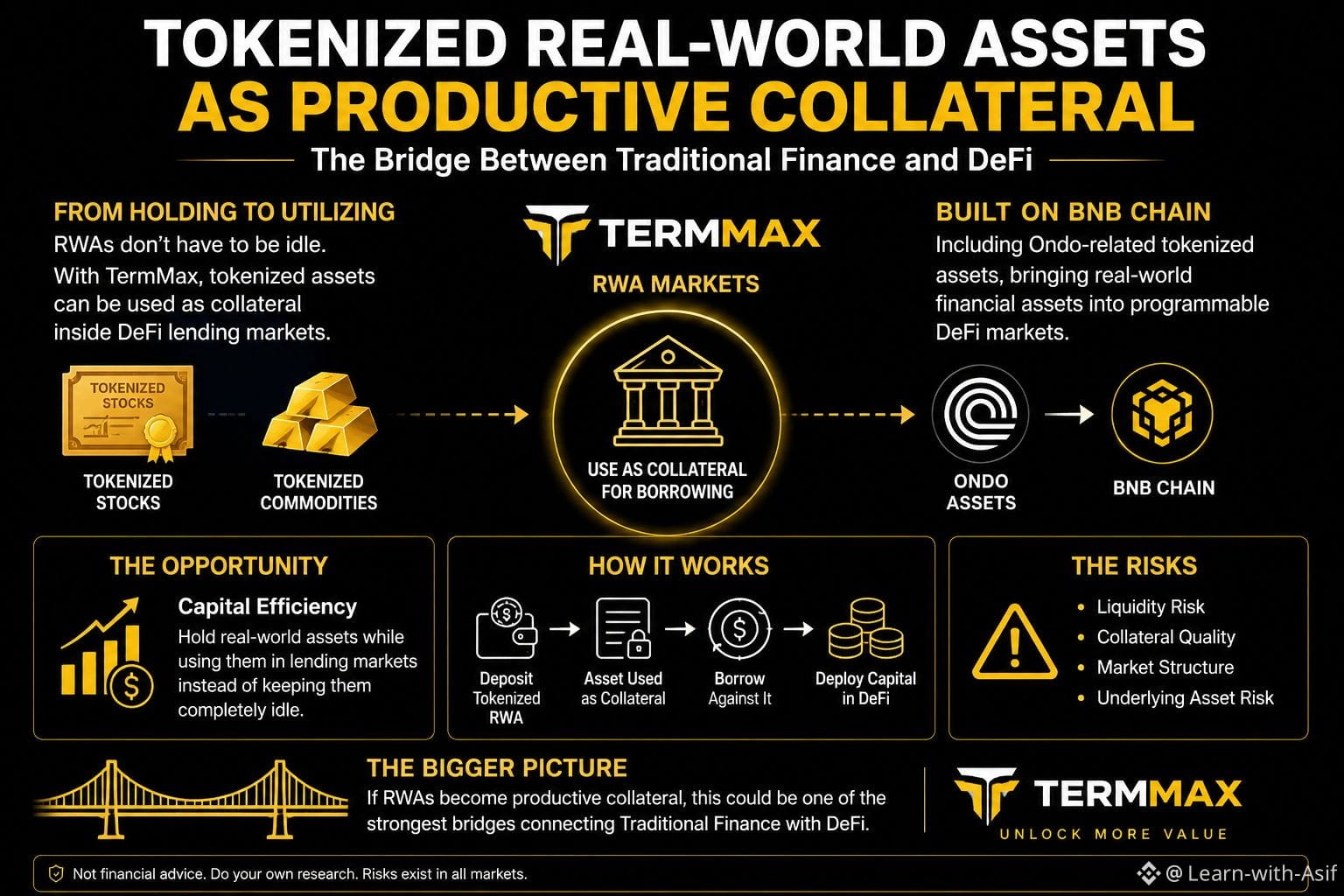
Everybody is surprised to see market sentiments. I have been digging deeper into #TermMax and I think the bigger RWA story is no longer just about putting real-world assets on-chain.
It’s about what those assets can do after they arrive.
@TermMax caught my attention because its #BNB Chain RWA markets let users deposit eligible Ondo stock tokens as collateral to borrow USDT. That changes the role of a tokenized asset from something you simply hold into something that can potentially become productive capital.
For me, that is where the capital-efficiency thesis gets interesting. But the risk is equally important: tokenized collateral still depends on liquidity, pricing, asset structure, and the ability to manage positions when markets become stressed.
So I’m watching borrowing demand and collateral liquidity more closely than the #RWA narrative itself.
If RWAs can move from passive exposure to usable collateral, could TermMax become an important funding layer between traditional assets and DeFi?
@TermMax #TermMax $BTC $SOL $BNB
It’s about what those assets can do after they arrive.
@TermMax caught my attention because its #BNB Chain RWA markets let users deposit eligible Ondo stock tokens as collateral to borrow USDT. That changes the role of a tokenized asset from something you simply hold into something that can potentially become productive capital.
For me, that is where the capital-efficiency thesis gets interesting. But the risk is equally important: tokenized collateral still depends on liquidity, pricing, asset structure, and the ability to manage positions when markets become stressed.
So I’m watching borrowing demand and collateral liquidity more closely than the #RWA narrative itself.
If RWAs can move from passive exposure to usable collateral, could TermMax become an important funding layer between traditional assets and DeFi?
@TermMax #TermMax $BTC $SOL $BNB